Moldovans buy fewer medicines; Imports account for nearly 93%
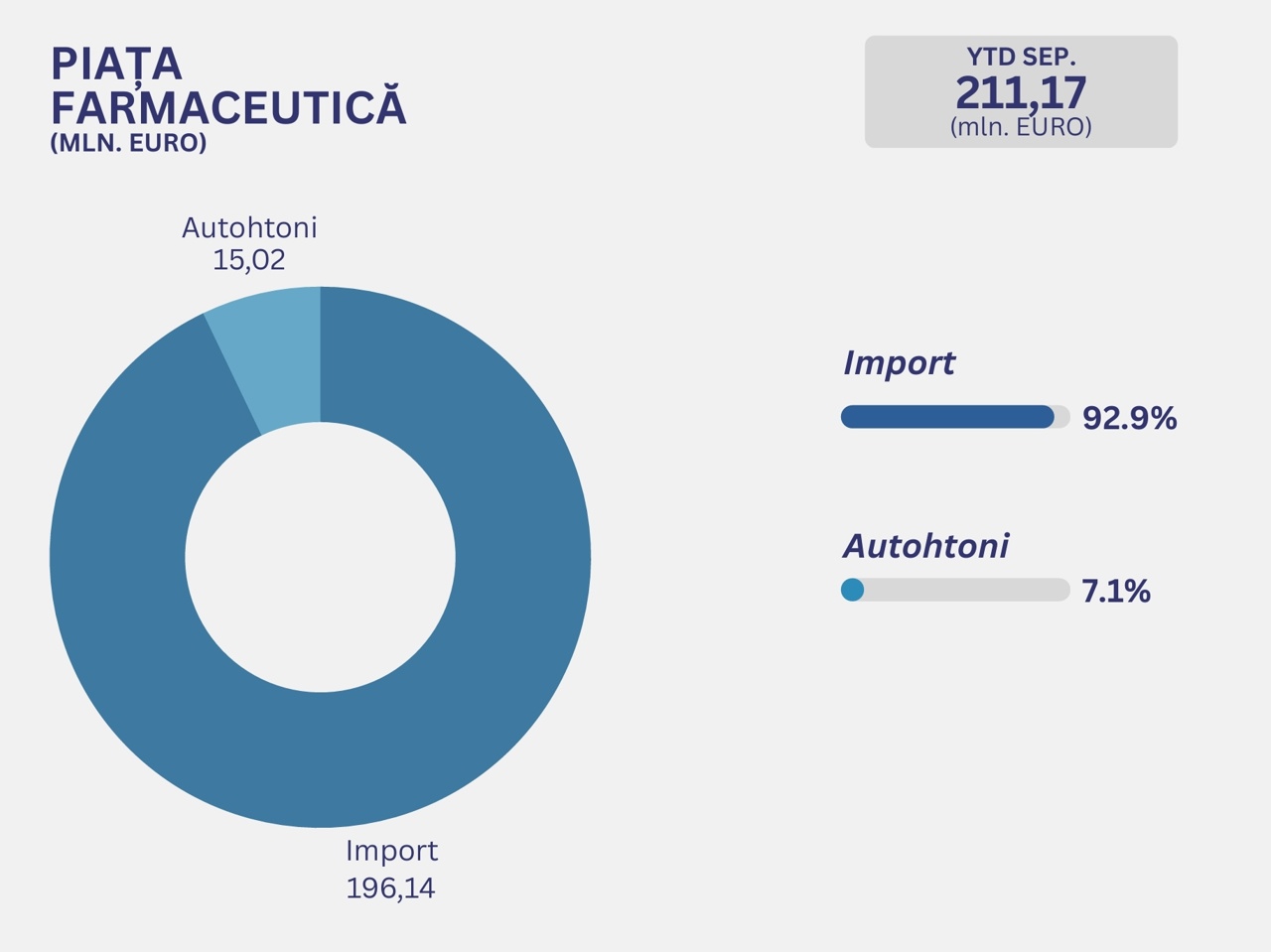
In the first nine months of 2026, Moldovan consumers purchased nearly nine million fewer boxes of medicine than during the same period last year, yet the overall value of the pharmaceutical market increased. The country remains heavily reliant on imports, with foreign-made medicines accounting for nearly 93% of the total value of pharmaceuticals sold.
The pharmaceutical market value has reached over 211 million euros, up 3.6% from January to September 2025.
Of this total, approximately 196 million euros account for imported medicines, while only 15 million euros are attributed to local manufacturers, according to a report by the Medicines and Medical Devices Agency (AMDM).
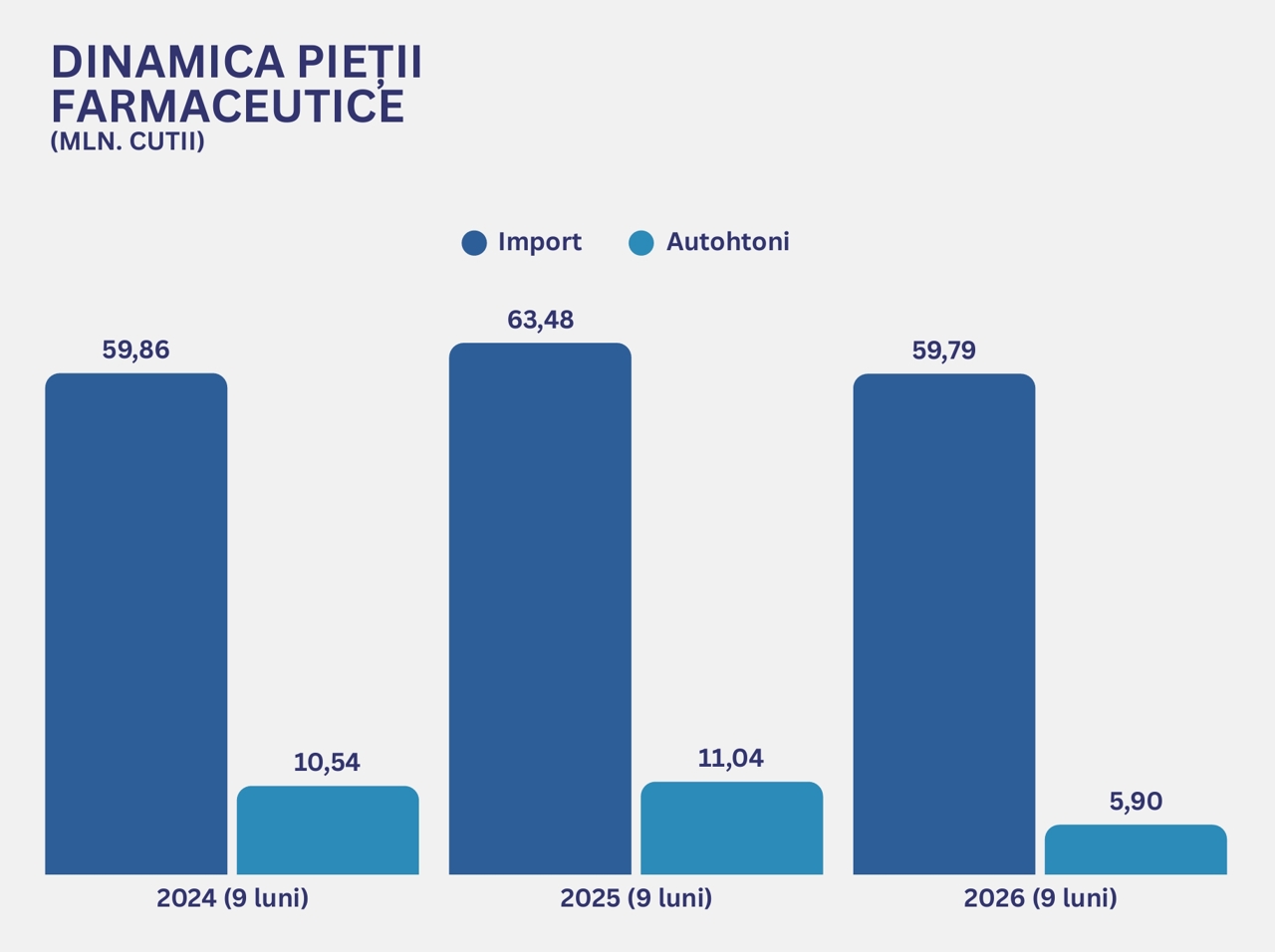
Although the value of the pharmaceutical market has increased, the number of medicine packs sold has decreased. In the first nine months of 2026, approximately 65.7 million packs of medicine were sold in the Republic of Moldova—nearly nine million fewer than in the same period of 2025.
The most significant decline was recorded for domestically produced medicines, with sales volume falling from 11 million to 5.9 million packs—a reduction of over 46%.
Germany accounts for the largest share of imported medicines, with products valued at over 28 million euros.
Next is Slovenia, with 18.5 million euros, followed by Romania (17.9 million euros), Hungary (16.5 million euros), and Turkey (15.18 million euros).
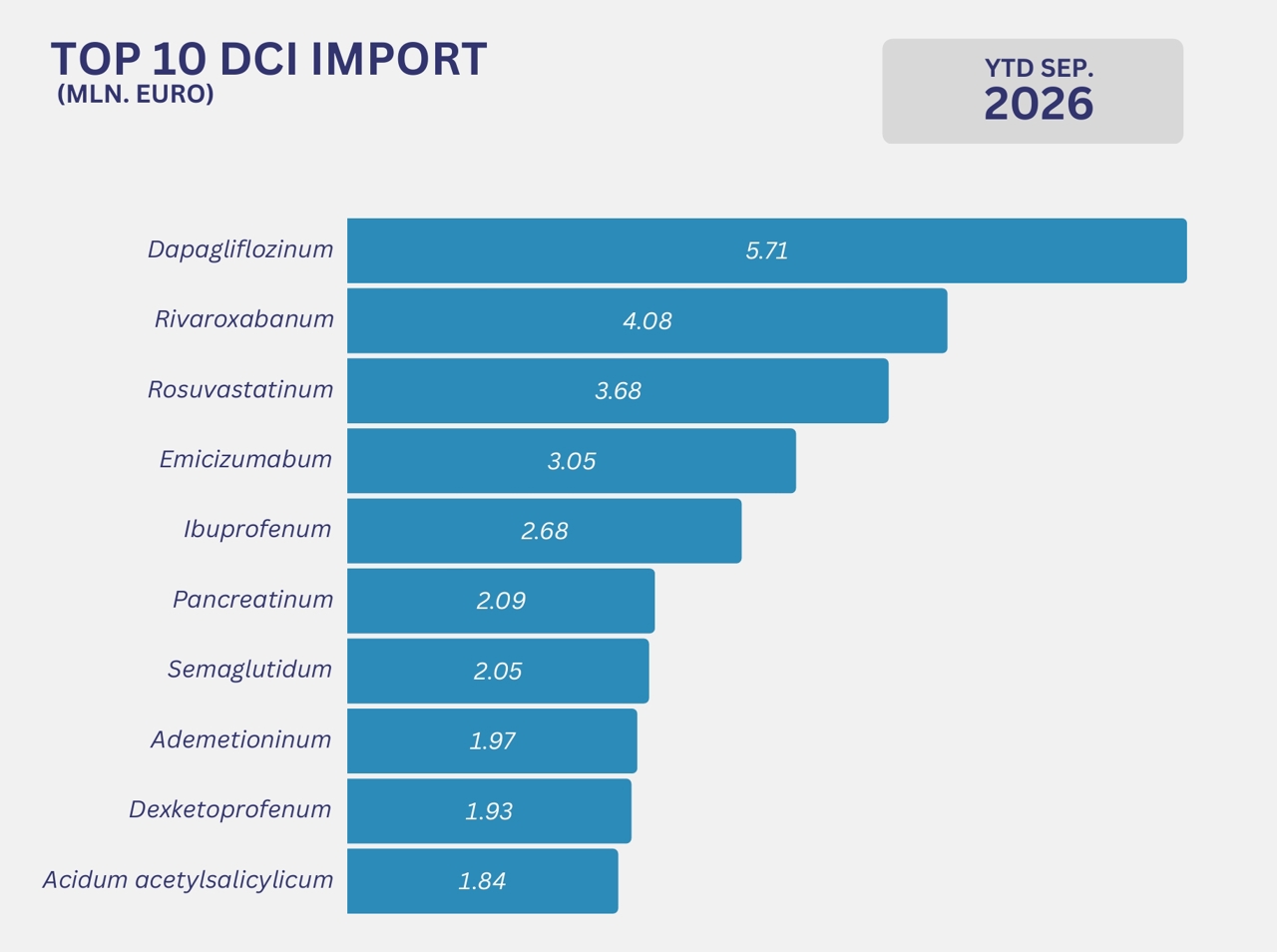
Among the imported medicines with the highest value are those used to treat diabetes and cardiovascular diseases, as well as those intended to lower cholesterol levels.
For instance, the value of imports for medicines containing dapagliflozin reached 5.71 million euros; for medicines containing rivaroxaban—used to prevent and treat blood clots—it reached 4.08 million euros; and for medicines containing rosuvastatin—used to lower cholesterol—it reached 3.68 million euros.
According to the Medicines and Medical Devices Agency, the development of the pharmaceutical market is also influenced by the list of subsidized medicines, the costs of which are covered—either fully or partially—by the state.
Including a medicine on this list can increase demand, affecting both import volumes and local manufacturers' sales.
In the Republic of Moldova, the production of medicines intended for the domestic market is concentrated primarily among a few companies. Balkan Pharmaceuticals ranks first, with sales of 10.59 million euros, accounting for over 70% of the total value of domestically produced medicines sold in the country. It is followed by Farmaprim with 2.35 million euros, Flumed-Farm with 1.2 million euros, and Eurofarmaco with 860,000 euros.
The import market is also dominated by a few companies. Dita Estfarm is the largest importer, with medicines valued at nearly 93 million euros—representing almost half of the total value of imports. It is followed by RihPanGalFarma with 42 million euros and Tetis International with 30.7 million euros. Together, these three companies account for approximately 84% of the value of medicines imported into the Republic of Moldova.
The Republic of Moldova produces between 550 and 600 types of medicines, out of the more than 6,000 authorized for the national market. Over 70% of domestic production is destined for export, with medicines manufactured in the country reaching more than 30 foreign markets, including the European Union, Canada, and the Middle East.
The pharmaceutical market is also set to change as part of the accession process to the European Union. Between 57% and 60% of the medicines included in the State Register will need to be reviewed and adapted to meet European authorization requirements. For this process, the authorities have requested a five-year transition period following accession; however, Brussels has not yet accepted this request.
The Ministry of Health says that the review of authorizations does not entail the automatic withdrawal of medicines from the market.