EU enlargement faces a political test as European elections may impact the process
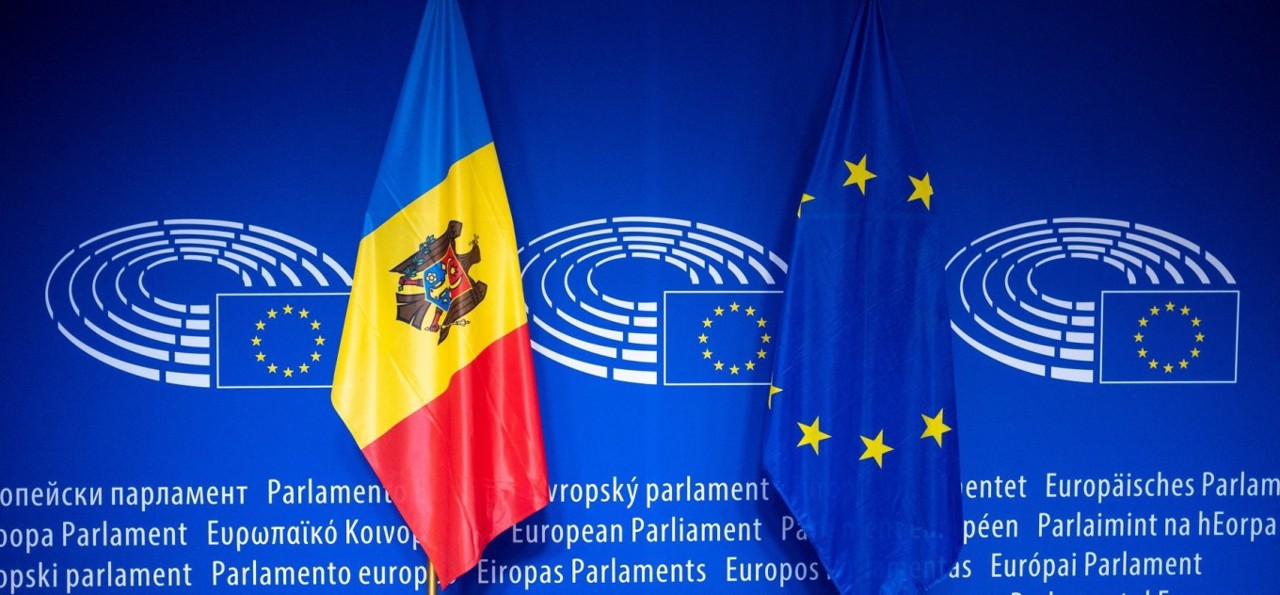
Elections scheduled in several European countries in 2027 could affect political support for EU enlargement, including the accession of the Republic of Moldova. The risks stem from potential government changes and increased propaganda targeting European solidarity. Against this backdrop, experts say that maintaining the pace of reforms and demonstrating tangible progress are Chișinău’s strongest arguments in discussions with EU member states.
President Maia Sandu’s visit to Brussels carries both political and diplomatic significance. Through meetings with European leaders, the head of state aims to consolidate support for the Republic of Moldova’s accession and demonstrate that the authorities in Chișinău are fulfilling their commitments. However, progress in negotiations depends not only on the reforms implemented by candidate countries but also on political consensus among EU member states.
In an interview for the program "În Context" on Moldova 1, Alexandra Foarfă, an expert in European affairs at Europuls, explained that the Republic of Moldova’s progress must be presented and advocated for through ongoing diplomatic dialogue with European partners.
"The Republic of Moldova is moving forward at a very rapid pace—that is the reality. The very act of demonstrating this—and being able to articulate it diplomatically and at the political level—is precisely the task President Maia Sandu is carrying out in Brussels right now," stated Alexandra Foarfă.
Implementing reforms can diminish arguments against enlargement and increase the openness of member states toward the Republic of Moldova’s accession. Nevertheless, the process is not merely about meeting technical conditions; the admission of a new member also entails additional responsibilities for the European Union as a whole, the expert explained.
The 2027 elections: A potential risk for enlargement
The European Union's electoral calendar is one of the primary uncertainties for the enlargement process. In 2027, several member states are set to hold elections—including France, where a presidential election is scheduled. Their outcomes could shift certain governments' stances on admitting new members.
The primary risk is not necessarily the emergence of direct opposition to enlargement, but rather the intensification of rhetoric that pits national interests against European solidarity. Such campaigns could influence political debates and voter attitudes ahead of elections, warns Alexandra Foarfă.
"As we draw closer to the elections, the electoral stakes will rise, creating an opening for propaganda to take hold through various narratives. While we might not see it in the form of explicit anti-enlargement messaging, it could manifest, for instance, in arguments that each state should act in its own self-interest rather than prioritizing solidarity with others," the expert explained.
Potential leadership changes in EU member states that wield significant political and economic influence could also affect their willingness to support enlargement. For this reason, the positions of future governments will need close monitoring. Nevertheless, the impact of these uncertainties can be mitigated if Chisinau continues its reform process. In Alexandra Foarfă’s view, maintaining the current pace is the surest way for the Republic of Moldova to sustain its European path, regardless of the election results in member states.
Reforms must deliver tangible changes for citizens
Beyond political negotiations, the success of European integration also depends on how citizens perceive changes within society. Institutional reforms do not always yield immediate results, and people tend to gauge progress primarily through improvements in infrastructure and public services.
Romania's experience—which will mark 20 years since its accession to the European Union in 2027—shows that the benefits of reforms must be explained to citizens well before accession. According to Alexandra Foarfă, European investments should be presented not merely in terms of the funding provided, but also through the tangible changes they bring to local communities.
"What people truly notice is when roads are paved, schools are renovated and well-equipped, and hospitals offer high-quality conditions—things you can see with the naked eye as you go about your daily life. Reforms certainly take effect, but their impact tends to be more long-term," the expert noted.
At the same time, the authorities in Chișinău should place greater emphasis on informing citizens about how the European Union functions, its decision-making process, and the concrete advantages of accession. Such communication must reach local communities, ensuring people better understand the changes that integration entails.
The Republic of Moldova has opened four of the six negotiating clusters with the European Union since the official launch of accession negotiations in June 2024. The first two clusters—covering fundamental values and external relations—opened in June and July 2024, while two others, concerning the internal market and competitiveness, opened in October. In total, these four clusters encompass 24 negotiating chapters.
The opening of the final two clusters—"Green Agenda and Sustainable Connectivity" and "Resources, Agriculture, and Cohesion"—is expected by the end of this year. In its enlargement report published on November 4, the European Commission concluded that the Republic of Moldova already meets the necessary conditions for this stage and urged member states to approve the opening of negotiations in these remaining areas.
Furthermore, the European Commission has presented a roadmap that envisages provisionally closing up to 25 negotiating chapters in 2027. To achieve this goal, the Republic of Moldova must first fulfill the interim benchmarks related to the rule of law, including those concerning the judiciary and fundamental rights.