Moldova plans school reforms to improve PISA scores
Moldova’s Education and Research Ministry has set higher targets for the country’s 2029 PISA results, aiming to raise student scores in Reading, Mathematics and Science through curriculum and assessment reforms.
Higher targets for all three assessment areas
The Ministry of Education and Research aims to raise Moldova’s average PISA scores from 404 to 440 points in Reading, from 410 to 440 in Mathematics, and from 422 to 445 in Science by 2029.
The plan focuses on changing school curricula and national assessments to place greater emphasis on critical thinking and the ability to apply classroom knowledge to real-life situations.
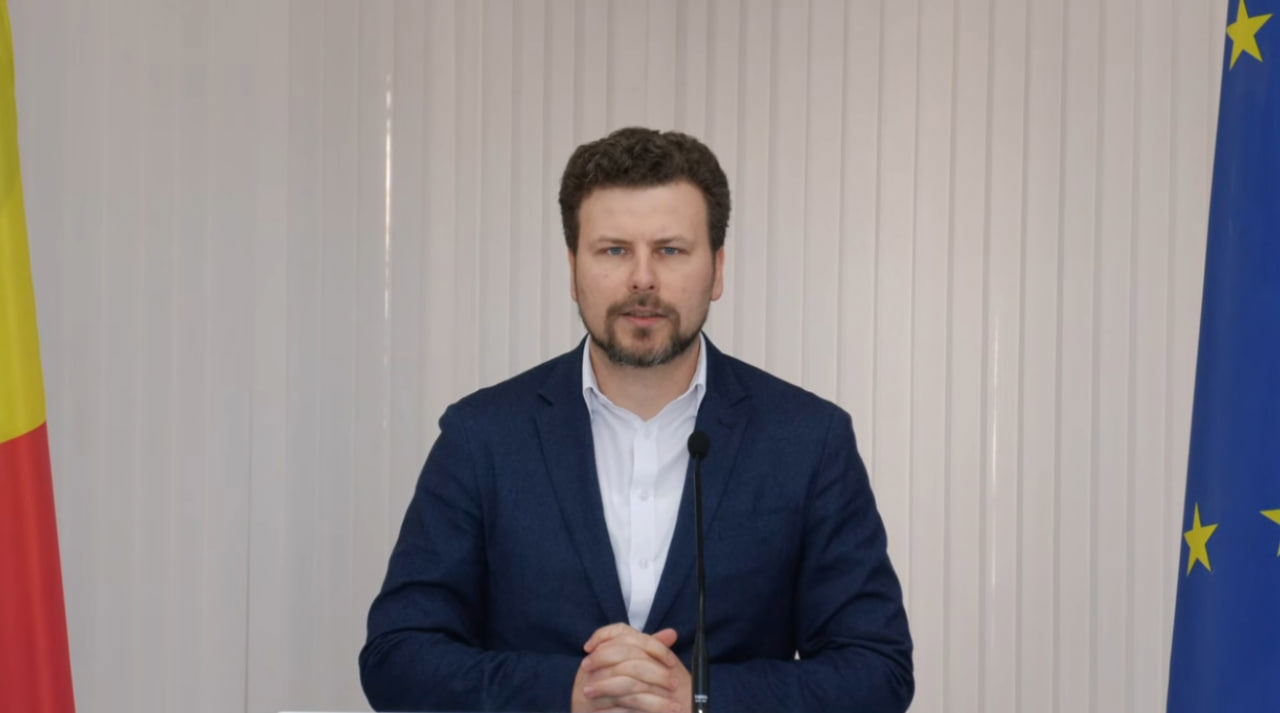
“We want young people to understand texts and assess the credibility of information, work with data, explain phenomena and develop scientific research skills. In Mathematics, we want them to solve problems, explain why their solutions make sense and apply theoretical knowledge to real-life situations and other fields,” Education and Research Minister Dan Perciun said on Friday, November 20, while presenting the plan.
One of the main changes concerns how students’ knowledge and skills are assessed. National examinations will increasingly test whether pupils understand and can apply what they have learned, rather than simply reproduce information.
Starting in 2027, lower secondary school leaving examinations, taken at the end of ninth grade, will include more tasks requiring students to apply their knowledge and transfer it to unfamiliar contexts.
More students expected to reach minimum proficiency
The plan also aims to increase the proportion of students reaching at least Level 2 proficiency in PISA assessments, considered the baseline level of competence.
In 2025, 48.3% of Moldovan students reached this threshold in Reading. The ministry wants to raise the figure to at least 60% by 2029.
In Mathematics, the target is to increase the proportion from 44.2% to at least 55%, while in Science it is expected to rise from 53.9% to at least 60%.
Another priority is reducing by at least one-third the performance gaps between students in rural and urban areas, as well as between pupils attending small and large schools.
“These are extremely ambitious targets. If we achieve these scores, we will outperform several countries in our region and Moldova will become a regional leader in the quality of education and the skills developed among its students,” Perciun said.
Compulsory critical reading classes and new books
Among the measures is the introduction of one compulsory Critical Reading class for pupils in grades 1-9, starting in September 2027.
Students will learn to analyse texts, distinguish between facts and opinions, and check whether information and conclusions are supported by evidence.
New textbooks will include literary and non-literary texts, charts and argumentation exercises designed to develop students’ ability to understand, interpret and critically assess information.
The ministry also plans to purchase approximately 216,000 books in 2027-2028. They will be distributed to kindergartens, primary school pupils and students preparing for the next PISA assessment, with the aim of encouraging reading and improving comprehension skills.
Mathematics and Science to focus on practical skills
In Mathematics, authorities plan to introduce textbooks adapted from the Estonian education model, with the new materials expected to reach schools from September 2027.
The free remedial learning programme, currently available to ninth-graders, will also be extended to eighth-grade students to help them address learning gaps.
Science education will begin in first grade, with the revised curriculum placing greater emphasis on experiments and practical activities.
The STEAM subject, integrating Science, Technology, Engineering, Arts and Mathematics, will become compulsory for students in grades 5-8. The classes will use the time currently allocated to optional subjects.
The plan also provides for equipping at least 250 schools with 500 laboratories, particularly for Physics and Chemistry, over the coming years.
In 2027, authorities will pilot an integrated Science assessment for eighth-graders. Depending on the results, the evaluation could be extended to ninth grade in 2028.
Implementation to require €20.4 million
The plan is expected to require approximately €20.4 million (approx. 411.2 million MDL) between 2027 and 2031.
The largest allocation, approximately €12.5 million, will go towards equipping schools with Physics and Chemistry laboratories.
Another €1.5 million is earmarked for teacher training, while €1.2 million will fund remedial Mathematics programmes.
The estimated budget for 2027 alone stands at approximately €4.5 million.
Perciun said that around 70% of the required funding was already covered by the state budget. Authorities are also holding discussions with international partners to secure additional resources, particularly for laboratory equipment.
Over the coming weeks, the ministry will consult Romanian language, Mathematics, Physics, Chemistry and Biology teachers on the proposed measures.
The document is expected to be approved by the end of December 2026, after which implementation will begin.
“We hope to have an approved plan, with a budget, by the end of December and move directly to implementation. Our ambition is to improve our students’ skills and make them more competitive in Reading, Mathematics and Science,” Perciun said.
The Ministry of Education and Research will coordinate and finance the implementation of the plan.
The National Agency for Curriculum and Assessment will be responsible for developing assessment standards and updating national examinations, while the National Institute of Education and Leadership will oversee teacher training and mentoring.
Newly established territorial agencies and schools will be responsible for implementing the measures and ensuring that they reach every educational institution.
PISA 2025: Progress recorded only in Science
Moldova’s results in the 2025 international PISA assessment showed improvement only in Science, where students scored 422 points, five more than in 2022.
In Mathematics, students scored 410 points, four fewer than in the previous assessment. Reading scores fell by seven points to 404.
According to data presented by the National Agency for Curriculum and Assessment, only 44.2% of students reached minimum proficiency in Mathematics, 48.3% in Reading and 53.9% in Science.
The assessment also revealed significant differences between urban and rural students, with performance gaps ranging from 55 to 65 points, equivalent to approximately three years of schooling.
Socio-economic background also plays a significant role. In Science, the gap between students from advantaged and disadvantaged families reaches 85 points.
More than 6,600 students from the Republic of Moldova participated in the assessment.
What is PISA?
PISA (Programme for International Student Assessment) is an international study conducted by the Organisation for Economic Co-operation and Development (OECD). It assesses the knowledge and skills of 15-year-old students in Reading, Mathematics and Science, focusing on their ability to apply what they have learned to real-life situations rather than simply recall information.
The assessment results help governments identify strengths and weaknesses in their education systems, develop evidence-based policies and address inequalities in learning outcomes.
The next PISA assessment will take place in 2029, with results expected to be published in 2030.
Translation by Iurie Tataru
RELATED COVERAGE