Moldovan honey fetches higher EU prices, but its potential remains untapped
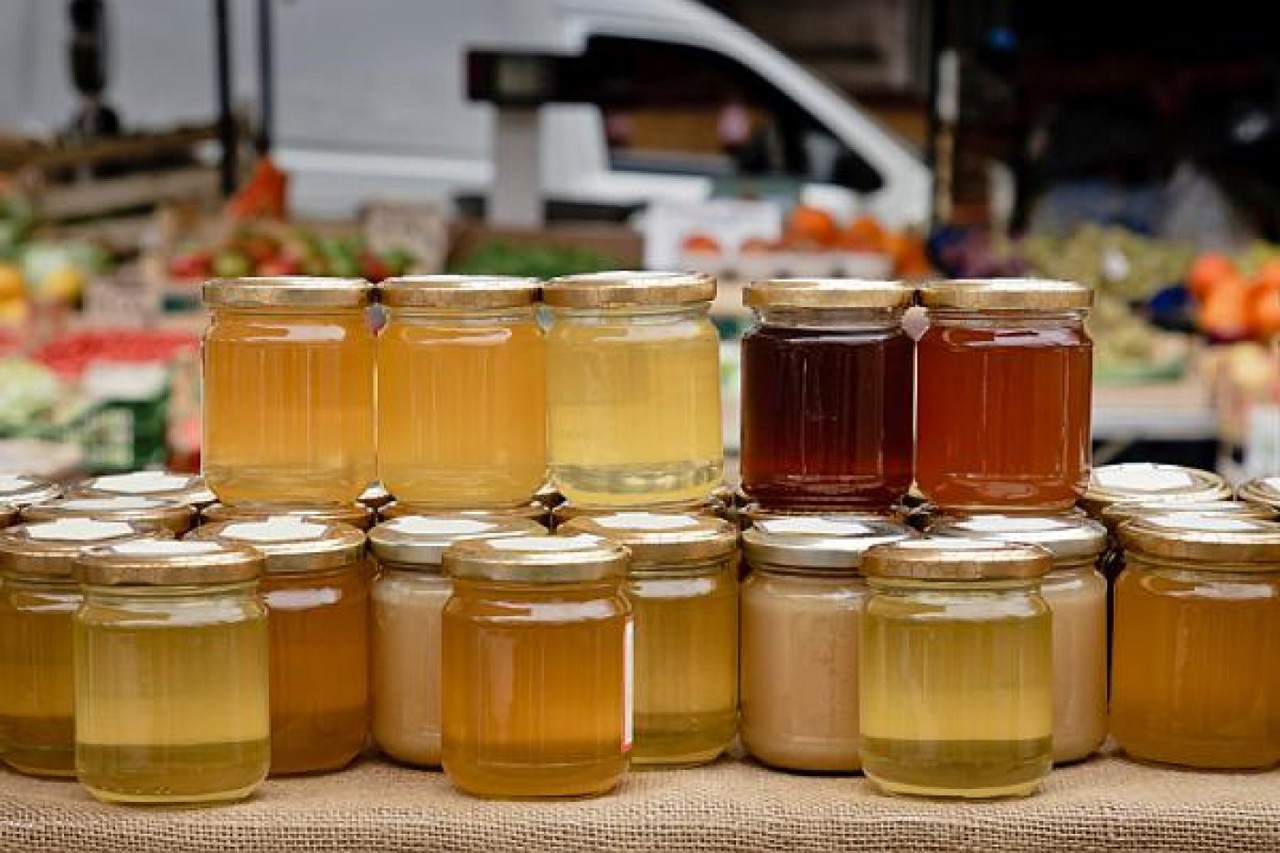
The Republic of Moldova exports nearly 13 times less honey to the European Union than Ukraine, yet secures an average price per kilogram about 25% higher. This disparity has persisted over the last nine years, according to an analysis of Eurostat data conducted by economist Ghenadie Ivașcenco. However, the expert cautions that higher prices do not automatically translate into higher earnings for Moldovan beekeepers, since a large portion of the honey continues to be exported in bulk.
In 2025, Ukraine supplied over 53,000 tons of honey to the European market at an average price of 2.04 euros per kilogram. The Republic of Moldova exported 4,140 tons at an average price of 2.55 euros per kilogram, according to an economist's calculations.
These differences are also evident in markets where the two countries compete directly. In Romania, Moldovan honey was imported at an average price of 2.54 euros per kilogram, compared to 2.04 euros for Ukrainian honey. In Italy, the figures were 2.77 versus 2.15 euros per kilogram, and in France, 2.53 versus 1.87 euros per kilogram.
However, these differences do not necessarily prove that honey produced in the Republic of Moldova is of better quality, notes Ghenadie Ivașcenco, an economist and economic development consultant. In an analysis published on Facebook, he explains that average prices can be influenced by the variety, packaging, destination market, and commercial terms.
“Acacia or linden honey, sold in jars, cannot be directly compared to sunflower honey exported in bulk. The varieties, packaging, destination markets, and commercial terms all influence the statistical average. A higher price does not automatically mean superior quality,” the economist explains.
Moldova has a commercial advantage, but no guarantee of higher profits
Competition with Ukraine will remain intense, given that the European Union has set an annual quota of 35,000 tonnes of honey that can be imported from that country duty-free. For quantities exceeding this limit, a 17.3% customs tariff applies.
In contrast, the Republic of Moldova enjoys access to the European market for honey with no quotas and no customs duties. The economist considers this a significant commercial advantage, yet insufficient to ensure greater profitability for the sector as a whole.
The core issue is that a substantial portion of the product's value is generated only after the honey leaves the Republic of Moldova—through processing, packaging, distribution, and marketing.
“A higher average export price does not necessarily translate into higher profits for exporters or better earnings for beekeepers. Statistics do not reveal how value is distributed along the value chain,” argues Ghenadie Ivașcenco.
Proposed solution: Joint exports and value-added products
To better leverage the Republic of Moldova’s position in the European market, the economist proposes that producers and exporters join forces within a macro-cluster dubbed “Honey of Moldova.” This model entails consolidating export volumes, making joint investments in quality and traceability, developing proprietary brands, and negotiating directly with major international buyers.
Such a reorganization would enable the sector to overcome the challenges posed by fragmented exports. Currently, production is fragmented among relatively small operators, who cannot always supply the quantities requested by large European companies.
New European Union requirements on the authenticity and traceability of honey could create additional opportunities for producers who can demonstrate the origin and quality of their products. However, according to the economist, the Republic of Moldova's goal should not be merely to increase export volumes or maintain a price point higher than Ukraine's.
"The real challenge for Moldova is not to sell honey at a higher price than Ukraine but rather to create and retain more value within its own economy," states Ghenadie Ivașcenco.