Deputy speaker: Tofan cabinet's administrative overhaul needs time
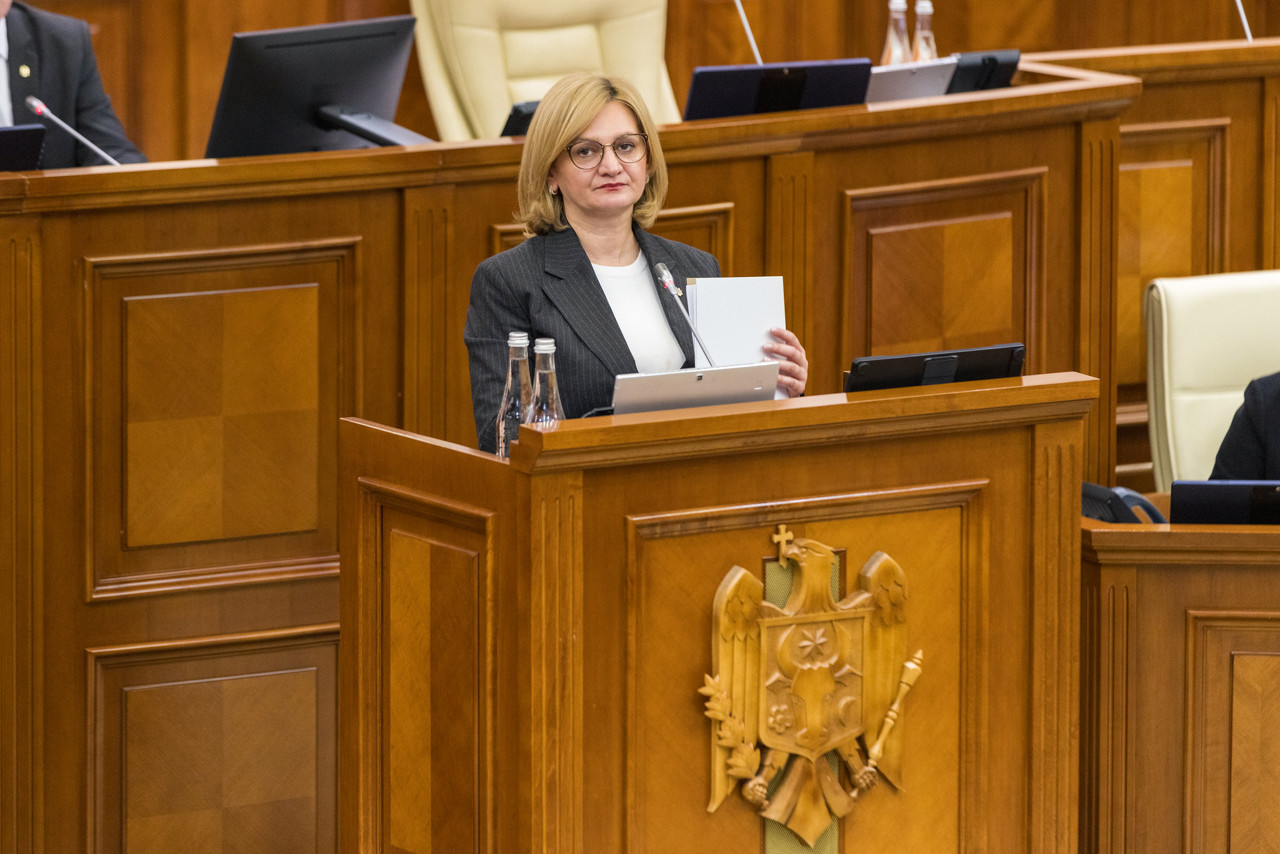
Moldova's administrative overhaul has progressed slower than expected during Prime Minister Vasile Tofan's first 100 days in office, Deputy Speaker Doina Gherman said in an interview with investigative outlet CU SENS.
Gherman, who also serves as vice chair of the ruling Action and Solidarity Party (PAS), noted that the measures announced by the prime minister remain on the government's agenda despite taking longer to implement.
“I probably had higher expectations regarding the streamlining of the administrative apparatus,” said Gherman, referring to the pace of public sector efficiency reforms. “I thought that ‘chainsaw’ he spoke about would take effect much faster, though that is not necessarily a bad thing.”
She described Tofan as “a prudent and very calculated man,” adding that the reforms have not stalled and remain in preparation.
Despite the slower pace on bureaucracy cuts, Gherman gave a positive overall assessment of the cabinet's performance. She highlighted Tofan's leadership, public outreach, and focus on economic development and foreign investment.
“He brought new energy and was like a breath of fresh air for us as a governing party,” said Gherman. “He has significantly improved the government's visibility, which is encouraging. In my view, he has proactive and very strong communication.”
Scope of the central administration overhaul
The central government restructuring plan previously announced by Tofan targets roughly 161 public institutions employing about 52,000 people. The initiative envisages staff reductions of 10% to 30%, depending on the institution, alongside the merger of agencies with overlapping mandates or small headcounts.
Ministries have been tasked with identifying cost-cutting measures and submitting restructuring proposals. Officials say the overhaul aims to curb administrative spending and improve budget efficiency amid fiscal pressures and social support costs.
Local governance map and 2027 timeline
Separately, a proposed local public administration reform would replace Moldova's 32 districts with three larger regions: North, Center, and South. Under the concept presented on October 1, Chișinău and Bălți would retain their distinct municipal status, the Gagauzia autonomous region would remain unchanged, and the Taraclia district would become a second-tier municipality.
The reform also plans to consolidate town halls and shift greater competencies and financial resources to local authorities ahead of the 2027 general local elections. Proposals under discussion include a minimum threshold of 3,000 residents per municipality to strengthen local capacity to deliver public services.
Presenting his cabinet's 100-day report, Tofan acknowledged that several policy goals will require more time and that the impact of structural changes will only become visible in the coming years. The prime minister gave his cabinet a seven out of ten, citing ongoing challenges in crisis management.
Translation by Iurie Tataru
RELATED COVERAGE
- Moldova mulls cutting 32 districts into 3 regions
- Moldova unveils 19 priority projects under €1.9B EU plan
- Moldova outlines mandatory municipal mergers and fiscal decentralization
- Moldova's Tofan government targets EU integration and reform
- PROFILE | Vasile Tofan: From Horizon Capital to Government reform