Moldova advances plan to cut 32 districts into three regions

Moldova's cabinet will review draft legislation on Wednesday, November 25, to overhaul local public administration and redistribute powers between town halls and regional bodies before sending the package to Parliament.
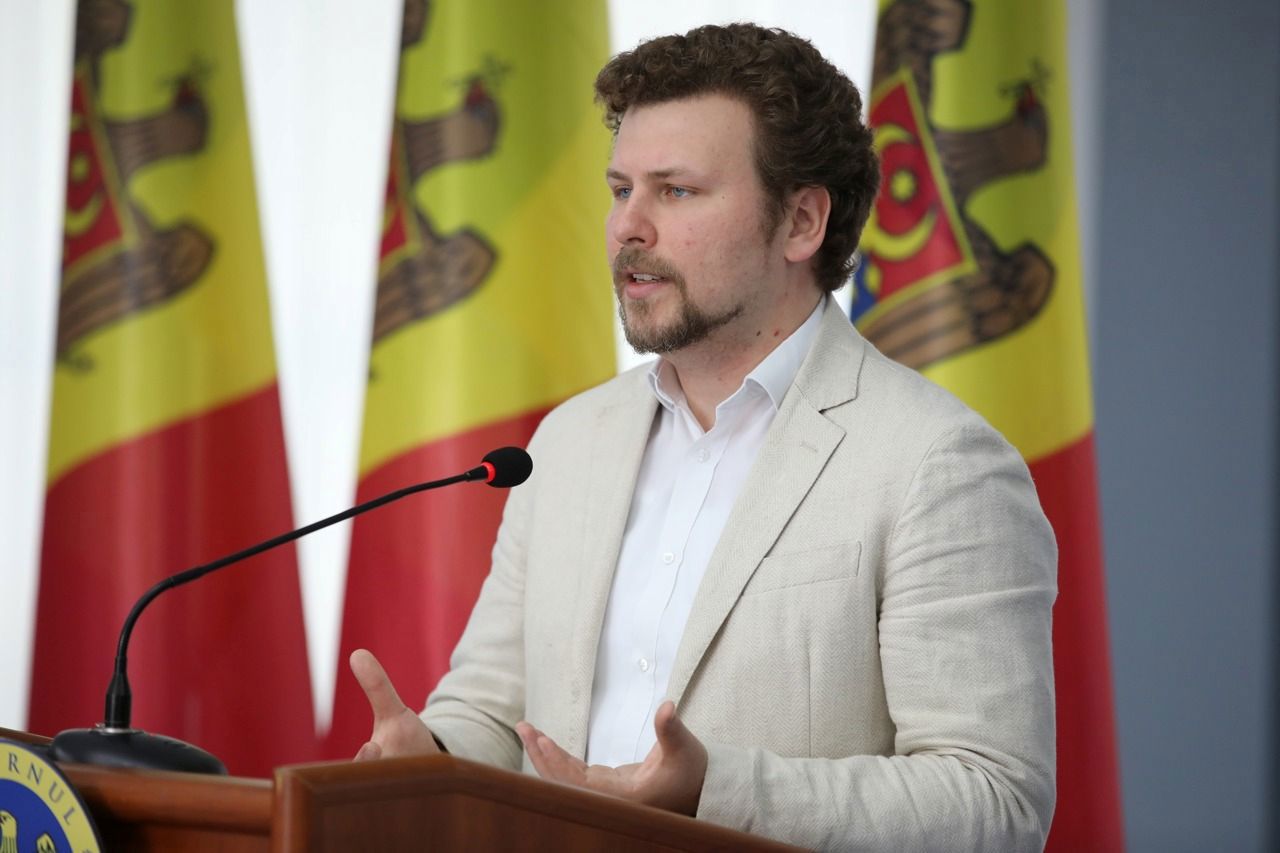
Government Secretary General Alexei Buzu will brief reporters on the legislative package ahead of the cabinet session. Experts say the reform aims to reduce administrative fragmentation, improve public services, and strengthen local authorities' capacity to absorb European Union funds.
New administrative map and €173.6 million fund
The government's proposal reduces the number of town halls to 273 and consolidates Moldova's 32 districts into three regions: North, Center, and South. The new administrative structure is scheduled to take effect with the 2027 general local elections.
The municipalities of Chisinau and Balti will retain their current status, while the Autonomous Territorial Unit of Gagauzia will preserve its special autonomous status. The southern district of Taraclia will be reorganized into a second-tier municipality to reflect the ethnic and cultural identity of its Bulgarian community.
To support investments in voluntarily amalgamated localities, the government has announced a €173.6 million (approx. 3.49 billion MDL) investment fund.
Consultations and legislative vetting
Public consultations began on October 28 across every district, covering two core bills: one defining the competencies of first- and second-tier local public authorities, and another governing voluntary amalgamation and territorial organization. Discussions brought together mayors, local councilors, civil society groups, political parties, and local authority associations, Diana Chiriac, head of the Local Public Administration Directorate at the State Chancellery, said on Radio Moldova's "Zi de Zi" program.
The draft bills have cleared procedural, legal, and anti-corruption reviews, including vetting by the National Anticorruption Center (NAC).
“We plan to place them on the government's agenda this week first and then submit them to Parliament as soon as possible. In principle, we aim for this to happen this very week,” said Chiriac.
Addressing local representation concerns
Local representation emerged as one of the most debated topics during consultations. Some residents worry that merging localities will leave smaller communities without their own mayor and weaken direct ties with local officials, while others fear having to travel to new administrative centers to obtain documents or public services, Chiriac noted.
“The very purpose of this reform was to bring services closer to people,” said Chiriac. “The stronger a town hall is, the greater its capacity. First, that means a dedicated team; second, it means digital services in every locality within that municipality; and third, it means financial resources.”
Regional context and EU precedent
Across Europe, territorial restructuring typically seeks to curb fragmentation and build administrative units capable of delivering services more efficiently, noted Victor Giosan, a former European Union high-level adviser to Moldova on local public administration reform. Speaking on public television, Giosan pointed out that neighboring Romania has yet to carry out a comparable territorial overhaul.
“Moldova is currently about 15 years ahead of Romania in terms of administrative-territorial reform. Over the past 15 years, very well-founded studies have been conducted here on how to achieve what Romania lacks. Strictly from this perspective, Moldova cannot learn from Romania's example, but rather the reverse,” said Giosan.
Translation by Iurie Tataru
RELATED COVERAGE
- CALM welcomes €173m fund for merged Moldovan localities
- Moldova mulls cutting 32 districts into 3 regions
- Moldova debates local power reform as districts face merger
- Moldova merges 561 mayoralties in major local government reform
- Moldova outlines mandatory municipal mergers and fiscal decentralization