Maia Sandu denies discussing Moldova's federalization in Ukraine war negotiations
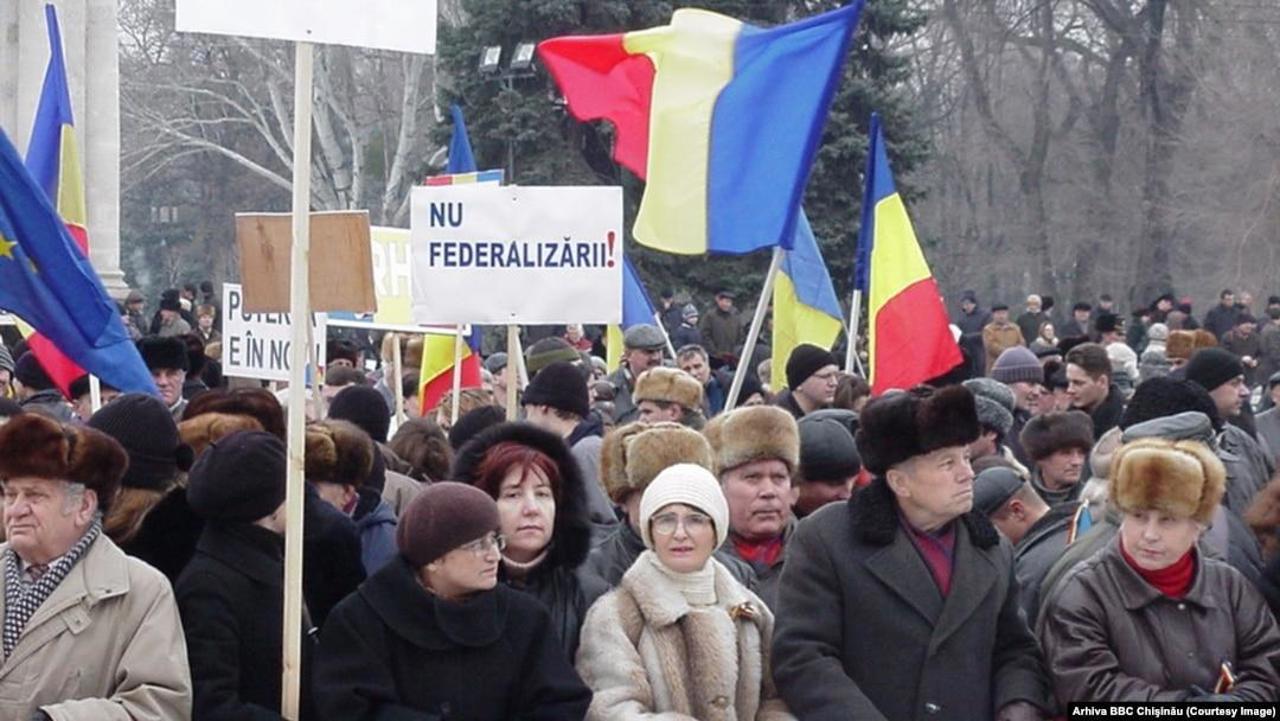
President Maia Sandu has dismissed reports that Russia is seeking to include the federalization of the Republic of Moldova in discussions on ending the war in Ukraine. She said no official source involved in the talks had confirmed the scenarios and stressed that the country's territorial integrity is not up for negotiation.
President Maia Sandu has dismissed reports circulating in the public sphere about a purported “roadmap” proposed by Moscow that would envisage the federalization of the Republic of Moldova into three entities: the Republic of Moldova, the Gagauz Autonomous Territorial Unit, and the Transnistrian region. According to these reports, the entities would be granted the right to hold independence referendums if the Republic of Moldova joined the European Union, following the Kozak Memorandum model.
“This has not been discussed; therefore, the information has not been confirmed by any source among those who participated in these discussions. Of course, it would not come as a great surprise if, at some point, the Russians were to propose such a thing, given that they clearly lack respect for states in the region and beyond. We could, with equal justification, suggest that they hold a referendum in Chechnya,” the President said during a show on Jurnal TV.
Maia Sandu assured that international partners firmly support the sovereignty and internationally recognized borders of the Republic of Moldova, ruling out any possibility of the country's status becoming a subject of negotiation.
“Everyone, with the exception of Russia, respects the territorial integrity of the Republic of Moldova. There is simply no way our status could end up on the negotiating table,” the head of state concluded.
Russian and German media reported that, according to sources involved in trilateral negotiations between Russia, Ukraine, and the U.S.—held in Abu Dhabi on November 11–12 regarding an end to the war in Ukraine—Moscow allegedly proposed transforming the Republic of Moldova into a federal state, composed of Moldova proper, the Transnistrian region, and the Autonomous Territorial Unit of Gagauzia.
Furthermore, should the Republic of Moldova join the European Union, referendums on the independence of these territories would be held.
In exchange, Russia would agree to withdraw its troops from the left bank of the Nistru, provided that the Republic of Moldova adopts a status of military non-alignment.
The idea of federalizing the Republic of Moldova is not new. One of the most well-known proposals was the 2003 Kozak Memorandum, which envisioned transforming the country into an asymmetric federation consisting of three entities: the Republic of Moldova, the Transnistrian region, and Gagauzia.
The document, drafted by Dmitry Kozak—then deputy chief of the Kremlin’s Presidential Administration—stipulated a bicameral parliament in which representatives from the Transnistrian region and Gagauzia would have held significant weight. The proposed structure would have granted representatives from Tiraspol the ability to influence decisions at the federal level. The memorandum also provided for the continued presence of Russian troops on the territory of the Republic of Moldova for an extended period.
Initially, the president at the time, Vladimir Voronin, supported the proposal and was set to sign it in November 2003 in the presence of Russian leader Vladimir Putin. At the last moment, however, Voronin backed away from signing amid opposition protests and discussions with representatives of Western partners. Putin’s visit to Chișinău was cancelled, and the memorandum was never signed.
Vladimir Voronin later acknowledged that the Republic of Moldova would have lost its independence had he signed the "Kozak Memorandum."
After becoming president in 2016, Igor Dodon continued to advocate for a federal solution to the Transnistrian issue. He also pushed to expand Gagauzia’s powers as part of potential constitutional reform.