Marcel Spatari: Moldova relies on Black Sea gas and Romania’s support for EU accession
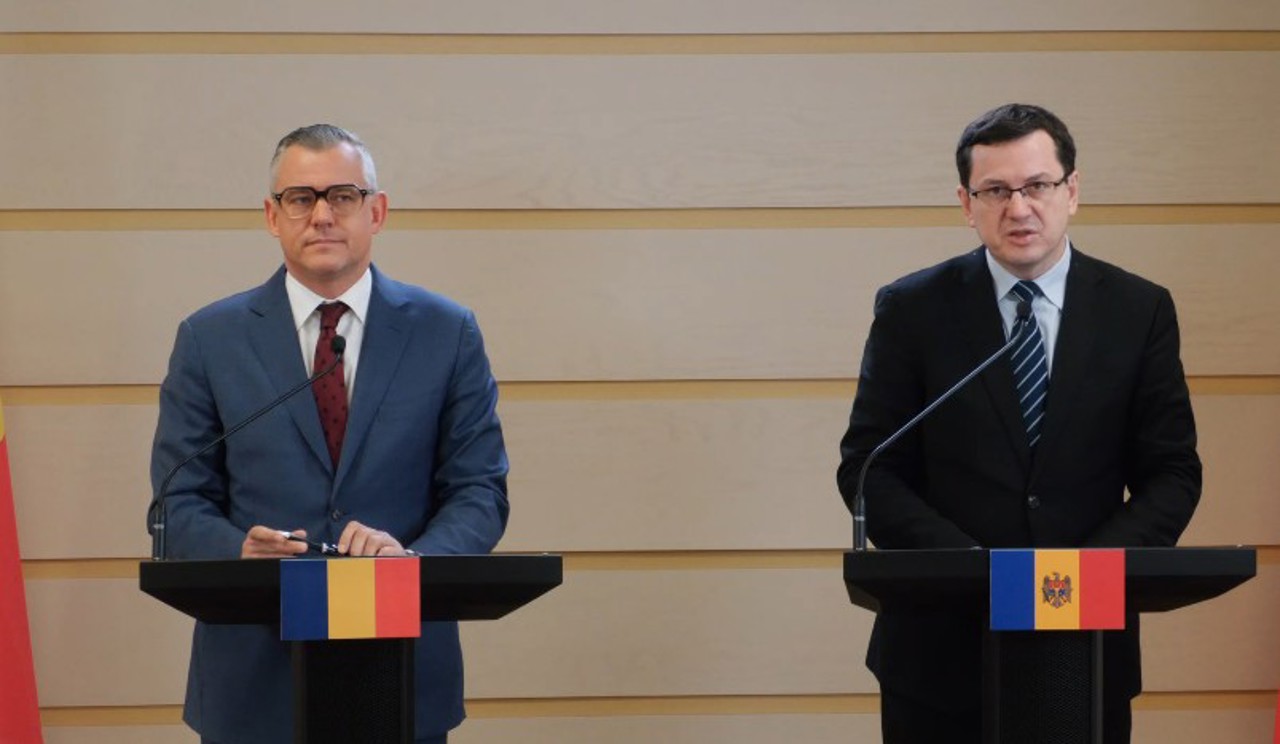
The Republic of Moldova is counting on natural gas to be extracted by Romania from the Black Sea, starting in 2027, as well as on the development of electricity interconnections with its neighbor, to strengthen its energy security. Marcel Spatari, chair of the parliamentary Committee on Economy, Budget, and Finance in Chișinău, made these statements after a joint meeting with members of the Committee on Energy, Energy Infrastructure, and Mineral Resources of the Romanian Senate.
Natural gas to be extracted from the Black Sea as part of the Neptun Deep project—developed in Romania—represents an opportunity for the Republic of Moldova to diversify its supply sources, emphasized Marcel Spatari. Extraction from these deposits is set to begin in 2027 and could contribute to strengthening energy security across the entire region.
"We have high hopes regarding the volumes of gas that will come from Black Sea operations through the Neptun Deep project," stated Marcel Spatari during a press conference held on Thursday, November 26, alongside István-Loránt Antal, Chairman of the Committee for Energy, Energy Infrastructure, and Mineral Resources in the Romanian Senate.
Another topic addressed during the meeting concerned the development of electricity interconnections with Romania. In this context, Marcel Spatari highlighted the importance of the recently commissioned Vulcănești–Chișinău high-voltage power line, which will enable the diversification of electricity supply sources and, in the future, even facilitate electricity exports.
Two other strategic projects are the Strășeni–Gutinaș and Suceava–Bălți power lines, which will increase the interconnection capacity between the two states' power systems.
Beyond developing energy infrastructure, the Republic of Moldova also counts on Romania's support in its process of acceding to the European Union. Parliamentarians from Chișinău and Bucharest discussed, in particular, the status of preparations for negotiations regarding Chapter 15 – "Energy."
This topic was addressed in the context of the Republic of Moldova being invited—on November 20, following the approval of the screening results for clusters IV and V—to present its negotiating positions.
According to Marcel Spatari, the Republic of Moldova has already fulfilled more than two-thirds of the 130 commitments and actions agreed upon with the European Commission in the energy sector.
"Regarding Chapter 15 – Energy, we are already quite advanced in the technical negotiations. We have established, together with the European Commission, a list of 130 commitments and actions that we must fulfill as a candidate country for accession. To date, more than two-thirds of these actions have already been completed. We hope that official negotiations for Chapter 15 will begin soon, and we look forward to Romania's support. We are convinced—that we will have Romania's support, and specifically that of the Romanian Parliament and Senate, throughout the negotiation process. There are three dimensions that we need to work on in the near future," noted Marcel Spatari.
Suceava–Bălți power line could be completed ahead of schedule
István-Loránt Antal, Chair of the Energy Committee in the Romanian Senate, reaffirmed Bucharest’s readiness to support the Republic of Moldova’s European path, including by strengthening parliamentary cooperation and promoting joint legislative initiatives. The Romanian senator noted that the Strategic Partnership for the European Integration of the Republic of Moldova, signed in 2010, laid the foundation for bilateral relations, including in the energy sector.
"We believe in the importance of parliamentary diplomacy. In essence, parliamentary diplomacy is an institution that can—and must—support intergovernmental efforts. Through laws and legislative acts, we can introduce initiatives to establish a framework for cooperation between the two states and contribute, unequivocally, to the Republic of Moldova’s journey toward accession to the European Union," stated István-Loránt Antal.
The senator also highlighted Romania's role in strengthening regional energy security once natural gas extraction from the Black Sea begins.
"Through the Neptun Deep project, Romania will become the largest natural gas producer; in this new context, Romania will serve as a provider of energy security for the Republic of Moldova—and, naturally, for the entire region as well," affirmed István-Loránt Antal.
Another topic the Romanian senator addressed was accelerating construction work on the Suceava–Bălți electricity interconnection line. István-Loránt Antal stated that, following discussions with the CEO of Transelectrica, there is a possibility of shortening the 24-month timeframe originally set for the project's completion.
"Transelectrica is keen to see this line completed as quickly as possible," the senator said, noting that the order to commence construction work had been issued just before the press conference.
Finally, István-Loránt Antal proposed the establishment of a corresponding committee within the Parliament of the Republic of Moldova to strengthen parliamentary cooperation in the energy sector. This body would work directly with the Energy Committee of the Romanian Senate, particularly in reviewing public policy documents and aligning energy-related legislation with European standards.
A delegation from the Senate of Romania is visiting Chișinău from November 24 to 26, with discussions focusing on energy security. The delegation from Bucharest held meetings with representatives of key institutions and companies in the energy sector, including Moldelectrica, the National Energy Regulatory Agency, Energocom, Vestmoldtransgaz, and the Energy Market Operator (OPEM).
At the end of October, Minister of Energy Dorin Junghietu emphasized that for the Republic of Moldova, regional cooperation—particularly with Romania and Ukraine—is not merely a strategic choice, but an economic and security necessity. During the "Energy transition agenda – regional approach" conference, held on October 22 in Chișinău, the Minister stated that the experience of recent years has shown that energy security cannot be achieved in isolation, and that the transition toward a modern, competitive energy system extends beyond national borders.