Moldova links shared EU path with Romania to 1918 union legacy
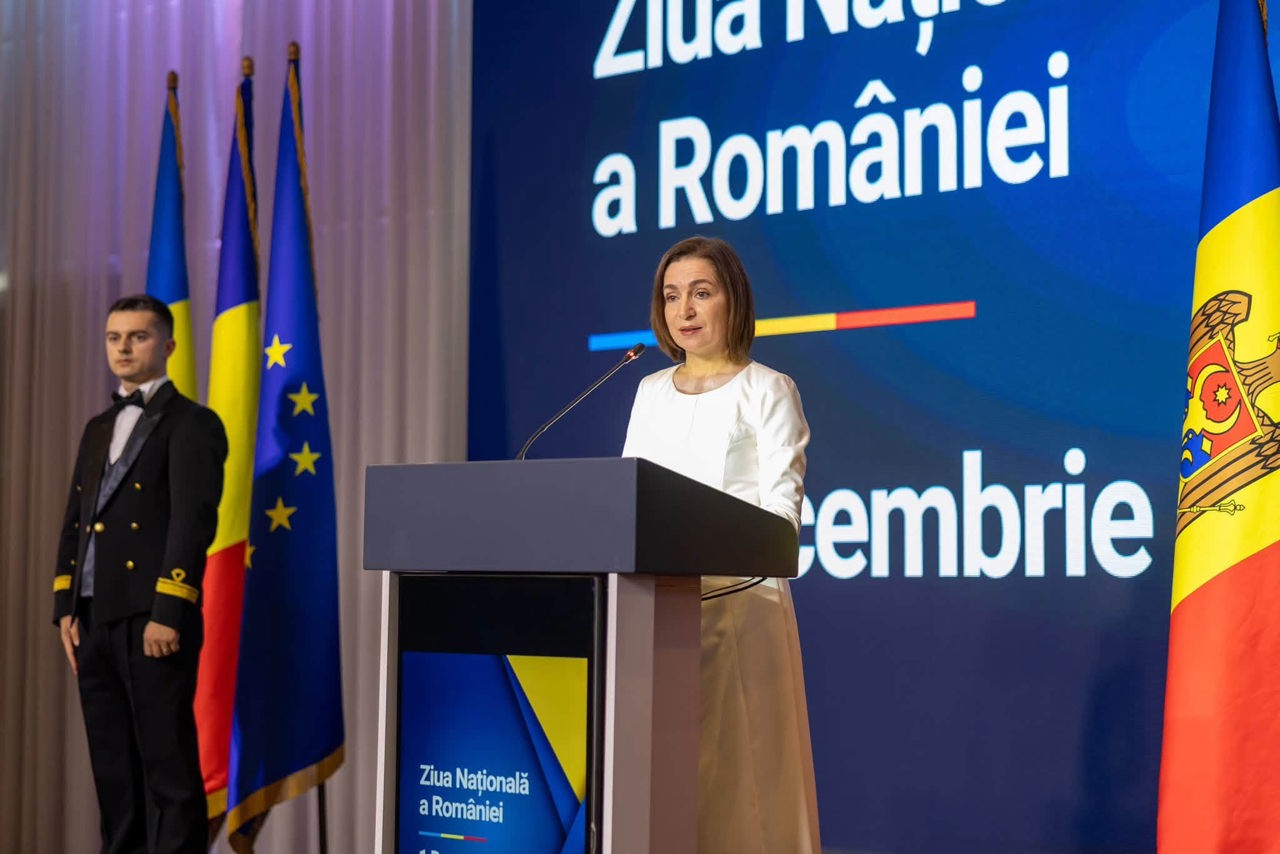
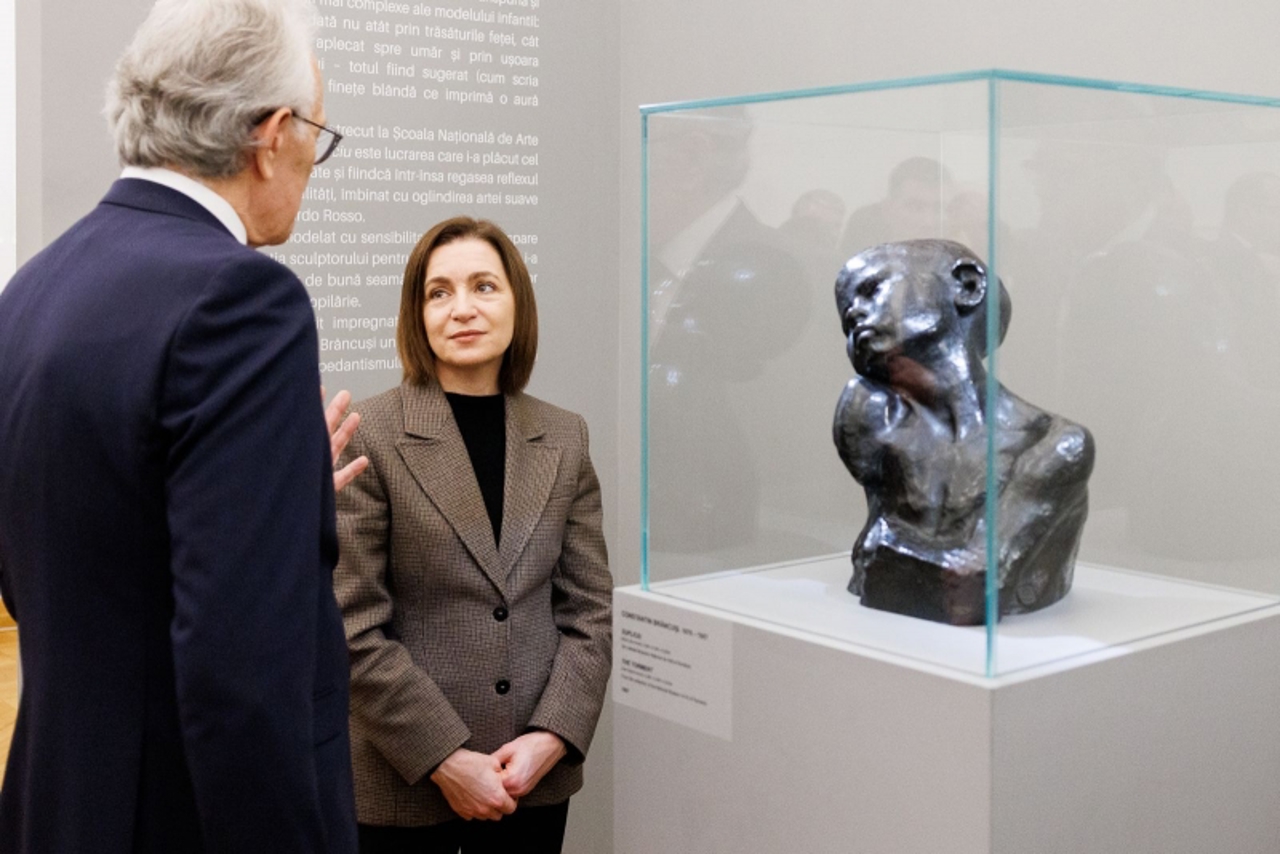
Moldovan President Maia Sandu said a shared European future with Romania can fulfill the 1918 Great Union's ideals, speaking at a Romanian Embassy reception in Chisinau marking Romania's National Day, Moldpres reported.
Addressing diplomats and officials, Sandu highlighted the historical weight of the 1918 union and the sacrifices made by earlier generations. She noted that those decisions made it possible to gather today in democracy and speak Romanian in Bucharest, Alba Iulia, and Chisinau.
“What they chose back then made our gathering today possible, in democracy, in the Romanian language, and not only in Bucharest or Alba Iulia, but also in Chisinau,” said Sandu. “What we choose today will define where the Romanian people will stand 100 years from now.”
EU progress and shared history
Sandu recalled that the 1918 union was followed by Soviet occupation in present-day Moldova and communist rule in Romania. During that era, both societies endured similar hardships, and residents on the Moldovan side of the Prut River viewed Romania as a forbidden territory.
She pointed to Romania's economic transformation since joining the European Union in 2007, noting that its GDP per capita rose from about 40% of the EU average to roughly 80% today. Sandu also credited Bucharest's backing for helping Moldova advance toward EU membership by the end of the decade.
“The ambitious plan, almost unbelievable a few years ago, to be ready for accession by the end of this decade is taking shape, including in official European Union documents,” said Sandu. “Such progress may not be what the Union generation imagined, yet it is certainly one worth celebrating.”
She added that mutual support remains essential to both nations' European trajectory. “As long as Moldova and Romania continue to take pride in and help each other, our shared European future will be just as the creators of the 1918 Union envisioned it: in freedom, civic dignity, and Romanian identity,” said Sandu.
Concrete projects and regional resilience
Romania's Ambassador to Moldova, Cristian-Leon Turcanu, said the bilateral partnership must extend beyond shared history and culture into concrete projects across energy, infrastructure, investment, education, and culture.
“We have unresolved matters, commitments to fulfill, and opportunities to seize,” said Turcanu. “We must deliver tangible results across every area of our common and bilateral agenda so that we become a European example of unity.”
The envoy dismissed criticism from Moscow as confirmation that Bucharest and Chisinau are moving in the right direction. “A shared future is not proclaimed or declaimed. It is chosen, embraced, and built. And as long as voices from the Kremlin criticize us relentlessly, both Bucharest and Chisinau know we are on the right path,” said Turcanu.
Turcanu also addressed the legacy of Soviet-era monuments in Moldova, contrasting imperial symbols with shared cultural heritage. “True values must stand on the pedestal, not Soviet tanks. And if Mihai Eminescu, Romania's national poet, stands today in Balti next to a cold red star, we know that is not our star,” said Turcanu.
He stressed that strengthening resilience and defense capabilities remains a priority for both states. “The sky above us must remain a horizon of freedom, not of fear or aggression,” said Turcanu. “True strength is not asserted through threats, but through the capacity to protect.”
Parliament tribute and Bucharest military parade
Moldova's Parliament also marked Romania's National Day on November 27, when lawmakers applauded a message from Parliament Speaker Igor Grosu thanking Bucharest for its sustained support.
“Let us say Happy National Day, Romania, and thank it for everything it does for the Republic of Moldova,” said Grosu.
Additionally, 20 soldiers from Moldova's National Army will march in the December 1 military parade at Bucharest's Arch of Triumph Square. Moldovan troops have joined the annual parade since 2014, pausing only during pandemic-related restrictions.
Translation by Iurie Tataru
RELATED COVERAGE
- Maia Sandu on Romania's National Day: “The Republic of Moldova and Romania, united under the flag of the European Union, will be stronger”
- Moldovan military joins Romania's National Day parade
- Romania National Day: High-altitude anthem and military parade
- Maia Sandu: Moldova faces brutal war pressure, needs EU
- December 1 - Romania's National Day. Maia Sandu: Romania is loved in the Republic of Moldova