Moldova needs 7-10% annual economic growth, expert warns against low state revenue
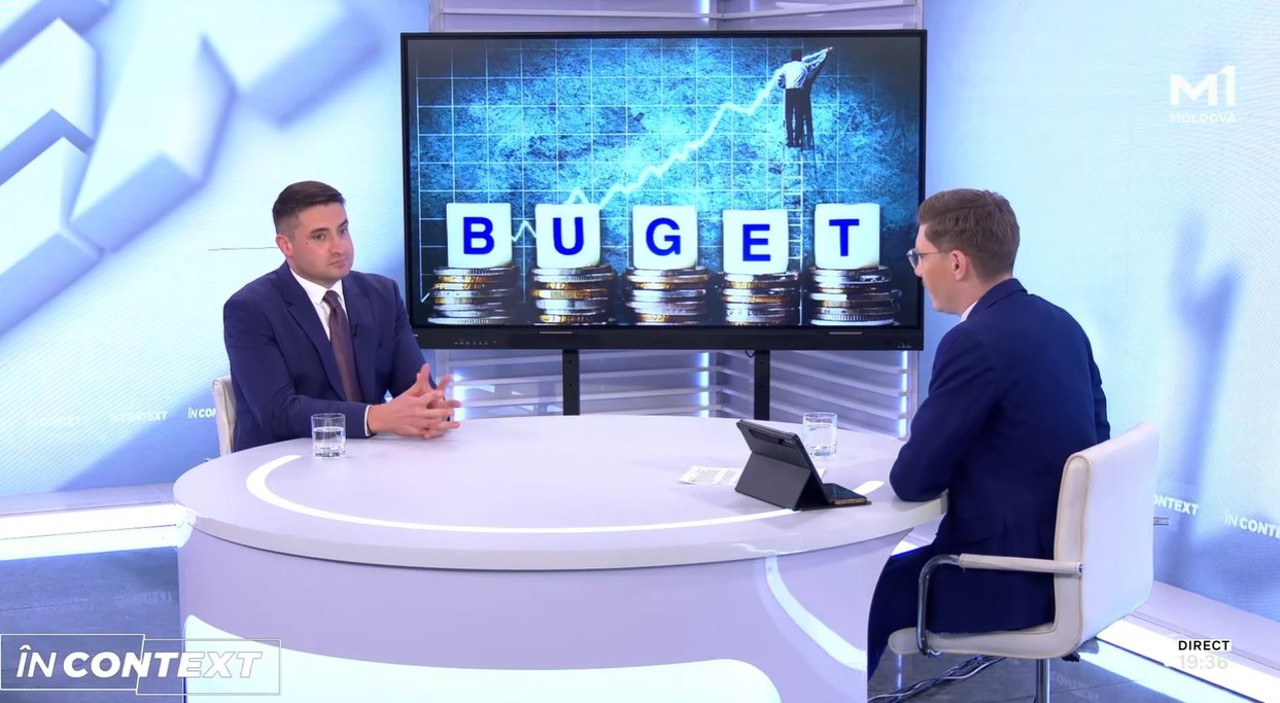
The Republic of Moldova’s economy remains highly vulnerable due to a slow pace of economic growth, currently estimated at just 2.4% for the next year, warns Marin Gospodarenco, the Executive Director of the Economica Analytical Center.
The expert contends that current budget projections are insufficient to meet the country’s real needs and urgently recommends new policies focused on significantly increasing state revenues.
"Moldova needs a 7-10% annual increase just to cope with its current socioeconomic challenges. Therefore, we must roll up our sleeves and substantially increase the revenues of the national budget," Gospodarenco stated on national television.
He argues that, ideally, the total Moldovan budget should be doubled or even tripled.
Gospodarenco pointed out a major gap in state spending effectiveness: "If the state invests approximately $55 million (one billion lei) in infrastructure like roads, hospitals, and kindergartens, the multiplier coefficient should bring at least $66 million (1.2 billion lei) back into the economy. The problem is that implementation remains a significant challenge in the Republic of Moldova."
He noted the current budget of approximately $4.4 billion (80 billion lei) is "very small for the Republic of Moldova."
Record Deficit Fuels Public Debt
Gospodarenco also issued a strong warning about the necessity of borrowing to cover a significant gap in state finances, which inevitably leads to an increase in public debt.
"What defines a deficit? Revenues are simply smaller than expenses. For the first time in the history of the Republic of Moldova, we face a deficit of approximately $1.15 billion (21 billion lei)," he explained. "This means we cannot cover our planned expenses and are forced to borrow. When we borrow, public debt increases."
The economic analyst advocates for creating domestic value-added through direct investment, rather than relying primarily on external finance.
"We currently rely on external debt, borrowing heavily from the European Union, the IMF, and the World Bank. That's the primary direction we're going. Therefore, we must actively create added value within the Moldovan economy. Investments exist, but they are insufficient," Gospodarenco cautioned.
According to the expert, key mechanisms for budget growth are strengthening the Tax Authority and the Customs Agency. "If we only see tiny increases in the national budget, it signals severe shortcomings in the effectiveness of these two key revenue dimensions," he concluded.
Context on the 2026 Budget
The Moldova budget for 2026, recently approved by the Government, forecasts revenues of approximately $4.4 billion (79.6 billion lei) and expenditures exceeding $5.5 billion (100.5 billion lei). This leaves the budget deficit for 2026 at $1.15 billion (20.9 billion lei), which represents 5.5% of the country’s GDP. The total deficit constitutes a fifth of the planned expenditures.
The largest planned expenditure categories include: over $165 million for economic development, nearly $35.3 million for public order, over $34.7 million for education, nearly $32.5 million for healthcare, and about $20.4 million for environmental protection.
Investment expenditures specifically target: $60.6 million for small and medium-sized enterprises, $25.6 million for agricultural and rural development, and $10.7 million for Moldova's state-owned railway company.
Translation by Iurie Tataru