Minister of Labor explains why thousands of applicants were denied heat compensation
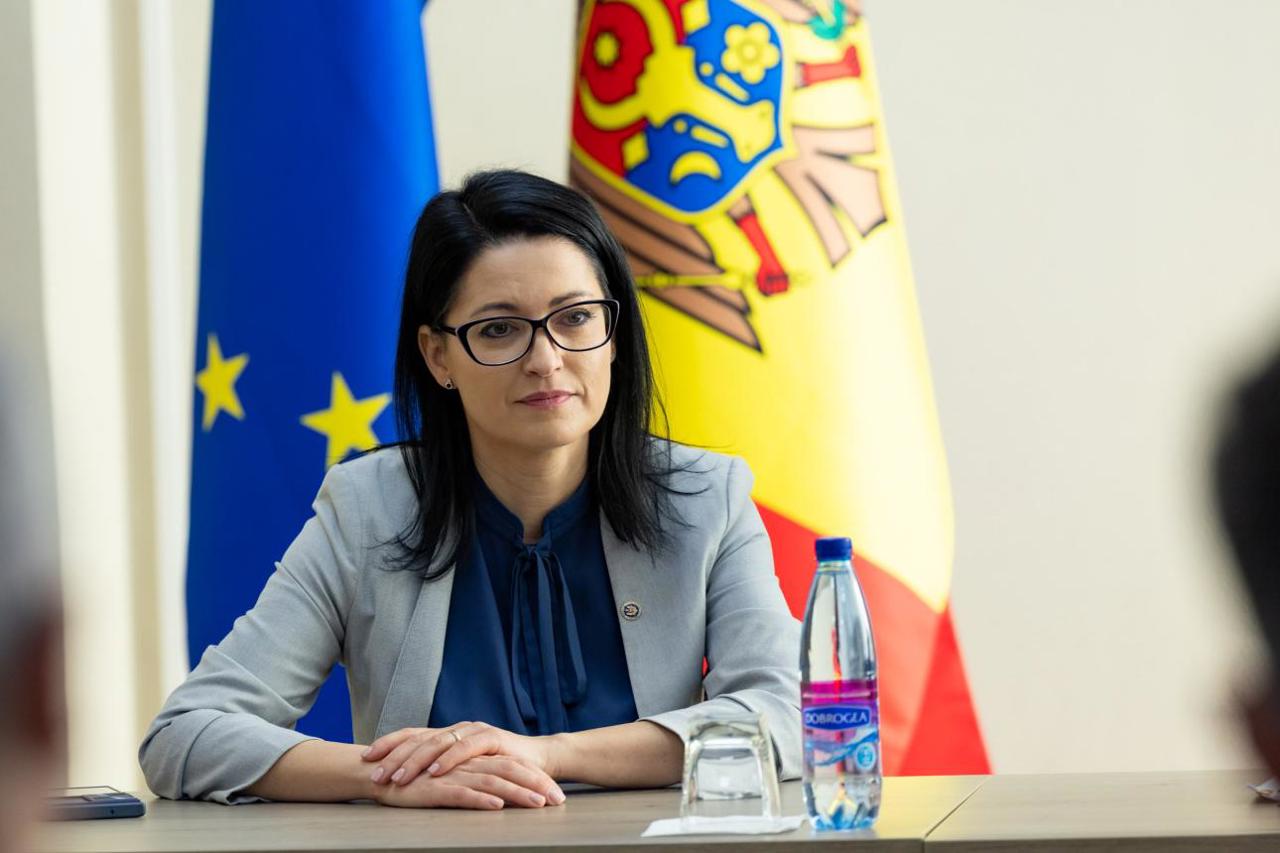
Undeclared income, inconsistencies in declarations, and interests exceeding 4,000 lei are the primary reasons why tens of thousands of households will not receive compensation through the "Help at the Meter" program during the 2025-2026 cold season. According to Natalia Plugaru, the Minister of Labor and Social Protection, the decrease in the number of beneficiaries this year does not indicate an improvement in living standards; rather, it reflects a more thorough review of applications.
"Most of those disqualified indicated higher incomes, but still wanted to benefit from compensation, or did not declare all their income. Then, our system checked with the Tax Service and the banks to connect with these systems and see the real income of the population. We wanted to offer compensation to as many people as possible. Because it's not just about paying bills. It's also about other expenses that vulnerable families and those with low incomes certainly have. And we wanted to offer this support", explained the minister on a TV8 show.
Natalia Plugaru reiterated that the decrease in the number of eligible households is not related to a possible increase in the population's well-being, but to the adjustment of the eligibility criteria, intended to direct support to the most vulnerable.
"The goal was to help the population overcome these price increases, especially during the cold season. Once we grant these compensations, our goal is to target the most vulnerable groups with the lowest incomes. (...) That is why, every year we have tried to adjust the criteria to reach the most vulnerable groups. We are talking about pensioners, people who have a severely disabled person in their household, who automatically qualify, we are talking about families with many children", the official listed.
In the process of assessing eligibility, not only declared incomes are analyzed, but also the assets owned by households. Among the basic criteria are the property's value, electricity and gas consumption, and bank interest rates, explained Natalia Plugaru.
"The compensation value is established individually for each household, we do not have the compensation value offered similarly to everyone, but depending on the individual situation. And when, initially, the person, to qualify, must pass the basic criteria: when the value of the property does not exceed a certain amount, when the electricity or gas consumption does not exceed a certain value, bank interest. First, we apply these filters to determine whether the household qualifies. Because we are talking not only about income, but also about the assets that the household owns. After that, the person's income is analyzed and each case is established individually", said Plugaru.
Referring to the residents of the left bank of the Nistru, the minister said that, within the framework of the "Help at the Meter" program, the same criteria apply to all citizens of the Republic of Moldova, regardless of region. She recalled that, in previous years, differences arose from the rules imposed by the so-called Tiraspol administration.
Authorities want to break the “circle of dependence on temporary allowances”
Also, the electricity compensation, automatically granted in the bill for the first 110 kWh, represented a temporary measure, financed from European funds for a period of one year, the minister was keen to point out in the same broadcast. The last electricity compensation will be paid for November, and from December this form of support will no longer be applied.
"I want to remind you that these compensations began to be paid in February, with the announcement that they would be for a period of one year, because the funds for these compensations came from the European Union. These are funds granted by our partners and donors for a fixed one-year period. It was offered to everyone as a temporary measure and, starting next year, we will have to focus on implementing measures that lead to economic growth. As we were discussing, the budget that was approved, the state budget, actually has this purpose: to start breaking this circle of financial dependence of families on temporary benefits and allowances to cover certain situations, but, in fact, to offer a stable income to the population to cover these bills", concluded the minister.
The Minister of Labor and Social Protection also rejected the perception that the aid and compensations were offered only during the electoral period and stopped later. She stated that state support has not been interrupted, emphasizing that the heating support continues and has been provided since November, with priority for vulnerable people.
According to the minister, social support is not limited to compensation, recalling the recent increase in the minimum wage to 6,300 lei, as part of the Government's efforts to consolidate the population's income.
We remind you that, starting with December 15, beneficiaries of the government energy compensation program "Help at the Meter" can pick up their payments at post offices, based on their ID card, if they have not opted for transfer to a bank or social card.
For the 2025–2026 cold season, over two-thirds of households registered on the compensatii.gov.md platform qualified for financial support. This is about 605,538 households out of the approximately 783,000 that submitted applications, covering over 1.2 million citizens. The total state budget allocated to this program exceeds 2.3 billion lei.
Payments for November are already available. Over 53% of beneficiaries will receive the maximum compensation – 800 lei for households that heat with solid fuels and 1,000 lei for those that use other energy sources. The rest of the households will receive intermediate amounts or the minimum compensation, of 500 lei. The aid is granted monthly, from November to March.
The majority of beneficiary households heat with solid fuels, followed by those that use natural gas, centralized thermal energy or electricity. Eligibility was established through checks in 12 databases of public and private institutions.
People dissatisfied with the level of energy vulnerability can request an explanation at 0 8000 5000 or at [email protected], and those who did not register on time can submit applications later to be included in the following months.