Beyond borders: Erasmus+ mobilizes thousands in the Balkans to build a European identity
The European Union is investing €26 billion (approx. 509.6 billion MDL) through the Erasmus+ 2021-2027 program to empower youth across the Balkans and the Eastern Partnership.
This strategic funding facilitates academic mobility, vocational training, and intercultural exchanges. It directly shapes the career trajectories of tens of thousands of participants in EU candidate states like Montenegro and Moldova.
Montenegro: Breaking cultural barriers
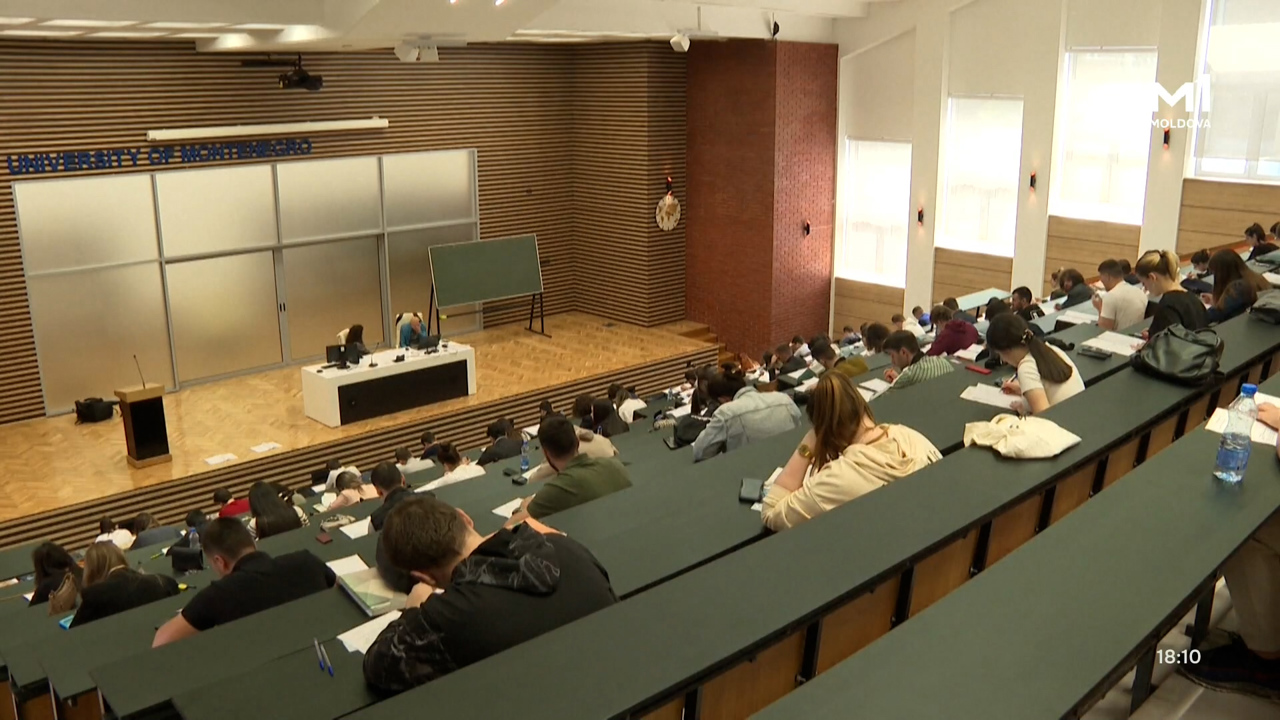
For students in Montenegro, Erasmus+ serves as a transformative pivot rather than a mere academic semester. Alexa Pavićević, a student at the University of Montenegro, spent a semester at Slovakia’s largest technological university in Bratislava.
"All the perceived differences I had back home vanished," Pavićević noted during the Vector European broadcast. He emphasized that these exchanges allow students to return with the initiative needed to influence their local social and academic environments.
The University of Montenegro currently maintains partnerships with 200 European institutions. Over the last decade, 1,500 students have benefited from these scholarships, with one in three participants applying for a second exchange.
Bosnia and Herzegovina: Fostering professional rigor
In Bosnia and Herzegovina, the program often provides the first contact with European professional standards. Selija Žugor, a Tourism Management graduate from Mostar, found that her six months in Córdoba, Spain, fundamentally changed her approach to work.
"My methodology became much more detailed. I began constantly asking how I could apply these standards to impact Bosnia and Herzegovina," Žugor explained.
Academic leaders, such as Jelena Jurčić from the University of Mostar, argue that mobility provides a "package of intercultural competencies" that cannot be replicated in a traditional local classroom.
Serbia: Full integration as a catalyst
As a fully associated member of Erasmus+ since 2019, Serbia operates on equal footing with EU member states. This status allows Serbian NGOs and universities to lead major European projects.
Participant Dragan Đorđević highlighted that youth exchanges in cities like Sofia focus on practical skills, such as integrating vulnerable labor groups. He noted that direct experience abroad is the most effective tool for personal and professional development.
Moldova: Strengthening the Eastern frontier
The Republic of Moldova remains an active partner in the program. Between 2014 and 2023, over 3,300 Moldovan students and academic staff participated in international mobility schemes.
With an annual global call budget of €5.2 billion (approx. 101.9 billion MDL), the EU aims to use these programs to mitigate "brain drain." By creating incentives for returnees, governments hope to transform migration into a natural cycle of knowledge circulation.
Translation by Iurie Tataru