Nature’s resilience: Rare wildcat and otter sightings challenge Moldova’s environmental status quo
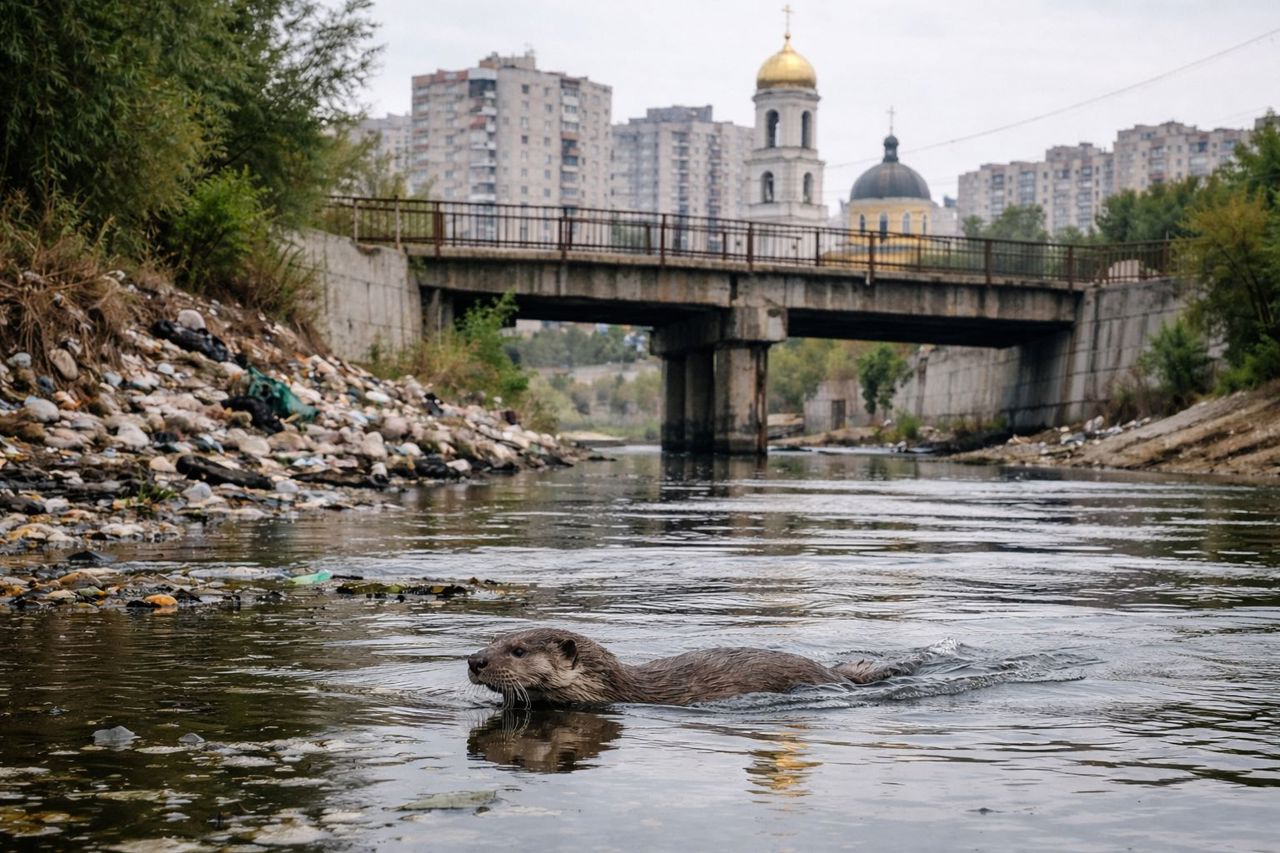
The recent sightings of a European wildcat near Orheiul Vechi and an otter in the heart of Chisinau have sparked intense public interest. While environmentalists view these species as vital indicators of ecosystem health, experts warn that enthusiasm must be grounded in scientific data.
The European wildcat is notorious for its cautious behavior, typically thriving only in well-preserved forest ecosystems with minimal human interference. Its appearance in the Orheiul Vechi National Park suggests a potential improvement in local biodiversity.
Ecologist Vladimir Garaba noted that the sighting is a natural consequence of migrating patterns. He stated that the situation in Moldova's forests is partially improving, allowing such "desired guests" to reclaim their ancestral territories.
The Bâc River’s unexpected resident
Simultaneously, footage of an otter swimming in the Bâc River—Chisinau’s heavily criticized waterway—went viral. However, Garaba remains skeptical, suggesting the animal might have migrated temporarily from cleaner upstream tributaries.
The expert emphasized that the river’s pollution levels have historically exceeded ecological norms by hundreds of times. "We should prioritize rigorous water analysis before celebrating the return of these animals," Garaba cautioned.
A legacy of systemic neglect
Civic activist Alexei Guțaga recently kayaked through the urban segment of the Bâc to document its true state. His photographic evidence reveals a river choked by 50-year-old trees growing in the riverbed and decaying concrete infrastructure.
Guțaga argues that the river is only maintained in visible areas, while the rest remains neglected. These obstacles severely hinder water flow, particularly during heavy rains, highlighting a lack of consistent institutional care.
Official monitoring results
In contrast to the activists’ concerns, the Environmental Agency reports that recent water samples comply with national standards (Government Decree 890). Vasile Parasciuc, head of the Environmental Reference Laboratory, noted that water quality fluctuates seasonally.
While autumn and winter rains improve parameters through dilution, summer low-flow periods remain a challenge. The question remains whether these sightings represent a fragile recovery or merely a fleeting anomaly in an otherwise struggling urban ecosystem.
Translation by Iurie Tataru