PSRM has signatures for censure motion but can’t submit during state of emergency
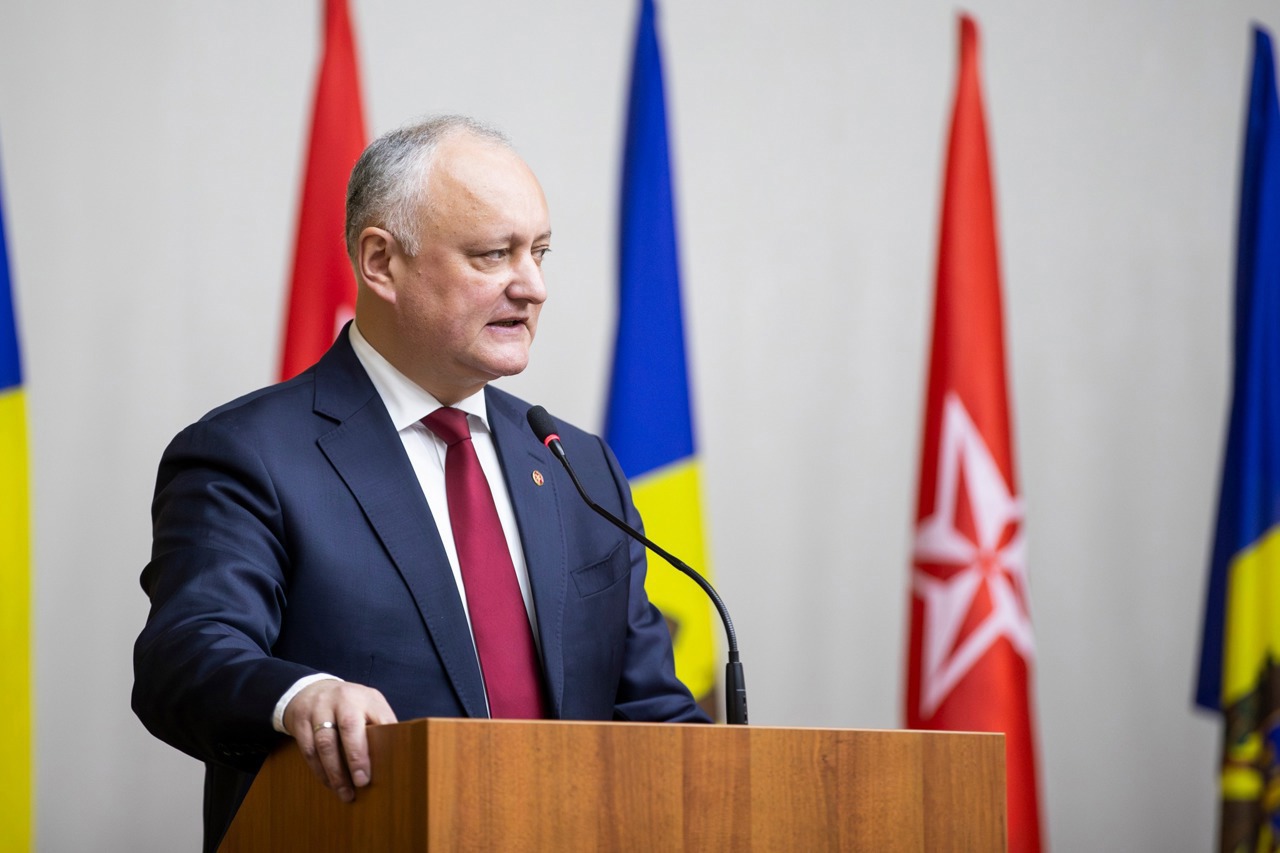
The Socialist Party of the Republic of Moldova (PSRM) announced that it has gathered enough signatures to initiate a motion of censure. However, they are unable to submit the motion due to the declaration of a state of emergency. These statements were made by the socialist leader, Igor Dodon, ahead of the Parliament session on March 26.
"We discussed with our opposition colleagues, and we have the minimum required 26 signatures to call on the Government to report. Mr. Munteanu refuses to come to Parliament with the report on the Government's activity. However, since Parliament has approved the state of emergency, submitting the motion during this period is not possible," the parliamentarian declared.
Igor Dodon stated that the PSRM (Party of Socialists of the Republic of Moldova) is not giving up on this initiative and will insist that the Government, in full composition, presents a report to Parliament as soon as the legal framework allows it.
Regarding the declaration of a state of emergency, Dodon stated that the PSRM did not vote against it but abstained, citing concerns about the initiation of direct energy purchases.
"I remind you that, in the last 4-5 years, when direct purchases were made, the Bumbata-Leova road was constructed, costing hundreds of millions of lei, in a non-transparent manner, and we still lack clarity. Additionally, gas was purchased at double the market prices through direct purchases," accused the socialist leader.
In light of the energy crisis, the PSRM is proposing that the Government initiate negotiations with the Cuciurgan Thermal Power Plant (MGRES) to purchase electricity.
"If we buy gas, even at market prices from the European Union, and deliver it to Cuciurgan to generate electricity, the price will be lower than what we currently pay for electricity from Romania and the EU market," stated the PSRM president.
We remind you that the socialists announced at a press conference in early February that they were preparing a motion of censure, stating it was the only way to bring Prime Minister Alexandru Munteanu to account during a plenary session of Parliament.
The PSRM, the largest opposition parliamentary faction, comprises 17 deputies, while a motion of censure can be initiated only by at least 26 of the 101 parliamentarians. For the motion of censure to pass and result in the dismissal of the Government, it requires a majority of the votes from the elected deputies, specifically 51 votes in favor.
We recall that Parliament established a state of emergency in the energy sector for 60 days, starting March 25, due to the risks generated by Russia's attacks on the energy infrastructure in Ukraine. These attacks led to the shutdown of the Isaccea–Vulcănești line, one of the country's main sources of energy supply. The decision was made on March 24 with a vote from 72 deputies from the PAS majority, the "Democratia Acasa," "Partidul Nostru" factions, and the "Alternativa" Bloc.
Prime Minister Alexandru Munteanu reiterated at the Government meeting on March 25 that the purpose of the authorities' intervention is to minimize risks and prevent electricity disconnections. The Prime Minister expressed hope that the issue could be resolved much faster than the 60 days for which the state of emergency was established. However, the risks of new Russian attacks on Ukrainian energy infrastructure remain high, and the Republic of Moldova continues to be vulnerable, necessitating "rapid interventions, strict coordination, and decisions made without delay."
The Government announced that medical and health institutions, critical infrastructure, and vulnerable consumers will have priority access to electricity. Operator Moldelectrica will resort to direct purchases and will halt exports during peak hours to direct any available resources to domestic consumption. Also, economic agents with production processes that consume large amounts of electricity will need to adjust their work schedules to avoid peak consumption periods.