Hungarian forint rallies following historic opposition victory
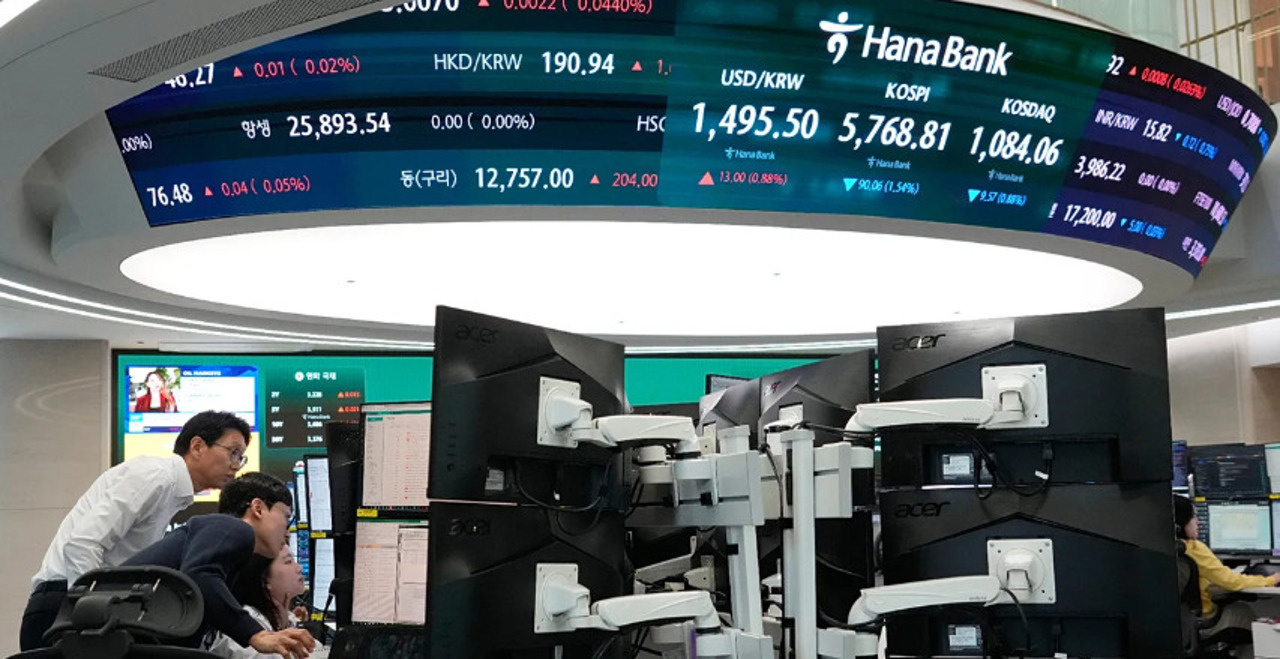
Global markets are facing a sobering Monday as weekend optimism for a diplomatic breakthrough evaporated, replaced by fears of a major geopolitical escalation. Investors are bracing for a volatile week driven by a looming U.S. naval blockade in the Middle East and critical inflation data.
Crude oil prices surged after President Donald Trump announced plans to block all maritime traffic to and from Iranian ports starting Monday at 14:00 GMT. International benchmark Brent climbed 7% to nearly $102 per barrel, while U.S. West Texas Intermediate (WTI) rose 8% to $104.
The Strait of Hormuz blockade follows failed ceasefire negotiations in Pakistan. This strategic chokepoint has seen significant disruptions since February, pushing Brent prices from $70 to peaks of $119, reigniting global fears of a "stagflationary shock" that threatens both stocks and bonds.
The Hungarian forint emerged as a top performer in currency markets following a landslide victory by Péter Magyar and his "Tisza" party. This win ends 16 years of Fidesz rule under Viktor Orbán, signaling a potential shift toward more pro-European policies and the restoration of the rule of law.
Currency markets reacted immediately, with the Euro trading at 366.18 forints — equivalent to approximately 19.65 MDL — down from 377.56 on Sunday evening. While the Hungarian stock index rose by 2.85%, the broader European markets, including the DAX and CAC 40, opened significantly lower.
Wall Street and Asian indices remained under pressure as analysts from Deutsche Bank and Astris Advisory warn of persistent risk aversion. Beyond geopolitics, the market focus this week shifts to the start of the corporate earnings season, featuring banking giants JPMorgan Chase and Goldman Sachs.
The International Monetary Fund (IMF) and World Bank spring meetings in Washington will also be closely watched. Investors are seeking clarity from the IMF’s "World Economic Outlook" on global resilience amid the intensifying conflict in the Middle East and slowing Eurozone industrial demand.
Translation by Iurie Tataru