EU-funded orchard provides hands-on expertise for Moldova’s next generation of agronomists
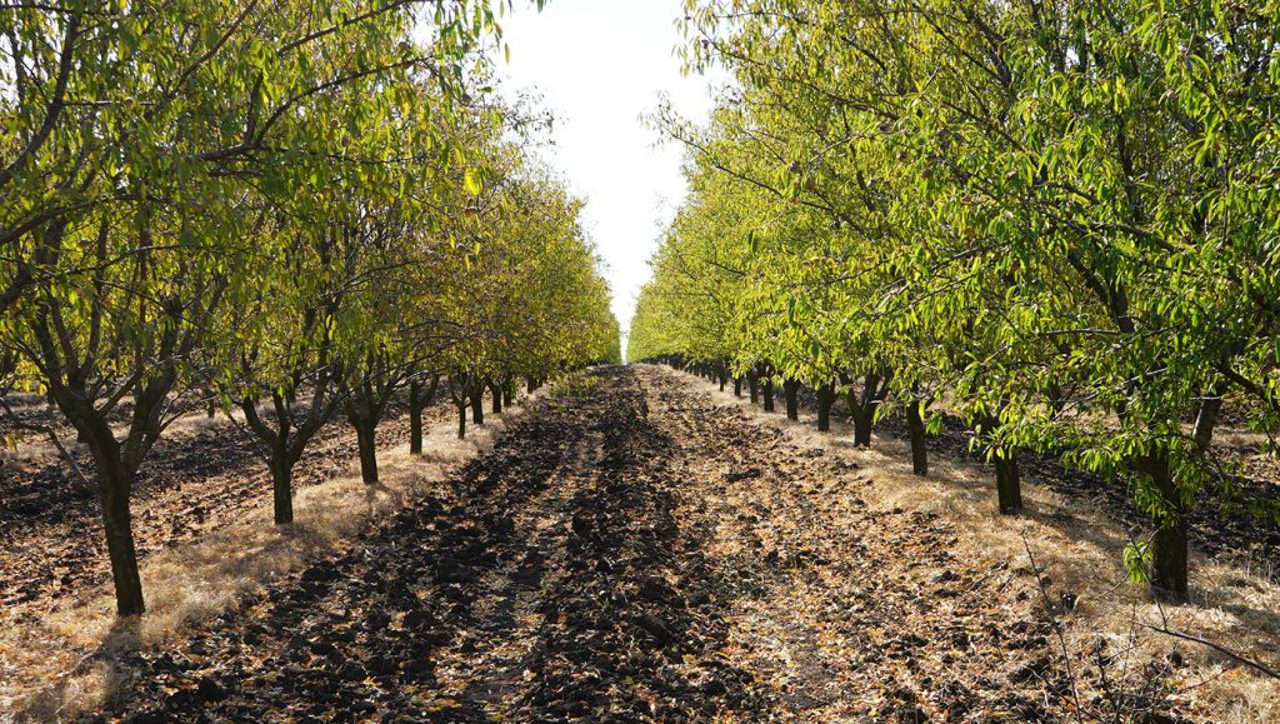
The Technical University of Moldova (UTM) is transforming agricultural education through a 10-hectare instructional orchard. Part of the "Fruit Garden of Moldova" project, this initiative is financed by the European Investment Bank (EIB) to bridge the gap between academic theory and modern horticultural practice.
Located in the Criuleni district, the orchard serves as a high-tech "living laboratory." It features nearly 50 varieties of fruit trees, allowing students to engage directly with the complexities of modern farming.
Bridging the skills gap
Sergiu Popa, Dean of the Faculty of Agricultural, Forest, and Environmental Sciences, emphasizes that field experience is non-negotiable for future experts. Students begin their practical training in early March, mastering essential techniques such as dormant pruning and canopy management across various species.
Beyond manual labor, the curriculum focuses on precision. Undergraduates learn to calibrate phytosanitary treatments and calculate exact fertilizer dosages, ensuring they meet rigorous international safety and quality standards.
A sustainable research model
The project is designed to be self-sustaining. While the primary goal is research, part of the harvest will be processed by the Faculty of Food Technology, and the remainder sold to cover maintenance costs. First yields of nectarines are expected as early as next year.
This €1.4 million (approx. 27.4M MDL) investment has also delivered a modern greenhouse complex with six distinct cultivation systems. This allows students to experiment with diverse agricultural technologies in a controlled, real-world environment.
Expanded infrastructure
The orchard is part of a broader modernization effort. Last spring, UTM planted a 4.8-hectare experimental vineyard featuring 12 indigenous grape varieties. The Criuleni research station was also upgraded with a monoplanar support system and new grain harvesters.
According to Dr. Tatiana Novac, this infrastructure ensures that graduates emerge as high-demand experts. By mastering diverse systems, UTM students are prepared to lead Moldova’s agricultural sector toward European integration.
Translation by Iurie Tataru