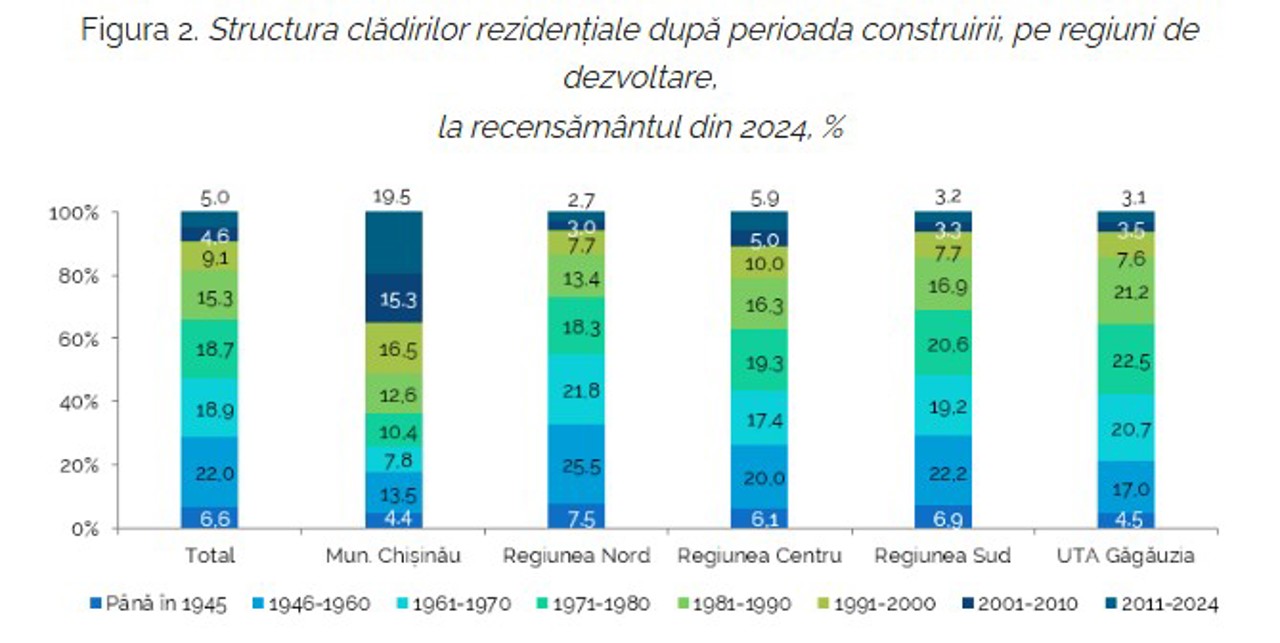
Nearly 250,000 homes in Moldova were built between 1946 and 1960
The Republic of Moldova has over one million homes, with 81% located in rural areas. Data from the National Bureau of Statistics indicates that approximately 247,000 homes were built between 1946 and 1960.
The difference in the number of homes in rural and urban areas has its roots in history. During the Soviet era, the population was primarily concentrated in villages, where houses were built by their owners. This practice fostered a sense of identity and belonging within the community.
Sergiu Tronciu, an associate professor at the Faculty of Urban Planning and Architecture at the Technical University of Moldova, explained on the show “Zi de Zi” on Radio Moldova that, “This indicator reflects a historically inherited socio-territorial structure. This type of housing was not developed with modern technical and logistical infrastructure and is not connected to healthcare, cultural, or educational institutions. However, houses in the village provide more autonomy since residents are less dependent on their neighbors, unlike those living in apartments in a block of flats.”
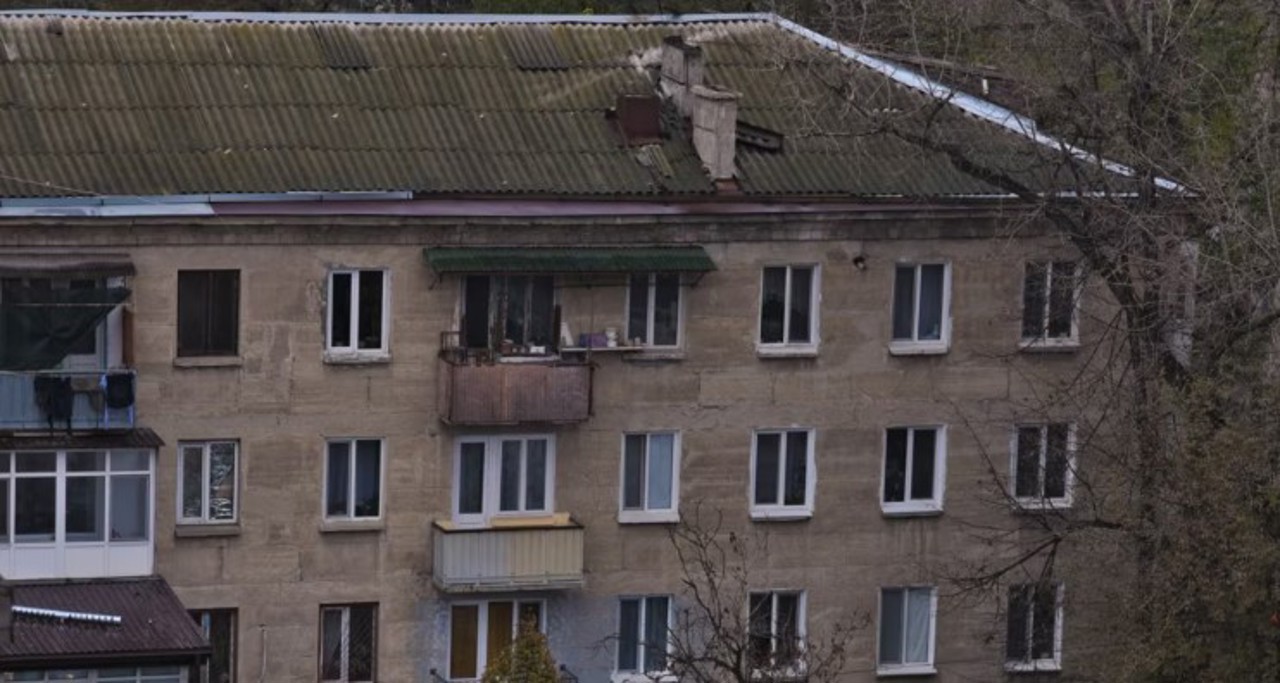
In contrast, the situation in cities is quite different. Most residential buildings were constructed before 1990, and their technical condition is becoming increasingly hazardous for residents.
"The primary risks associated with buildings constructed during the Soviet period stem from the wear and tear of various construction elements, including concrete, wood, and installations. It is important to note that these structures are situated in a seismic zone and lack necessary anti-seismic reinforcement," stated the university associate professor.
Beyond physical risks, older buildings also pose significant energy-efficiency challenges.
"The electrical and sanitary installations in these buildings are outdated. From an energy perspective, there are issues with heating costs and high electricity consumption. Maintaining a house exposed to the wind can be quite expensive," explained Tronciu.
The specialist emphasizes that the period following 1990 did not result in significant improvements, as the number of buildings constructed haphazardly—without an urban plan—increased.
"We must acknowledge a reality that I would describe as hybrid, predominantly chaotic, especially from 1990 to 2000. This situation was driven by economic transition and a lack of urban control. We must work towards regulated planning," stated Sergiu Tronciu.
According to official data, 90.9% of all apartment buildings are located in urban areas, with the Chisinau municipality accounting for 47.3% of all residential buildings in the country.