"Thank you for telling me": How we can prevent cyberbullying and protect children
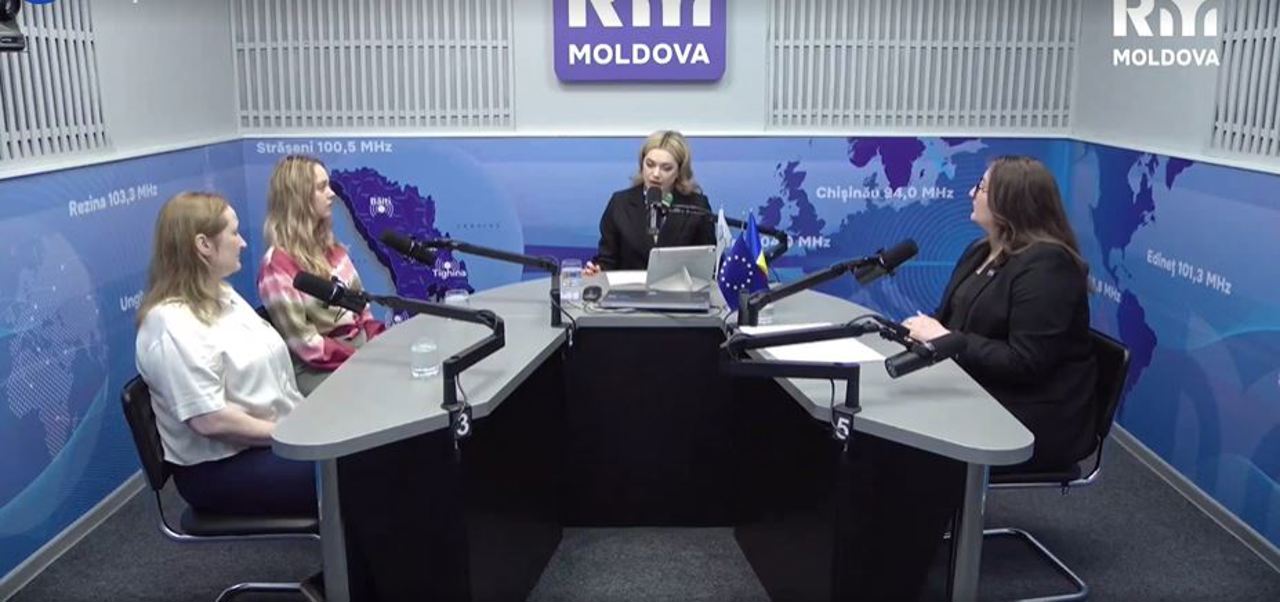
Children in the Republic of Moldova are spending increasing amounts of time online, and with greater opportunities for communication come greater risks. Cyberbullying, emotional manipulation, blackmail, and contact with strangers rank among the most common dangers children face online, experts warned during a special Children's Day edition of the Radio Moldova program "Public Space".
Parascovia Topadă-Coroi, supervising psychologist at the National Center for Child Abuse Prevention, emphasized that the forms of violence against children have remained largely the same. What has changed is the boundary between the online and offline worlds.
"We are seeing an overlap between physical and online contact. The line between the two has become less clear, making it harder to determine where one begins and the other ends," the specialist explained.
Among the most common issues are online harassment, bullying, and the exploitation of children who seek emotional validation and attention in virtual spaces.
Approximately 12,000 cases of digital violence against children were reported nationwide last year, including incidents involving the distribution of compromising material. Violations of children's rights online were also reported in 52 calls to the Child Helpline.
The service received more than 5,500 calls in total, 3,382 of which came from children. Manager Dina Sârbu stated that one of the most common risks involves children communicating with strangers who conceal their identities and attempt to gain their trust.
"A child receives validation, attention, and time that they may not receive elsewhere. This can draw them into the influence of someone whose identity we cannot verify, whether that person is another child or an adult," explained Dina Sârbu, describing the methods predators use to obtain images or personal information from minors.
According to her, a major warning sign arises when the person refuses to confirm their identity through a photo or video call.
The psychological effects of negative online experiences can be serious and long lasting, warns psychotherapist Elena Ustroi. Children who become victims of online harassment or manipulation may develop anxiety, depression, social withdrawal, sleep and eating disorders, or even physical symptoms with no apparent medical cause.
"The emotions a child feels are real. The child is responding to genuine emotional needs, but the source meeting those needs may be highly toxic," the psychotherapist explained.
The experts also highlighted the phenomenon of grooming, a process in which offenders gradually gain a child's trust in order to manipulate and exploit them later.
"This is a form of communication in which you slowly lure a child into your trap for harmful purposes," explained Parascovia Topadă-Coroi.
In such situations, responsibility always lies with the adults.
"A child is never to blame for what happened to them. Children are naturally curious. The responsibility rests with the adult who failed to supervise them and with the person who intended to harm that child," emphasized Dina Sârbu.
The guests highlighted that regular communication remains the most effective form of prevention. They encouraged parents to spend time with their children every day, talk about their online experiences, and watch for any changes in behavior.
"Thank you for telling me. I'm here to help you," is one of the responses parents should give when a child shares a problem they have encountered online.
If a child becomes a victim of online harassment or blackmail, experts recommend preserving evidence, such as screenshots, messages, or recordings, before blocking the offender. This can help authorities investigate and respond more effectively.
The participants concluded that protecting children in the digital age requires more than restrictions or technical controls. It calls for a joint effort by families, schools, government institutions, and online platforms.
Digital education, critical thinking skills, and strong trust between children and adults offer the most effective tools to prevent abuse in the online environment.
Children and adults who need help or wish to report a risky situation can call the Child Helpline at 116111 free of charge and in confidence, 24 hours a day.