GRECO urges leaders to promote integrity and anti-corruption efforts
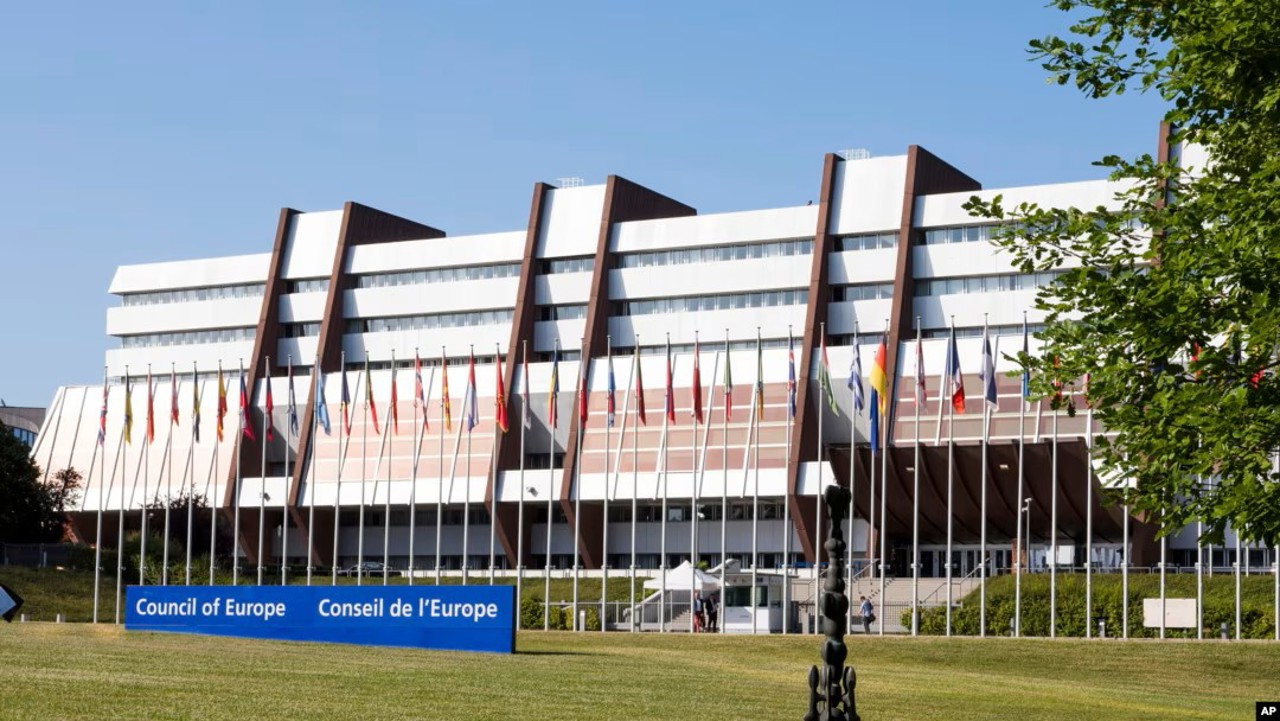
While reforms in law enforcement institutions are moving forward, the integrity of key executive functions in the Republic of Moldova remains uncertain. This structural issue, highlighted in the compliance report by the Group of States against Corruption (GRECO) of the Council of Europe, has drawn attention in Brussels, as it is a vital focus area for the EU under the “Fundamentals” cluster for accession.
Central government leaders have a key role in promoting a culture of integrity and zero tolerance for corruption, and this commitment must be supported by effective legislative and institutional mechanisms to prevent and combat the phenomenon, the EC’s GRECO stresses, referring to the compliance report from the fifth round of evaluation, adopted in Strasbourg in spring 2026.
Democracy needs both leaders who respect ethical standards and independent and effective institutions, GRECO President David Meyer stressed in an EC statement released on 30 June.
*“Democracy requires both ethical leadership and effective protection mechanisms. Reforms targeting the judiciary, law enforcement, prosecution and institutions specialized in combating corruption must preserve their independence, efficiency and credibility,” Meyer said.
He warned that, in the context of declining public trust in institutions and geopolitical tensions, preventing corruption is not only a component of good governance, but also an essential element of democratic resilience.
According to the compliance report from GRECO’s fifth evaluation round, almost 70% of the recommendations addressed to central governments have been fully or partially implemented, compared to 63% at the end of 2024. For law enforcement institutions, the implementation rate increased from 71.7% to 77.2%.
However, the organization notes that many states need to continue reforms in areas such as the application of codes of conduct for senior officials, the management of conflicts of interest, the transparency of the legislative process, the regulation of relations with lobbyists, access to public information and the declaration of assets and interests.
As regards the police and other law enforcement institutions, GRECO calls for further measures to strengthen integrity policies, improve recruitment and appointment procedures, prevent conflicts of interest and strengthen control and sanctioning mechanisms.
The report also highlights progress made in the fourth round of evaluation, dedicated to preventing corruption among parliamentarians, judges and prosecutors. By the end of 2025, almost 90% of the recommendations had been fully or partially implemented. Most of the recommendations that remained unimplemented concern parliamentarians (15.5%), followed by judges (8.6%) and prosecutors (5.7%).
Republic of Moldova in GRECO report
According to the compliance report from GRECO’s fifth evaluation round, which covers the period from the end of 2023 to the end of 2025, the Republic of Moldova had satisfactorily addressed only seven of the 25 anti-corruption recommendations; 12 were partially implemented, and six were not implemented at all. The remaining 18 recommendations are to be reassessed based on a new status report that the authorities in Chisinau must submit to the Group of States against Corruption by 30 September 2027.
The distribution of progress follows a clear demarcation line. Of the 13 recommendations addressed to top executive positions, such as the President, Prime Minister, ministers, state secretaries, general secretaries, and political advisors, only one was satisfactorily resolved, while the other 12 remained partially resolved or unimplemented.
The exception concerns the internal oversight mechanism within the National Integrity Authority (ANI), which GRECO considers to have been dealt with satisfactorily, following the adoption of a methodology for random distribution of control files and measures to standardize the practice of integrity inspectors.
Also in the chapter on asset declarations, GRECO notes that ANI publishes detailed statistics: in 2024, 80,654 declarations were submitted through the e-Integritate system, 201 substantive checks were completed and 140 violations were found. However, none of the substantive checks specifically targeted top executive positions.
Conflicts of interest, lobbying and the “revolving door”
The six unimplemented recommendations focus almost entirely on the high-level corruption prevention infrastructure: corruption risk registers for top executive positions, confidential integrity training and advice, regulation of contacts with lobbyists, management of conflicts of interest, and supervision of post-employment restrictions.
Regarding conflicts of interest, GRECO emphasizes that simply encouraging dignitaries to abstain from decisions does not amount to a legal obligation, the definition of “apparent” conflict of interest and the abstention mechanism remaining unadopted.
On lobbying, the authorities have only prepared a discussion paper, submitted to the National Anticorruption Center in December 2025 and not published. Codes of conduct for high-ranking officials are still in draft stage, under internal consultation.
The discrepancy between the authorities’ reported measures and GRECO’s assessment is most clearly seen in the case of the Anti-Corruption Prosecutor’s Office. Chisinau has extended the prosecutor’s office’s jurisdiction to include the president and members of the government, a step that GRECO welcomes, but presidential and ministerial advisors remain outside its jurisdiction, and of the 139 approved positions, only 94 were filled at the time of the assessment.
Police and Border Guard, the engine of progress
At the opposite end of the spectrum, six of the 12 recommendations addressed to law enforcement institutions have been satisfactorily addressed. The representation of women in the police increased from 21.92% to 25.41% of the workforce and from 11.6% to 14.22% in management positions, and in the Border Police - from 26% to 30.23%, respectively from 15.78% to 21.14% in managerial positions, between the time of the assessment and May 2025. Donation registers have been regulated and published, internal whistleblowing channels have been created, and integrity checks on police officers are carried out systematically throughout their careers.
However, progress in this sector is not complete either. The National Police and the Border Police do not yet have their own code of ethics, distinct from the general one for civil servants with special status in the Ministry of Internal Affairs. There is no effective mechanism to oversee post-employment restrictions for officers, the only unimplemented recommendation in this block, according to the report, and deputy police chiefs continue to be appointed without competition.
Interim appointments have, however, been significantly reduced: from 173 to 137 in the police and from 84 to 45 in the Border Police between 2023 and 2025. Salaries have increased by 18.83% for lower ranks but, by the authorities’ admission, remain below the national average, at 62.2% of it.
The balance sheet does not mean regression. The benchmark is the 2023 evaluation report, and GRECO notes tangible progress – from the criteria for appointing state secretaries to the extension of the prosecutor’s jurisdiction.
In a reaction from the Government in Chisinau to Teleradio Moldova, the Executive's continued commitment to implementing GRECO recommendations is emphasized, as well as the authorities' openness to continue the necessary reforms "to strengthen integrity and corruption prevention mechanisms".
The Republic of Moldova has been a member of GRECO (the Group of States Against Corruption) since 2001 and has completed four evaluation rounds, each focusing on different aspects of preventing and combating corruption. To summarize the implementation rates, 93% of the recommendations from the first evaluation round were implemented, followed by 67% in the second round and 88% in the third.
However, in the fourth evaluation round, which examined the prevention of corruption among parliamentarians, judges, and prosecutors, only 33% of the total recommendations have been fully implemented to date.
In its most recent publicly available compliance report, GRECO stated that the overall level of compliance with the recommendations was considered “overall unsatisfactory.”
In 2025, GRECO launched its sixth evaluation round, which focuses on measures to prevent corruption and promote integrity at the local and regional levels. The initial countries examined in this round were Estonia and Slovakia, and the process is continuing in Luxembourg, Slovenia, the United Kingdom, the Netherlands, Latvia, and Poland.