Alexandru Tănase: Government reset—the decisive test before three election years
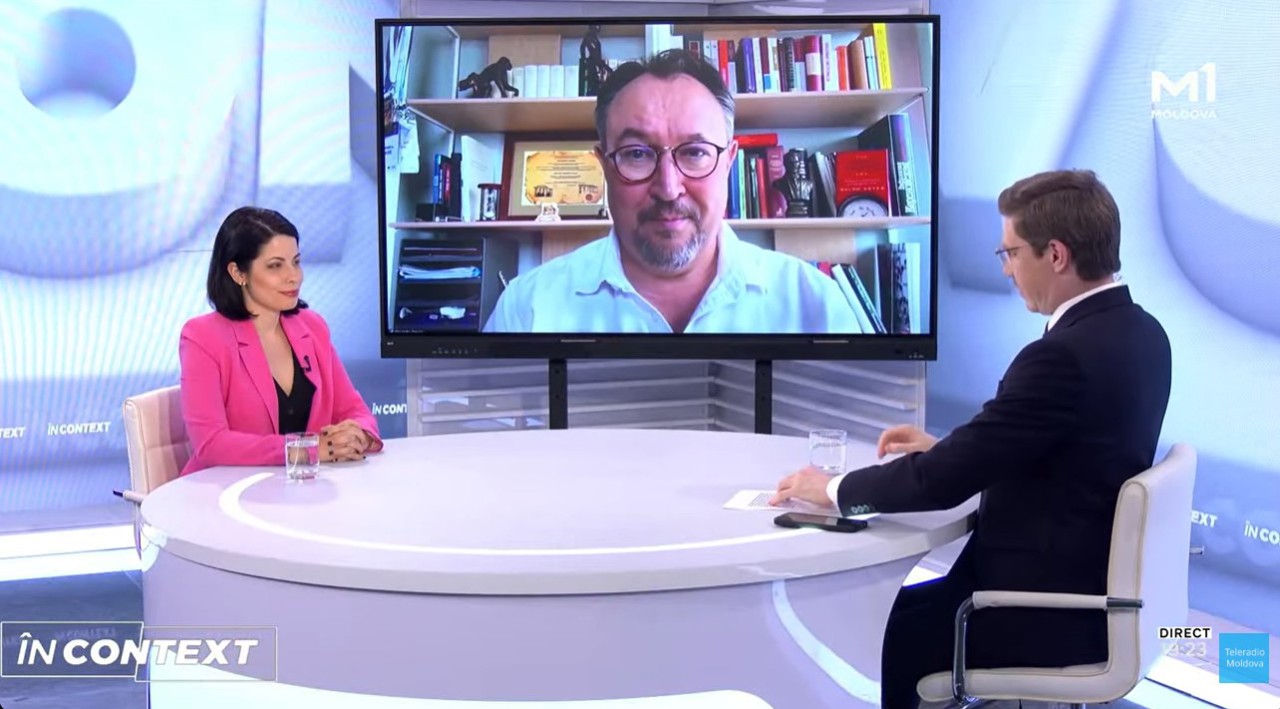
The government reset in Chisinau presents an opportunity for the administration to make up for lost time in implementing reforms ahead of the upcoming three electoral years, according to constitutional expert Alexandru Tănase. However, the success of this initiative hinges on maintaining political consensus regarding European integration, as noted by Europuls expert Tana Foarfă.
"I would not be so categorical as to say that we are facing a political crisis. After all, things are apparently quite clear. The resignation of the Munteanu Government was not the consequence of a governance crisis," said former President of the Constitutional Court Alexandru Tănase, former deputy and Minister of Justice, in the ÎN CONTEXT program on Moldova 1.
At the same time, he believes that the explanations provided so far by the former prime minister are not sufficient to clarify the true reasons for the decision.
"I don't think we are facing a crisis. It is a situation that requires qualification. What happened in reality and what is the real reason for this resignation. The recourse to principles and values that at some point became incompatible does not sound convincing at all. (...) He has never announced or made public any point of view that would even suggest a certain vision of governance. So very soon, most likely, the President of the Republic of Moldova, Mrs. Sandu, will nominate a new candidate to form the Government and we will return to normality", explained Alexandru Tănase.
A Prime Minister has the obligation to provide explanations
The former Minister of Justice believes that invoking general formulations about "principles" and "convictions" does not meet the public interest and does not provide the clarifications that citizens expect.
"A figure of major political importance such as the Prime Minister, when resigning from office, is obliged, has a moral obligation to society and a political obligation, to explain exactly what the arguments are and what the reasons for his resignation were. (...) All the more so, I have also noticed a certain coldness on the part of Mrs. President Sandu and Mr. President Igor Grosu in relation to Mr. Munteanu, who, in office, here suggests that in fact the reasons that led to this resignation are not necessarily related to the formulations and explanations that were offered", noted the former President of the Constitutional Court.
A year of missed reforms
In the opinion of the former minister, the Republic of Moldova has lost a favorable interval for the implementation of important transformations, and the approach of a new electoral cycle will make these reforms more difficult to achieve.
"It was a year of stagnation" in which no "reforms" occurred. "One thing is absolutely obvious. This year that was discussed represents, in itself, a strategic failure because it was the year when a series of reforms could have been launched. From now on, it will be very complicated. We are entering a continuous 3-year electoral cycle: local elections, presidential elections, followed by parliamentary elections. (...) And in this sense, I believe that Mrs. Sandu's dissatisfaction with the way Prime Minister Munteanu managed this mandate is related to the expectations she had. Everyone had very high expectations from this government," Tănase declared.
The Prime Minister needs political support
In terms of appointing a new head of the Executive, Tănase believes that the current context favors the appointment of a person who benefits from solid political support from the parliamentary majority.
"From the point of view of the challenges that this government is going to face, a strong prime minister, who would have the full support of the PAS parliamentary group and President Maia Sandu, would be the most appropriate solution. But if we were to carefully analyze the tradition, how it was acted in the last term, but also in other designations of candidates for the formation of the PAS government, as a rule, they prefer to have a prime minister who is not necessarily very strongly attached to the party", said Tănase, who warned that "any action of the prime minister is paid for by Parliament in the parliamentary elections".
At the same time, the former deputy advocates for a gradual approach to reforms.
"We are acting with great caution and intelligence. I think we need to identify one or two reforms. We will not be able to reach the cadence of the current government, but let's make them sustainable and fundamental. In parallel, of course, we continue our Euro-European path", concluded Alexandru Tănase.
Alexandru Munteanu announced his resignation on Friday, July 3, via a social media post. He cited the inability to carry out his duties "in accordance with his principles and beliefs." "It's a more complicated story," the outgoing prime minister said to the press.
According to the Constitution, the prime minister's resignation automatically triggers the resignation of the entire government, which remains in office with limited powers until a new executive is sworn in. President Maia Sandu stated that she would hold consultations with parliamentary factions to identify a candidate for the position. Igor Grosu also indicated that he does not expect "major changes in the government team."
Several opposition parties, including the Socialist Party and the National Alternative Movement, have publicly announced that they will not participate in the consultations at the presidency.
Following this, PAS leader Igor Grosu, who is also the President of Parliament, announced that the future government will not undergo radical changes, and most of the current ministers are expected to continue in the new government.