Tofan Government unveils economy and security industry plan
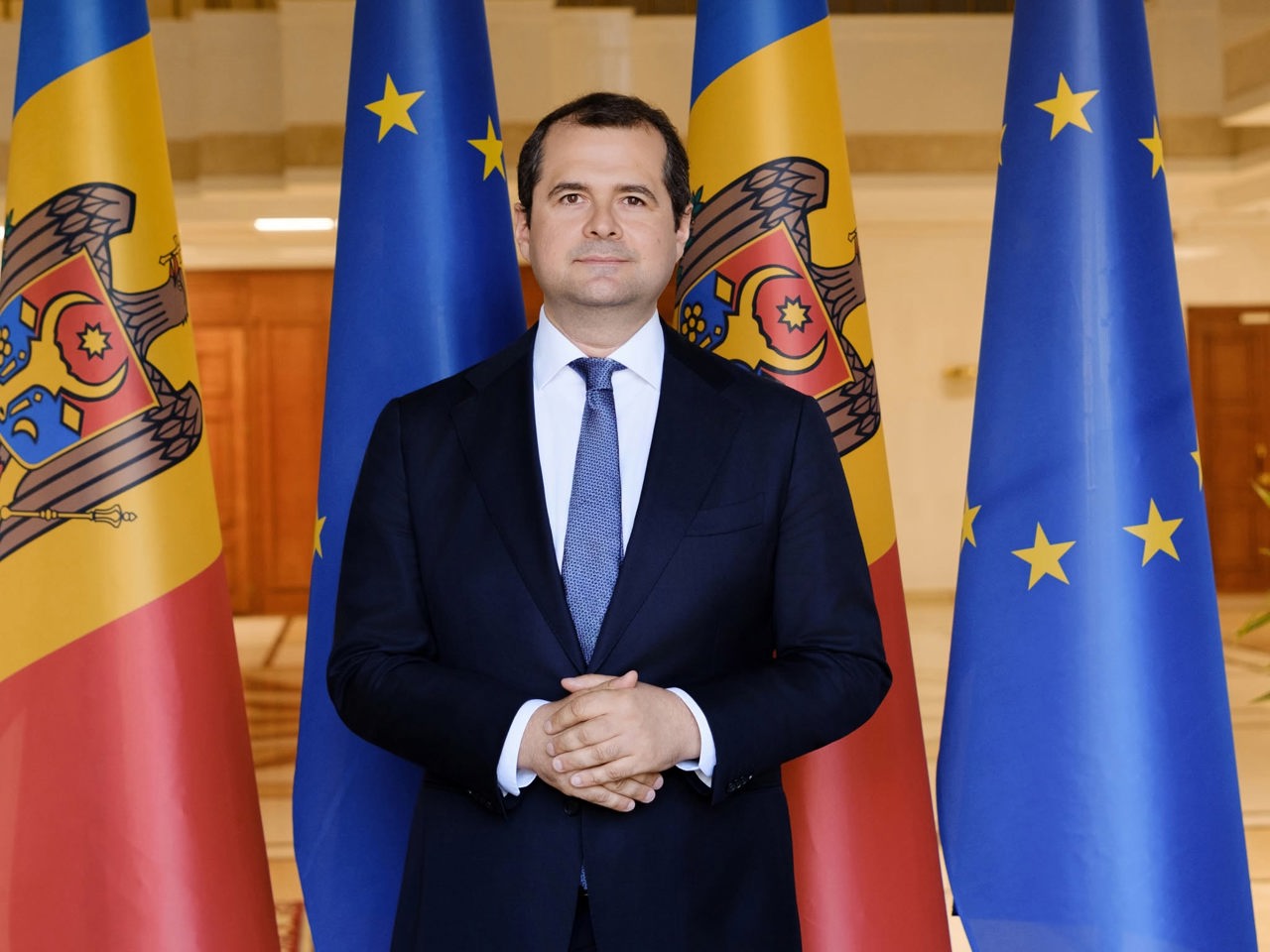
The main objectives of the future government, led by Vasile Tofan, are to transform the Republic of Moldova into a European economy and to create the most business-friendly environment in Europe. The government prioritizes the development of a new strategic industry to enhance national security. Additionally, it aims to raise the minimum wage to 10,000 lei and plans to rehabilitate at least 10 hospitals in the coming years.
The objectives are found in the "European Economy, Efficient State" Program proposed by Prime Minister-designate Vasile Tofan. The document has 147 pages and establishes the directions of activity of the future Cabinet until 2029, structured on five socio-economic priorities aimed at strengthening trust in state institutions in the European integration process.
"Tomorrow (Tuesday, July 21 - editor's note) I will go to Parliament, together with the team of ministers, to ask for a vote of confidence. We are starting with a clear ambition: to bring back energy, initiative and optimism to the country's development. Let's restart the economy, support entrepreneurs and create better-paid jobs. Let's build a smaller and more efficient state without overlaps and waste, but stronger in public services, security, education, health and protection of the vulnerable", wrote the Prime Minister-designate Vasile Tofan, on his Facebook account, where he made public the government program of the future Cabinet of Ministers.
The five priorities of the Tofan Government
- Relaunching economic growth by stimulating entrepreneurship, investments and exports, supported by simplified taxation that encourages work and investments.
The new Executive aims for the Republic of Moldova to become a simple, predictable and attractive European jurisdiction for business, an ambition that will guide tax policy, regulations, state controls, digitalization of services, access to financing and economic diplomacy.
- Accelerating accession to the European Union, with the objective of preparing for the signing of the Accession Treaty by the end of 2028, by opening all six negotiation clusters in 2026.
The priority will be Cluster 1 "Fundamental Values", which includes the rule of law, public administration, fundamental rights, procurement, statistics and financial control.
The performance of each ministry will be assessed by fulfilling the accession commitments and by the impact of reforms on the quality of life.
- An efficient, digital and accountable state, with strong mayors, quality public services and public managers accountable for performance, fairly remunerated.
The program aims to eliminate duplication of functions and strengthen essential areas: security, justice, infrastructure, education, health and social protection. The public sector salary system will become transparent and fair, without excessive remuneration, opaque bonuses or unjustified exceptions.
- Security, justice and peace, supported by modern institutions, an independent judiciary and close cooperation with European partners.
The Tofan government will focus on modern defense, through multi-annual investments in air and anti-drone defense, cyber protection, mobilization, civil protection and a national public warning system.
- Increasing the quality of life and social cohesion through decent jobs, human capital development, family support, promotion of gender equality and skills-oriented education.
The minimum wage is expected to reach 10 thousand lei in 2030.
Another section of the Government Program describes all the areas that underlie the functioning of the state.
Sectoral policies
Economy and Digitalization
Prime Minister Vasile Tofan's main priority is to ensure a business environment based on simple, predictable rules and direct financial support:
Replacing unjustified authorizations with notifications or self-declarations;
Full digitalization of essential services for businesses and eliminating paper documents;
State controls based on risk analysis, coordinated between institutions and oriented towards prevention and voluntary compliance;
Development of industrial and technological parks and platforms, including Moldova HiTech Park;
Stimulating investments in research and development, automation, energy efficiency and clean technologies;
Implementation of early warning, restructuring and "second chance" mechanisms for viable enterprises temporarily in difficulty.
Finance
After the debates and criticisms raised regarding the Munteanu Government's plans for budgetary-fiscal and wage policy, the Tofan Government's vision aims to remedy the communication gaps.
The new measures will be consulted in advance, accompanied by impact assessments and implemented gradually, ensuring stability and predictability.
Fiscal harmonization: Gradual alignment of VAT, excise duties and direct taxation with EU norms, through transition periods;
VAT refund: Refund of historical VAT accumulated in the account, prioritizing bona fide economic agents and e-invoice users;
Simplification: Broadening the tax base, reducing distortions and encouraging legal work, reinvestment and voluntary compliance;
Public procurement: Reducing state spending by strengthening financial control along the entire chain from planning and awarding, to reception, audit and recovery of damages.
Defense
The National Army will undergo a modern transformation, developing surveillance and early-warning systems, anti-aircraft and anti-drone capabilities, logistics, and cybersecurity.
The military infrastructure will be brought to modern standards, and for the first time a national defense industry will be developed through research and technological innovation centers - software, secure communications, sensors, maintenance.
Foreign Affairs
Diplomatic activity will focus on obtaining political support from EU member states to complete the negotiations necessary to sign the 2028 Accession Treaty. At the same time, deep strategic security partnerships will be established with Romania, Ukraine, EU member states, the US, the United Kingdom and other key partners.
Agriculture and Food Industry
The main objective is to transform agriculture from a sector vulnerable to drought and dependent on crisis subsidies into a competitive, technologically advanced and resilient one.
The food industry will become a central pillar through investments in processing, storage, refrigeration, logistics, packaging, and post-harvest infrastructure.
Reintegration of the country
The government proposes a pragmatic and gradual reintegration policy. The two banks of the Nistru will be brought closer together through a Convergence Fund, intended to reduce disparities in infrastructure and services.
Permanent monitoring of the Security Zone will be ensured, mechanisms for preventing incidents will be developed and the issue of demilitarization and democratization of the Transnistrian region will be addressed.
Home affairs
Police: Public order services will be focused on prevention, visible presence in the field, risk analysis and local cooperation;
Border: Modernization of border infrastructure to prepare for integration into the Schengen area and protect the future external border of the EU;
Migration: Creation of the "Migration" Information System, secured and interoperable with other public databases.
Justice
The program guarantees an independent judiciary, reformed institutions and honest judges.
In the penitentiary system, emphasis will be placed on reducing recidivism, bringing detention conditions to European standards and the social reintegration of former prisoners through education and work.
Infrastructure and regional development
The Tofan government aims to modernize national road and railway arteries, supported by the adoption of a new Transport Code, aligned with European standards. The authorities want to modernize or rehabilitate at least 100 kilometers of national roads per year and at least 300 kilometers by 2029.
Energy
The green transition will be a central priority of the future Government. The share of energy from renewable sources will increase to over 35% by 2028, supported by storage capacities and energy efficiency programs for buildings.
The Vulcănești-Chișinău (by the end of August 2026), Suceava-Bălți (by 2028), Gutinaș-Strășeni and Dnestrovsk-Bălți electricity interconnections will also be completed and operationalized.
Environment
For the first time, the Republic of Moldova will have functional automatic monitoring systems for air, water, soil and industrial emissions.
A modern infrastructure for waste collection, sorting and recycling will be built, and water will be managed as a strategic resource.
Labor and social protection
The cabinet aims to integrate at least 100,000 people into the workforce, increase the minimum wage and develop the eSocial information system, which will connect social services with employment measures.
Education and research
In education, the program provides for investments of at least six billion lei in infrastructure and the modernization of a network of 90 model schools.
Teaching profession: It is planned to attract at least 500 young teachers annually (at least 25% in STEM fields);
Higher education: It aims to retain high school graduates in universities in the country and admit at least 3,000 foreign students annually;
Vocational and technical education: Increase admission to dual programs to at least 2,900 young people annually by 2029.
Health
In health, the future Executive promises to advance the construction of regional hospitals in Bălți and Cahul, to modernize rehabilitation services in at least 10-12 hospitals and to introduce the electronic health record.
The patient's journey will be coordinated by the family doctor, and medical data will be integrated into a secure Electronic Health Record.
Medicines and medical devices will be evaluated according to transparent criteria of quality and price.
Culture
The cultural field will benefit from the inventory of movable and immovable heritage, which will be protected by digital registers and professional restoration. The state will also finance at least five local feature films, series or co-productions annually.
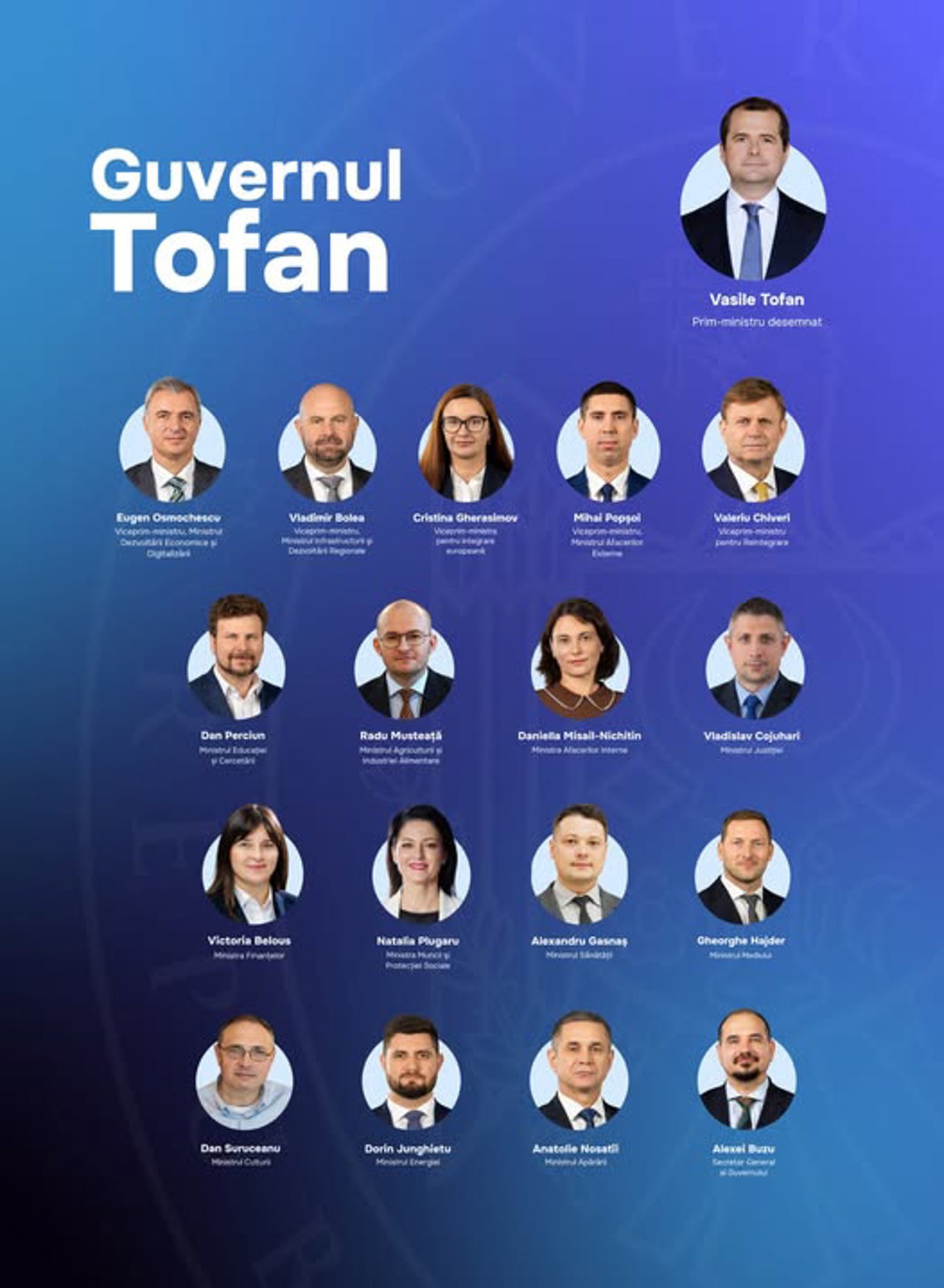
Entrepreneur Vasile Tofan was designated by President Maia Sandu as a candidate for prime minister on July 11, at the proposal of the Action and Solidarity Party faction, the majority in Parliament. He will make only four changes in the Executive, with the Ministries of Health, Agriculture, Culture and Finance to be led by other ministers.
The Tofan Government will request Parliament's investiture vote on July 21, almost three weeks after former Prime Minister Alexandru Munteanu submitted his resignation.