Foreign Ministry of Romania condemns the illegal Russian polling stations in Transnistrian region
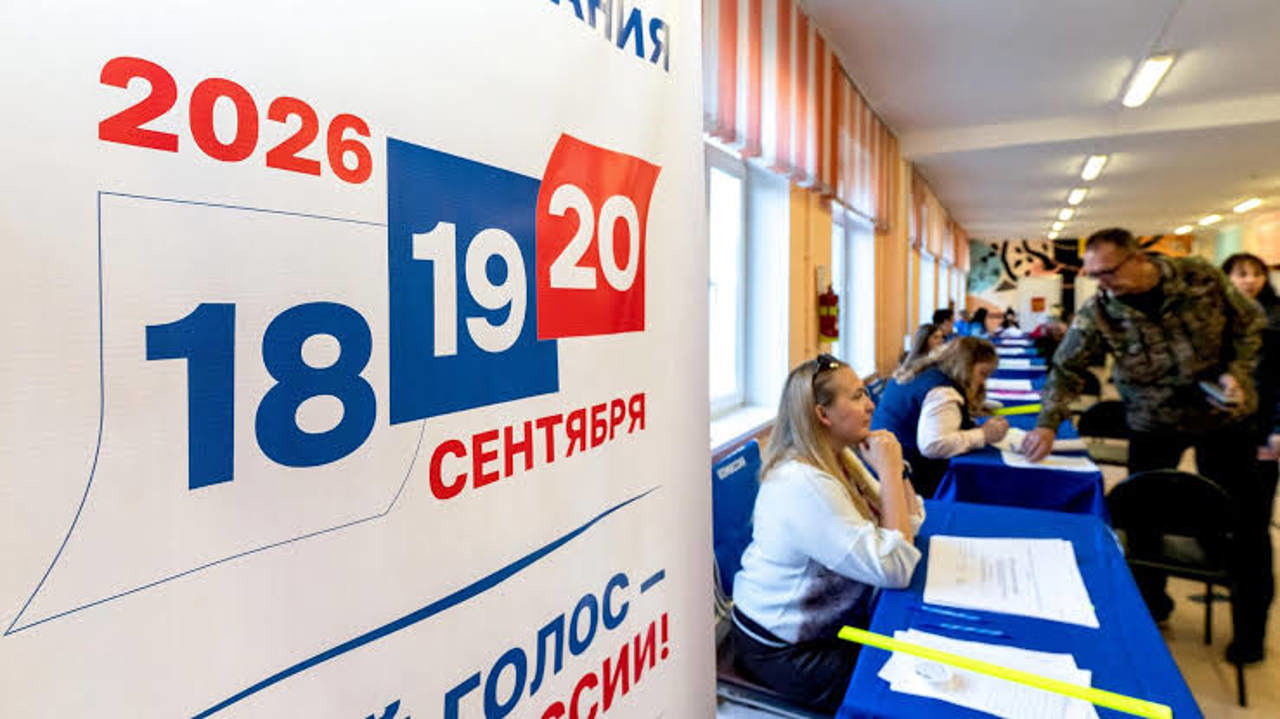
The Ministry of Foreign Affairs of Romania condemns the holding of elections for the State Duma of the Russian Federation in the temporarily occupied territories of Ukraine between September 18 and 20, as well as the opening of polling stations for this vote in the Transnistrian region of the Republic of Moldova, without the consent of the constitutional authorities in Chișinău.
The institution emphasizes that holding these elections in occupied Ukrainian territories constitutes a serious violation of international law, and Romania rejects any attempt to validate, through electoral processes, the consequences of the Russian Federation's illegal actions.
"Holding elections in the temporarily occupied territories of Ukraine constitutes a serious violation of international law. Romania firmly rejects any attempt to validate, through the organisation of electoral processes, the consequences of the Russian Federation's illegal actions and emphasises that these cannot produce legal effects nor alter the international status of the respective territories," the Ministry of Foreign Affairs (MFA) states.
Regarding the opening of polling stations in the Transnistrian region, the Ministry considers the Russian Federation's move to be a direct violation of the Republic of Moldova's sovereignty and territorial integrity.
"Romania condemns the organization of the vote by the Russian Federation in the Transnistrian region of the Republic of Moldova without the consent of the authorities in Chișinău. This move violates the sovereignty and territorial integrity of the Republic of Moldova and stands in total contradiction to the efforts of the authorities in Chișinău and international partners aimed at facilitating a political settlement of the Transnistrian issue," informs the institution.
The MFA reaffirms its support for the sovereignty, independence, and territorial integrity of Ukraine and the Republic of Moldova, rejecting any unilateral action by which the Russian Federation seeks to undermine the international legal order. "Romania reaffirms its firm support for the sovereignty, independence, and territorial integrity of Ukraine and the Republic of Moldova within their internationally recognized borders, and rejects any unilateral action by which the Russian Federation seeks to undermine the international legal order", the statement reads.
Republic of Moldova: Second-highest number of Russian polling stations globally, after Georgia
The Republic of Moldova ranks among the countries with the highest number of polling stations opened by the Russian Federation for the State Duma elections scheduled for September 18–20, 2026, according to an infographic produced by Ziarul de Gardă. A total of 17 polling stations will operate in the Republic of Moldova—one in Chișinău and 16 in the Transnistrian region—to serve an estimated 200,000 Russian passport holders living in the country. Only Georgia hosts more Russian polling stations, with a total of 46—35 in the separatist region of Abkhazia and 11 in South Ossetia—though none have been opened in Tbilisi.
Ukraine, home to approximately 8 million Russian citizens, will not host any polling stations in territories officially controlled by the Kyiv administration, given the ongoing war launched by Russia.
The 16 polling stations in the Transnistrian region of the Republic of Moldova will operate only on Sunday, September 20. According to Valeriu Chiveri, Deputy Prime Minister for Reintegration, the Russian Federation's decision to open these stations without Chișinău's permission demonstrates a "lack of respect for the sovereignty and territorial integrity of the Republic of Moldova."
The official also stated this week that Russia’s invocation of OSCE commitments to argue that the Republic of Moldova ought to accept these actions represents a distorted approach that fails to align with the spirit and essence of those commitments. On September 3, the Ministry of Foreign Affairs summoned Oleg Ozerov, the Russian Federation’s ambassador-designate to the Republic of Moldova, and handed him a note of protest regarding Moscow's intention to open polling stations on the left bank of the Nistru.
Meanwhile, regional media published the addresses of the 16 polling stations scheduled to open on Sunday; six are located in Tiraspol, three in Tighina (Bender), and one each in several other towns on the left bank of the Nistru.
This is not the first: during the March 2024 presidential elections, Russia also opened six polling stations in the Transnistrian region without Chisinau's consent.
According to the Promo-LEX Association, holding Russian elections in the Transnistrian region—despite protests from the Republic of Moldova—constitutes another episode in a series of actions by the Russian Federation that undermine the Republic of Moldova's territorial integrity, sovereignty, and inviolability.
Elections for the State Duma of the Russian Federation began on Friday, September 17, and continue through Sunday, as Russian citizens elect the 450 deputies of the legislature's lower house. Half of the seats will be allocated via party lists, while the other half will be decided in single-mandate constituencies. Ten political parties are in the race—all considered loyal to President Vladimir Putin—as the genuine opposition was excluded.
According to political analyst Abbas Gallyamov, cited by Euronews, Russian voters do not actually have a real choice regarding the most important issue on the country's political agenda: the war in Ukraine.
"The options are very limited. In other words, the key issue—the most important matter on Russia's political agenda, that of war and peace—has been sidelined. People have no opportunity to choose in this regard. Essentially, it all boils down to choosing the same thing, just in different packaging," Gallyamov stated.
For the first time, residents of Ukrainian territories under Russian control will also vote in the State Duma elections, amidst an active mobilization drive demanded by the Kremlin.
According to Euronews, the high number of casualties Russia has suffered in the war in Ukraine, as well as the conflict's economic impact, remain among the top concerns for Russian voters. Against this backdrop of discontent, the "Yabloko" party—the only political group to have openly spoken out against the war in Ukraine—is missing from the electoral lists, excluded from the race by a court ruling amid protests in major Russian cities. The "United Russia" party, in power since 2003, remains the clear favorite in the election, with its informal leader, Vladimir Putin, having held the Russian presidency since 2000.