Prime Minister on the Nistru crisis: Seek solutions, do not blame
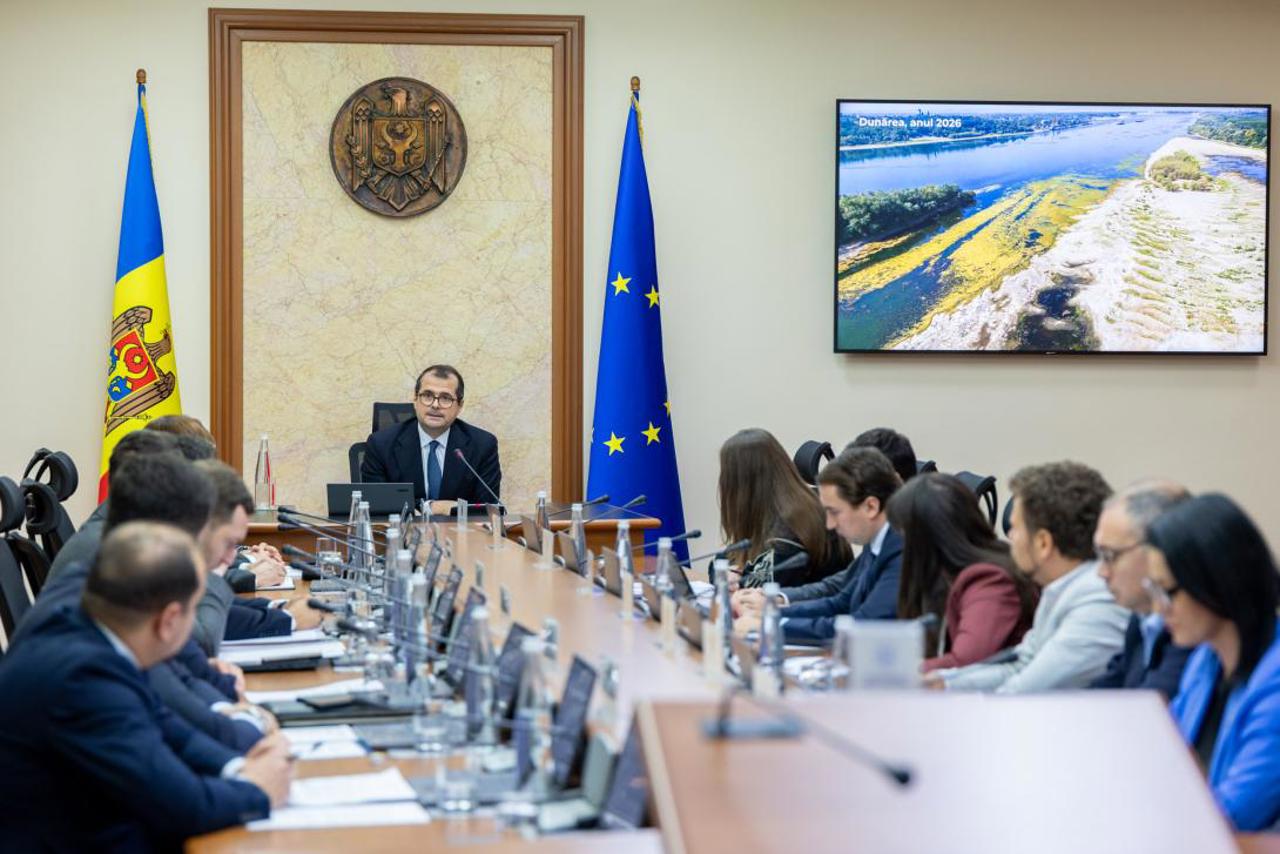
Ukraine cannot be held responsible for the Nistru crisis, Prime Minister Vasile Tofan says. He calls on the parties involved to engage in constructive discussions to break the deadlock and ensure a continued water supply for the population and businesses.
"I would very much like criticism to be constructive. If there are people who believe they can help us, who have solutions for the situation regarding the Nistru, we are open to it; we collaborate with everyone," the Prime Minister stated at the beginning of the government meeting on September 30.
He also presented images of other rivers in the region facing a similarly difficult situation.
"The Danube, which used to have a flow rate of 3,600 cubic meters per second, has dropped to 1,600. In certain sections—near Vidin in Bulgaria and Rasova in Romania—it has almost completely dried up. So, are the Ukrainians to blame for the Danube as well? The Rhine has reached a depth of just 10 centimeters in some places; barges cannot navigate it. This is the river that supplies Europe's entire industrial basin—an area teeming with barges back when I lived there. Did the Ukrainians block the water on the Rhine, too?" Tofan asked.
The Prime Minister also highlighted the difficult situation on the Prut River, where the flow rate has dropped to just 14 cubic meters per second. He said there is no need to look for scapegoats and advocated constructive discussions to propose solutions.
According to Tofan, the authorities did everything possible to prevent this situation; at Chisinau's request, Ukrainian partners delayed the decision to limit water releases from the Novodnistrovsk reservoir for as long as they could, even as the inflow and reservoir levels dropped to alarming lows. "And now we need to consider how to secure our water supply—both in Coșernița and Cosăuți. We must ensure people aren't left without water. That is where we need to focus our efforts, rather than pointing fingers where there is no problem," stated Vasile Tofan.
According to the latest data, the water level at the Cosăuți pumping station dropped by 50 centimeters in just 48 hours. Specialists monitoring the situation warn that if the level drops by another meter, the pumps will no longer be able to supply water to consumers in the north of the country. While the supplier's reservoirs can hold up to 9,000 cubic meters of water, daily demand exceeds 30,000 cubic meters.
Hydrological drought conditions have intensified in recent weeks. The Republic of Moldova can no longer rely on water releases from the Novodnistrovsk reservoir in Ukraine; due to a lack of precipitation in the Carpathians, the water level there has fallen to 111 meters, down from the optimal level of 121.5 meters.
Minister of the Environment Gheorghe Hajder said on Tuesday, September 29, that the Republic of Moldova can no longer negotiate a higher flow rate on the Nistru River with Ukraine, as reserves in the Novodnistrovsk reservoir are nearly depleted.
The situation is also difficult in the capital. According to environmental expert Iuliana Cantaragiu, if the Nistru River's water level continues to drop and there is no precipitation in the coming weeks, the intake station at Vadul lui Vodă might no longer be able to draw water under normal operating conditions.
"At Vadul lui Vodă, the water intake is located at a depth of eight meters and ten centimeters—that is the level. If the water drops below that, the pipe will effectively be left hanging in the air," Iuliana Cantaragiu stated during the "Spațiul Public" program on Radio Moldova.
The Republic of Moldova has been under a state of emergency regarding energy and water supplies since September 26, for a period of 60 days. Authorities are urging citizens and businesses to use water resources rationally.