Moldova's exports have increased over 60% in six years, mainly to the EU
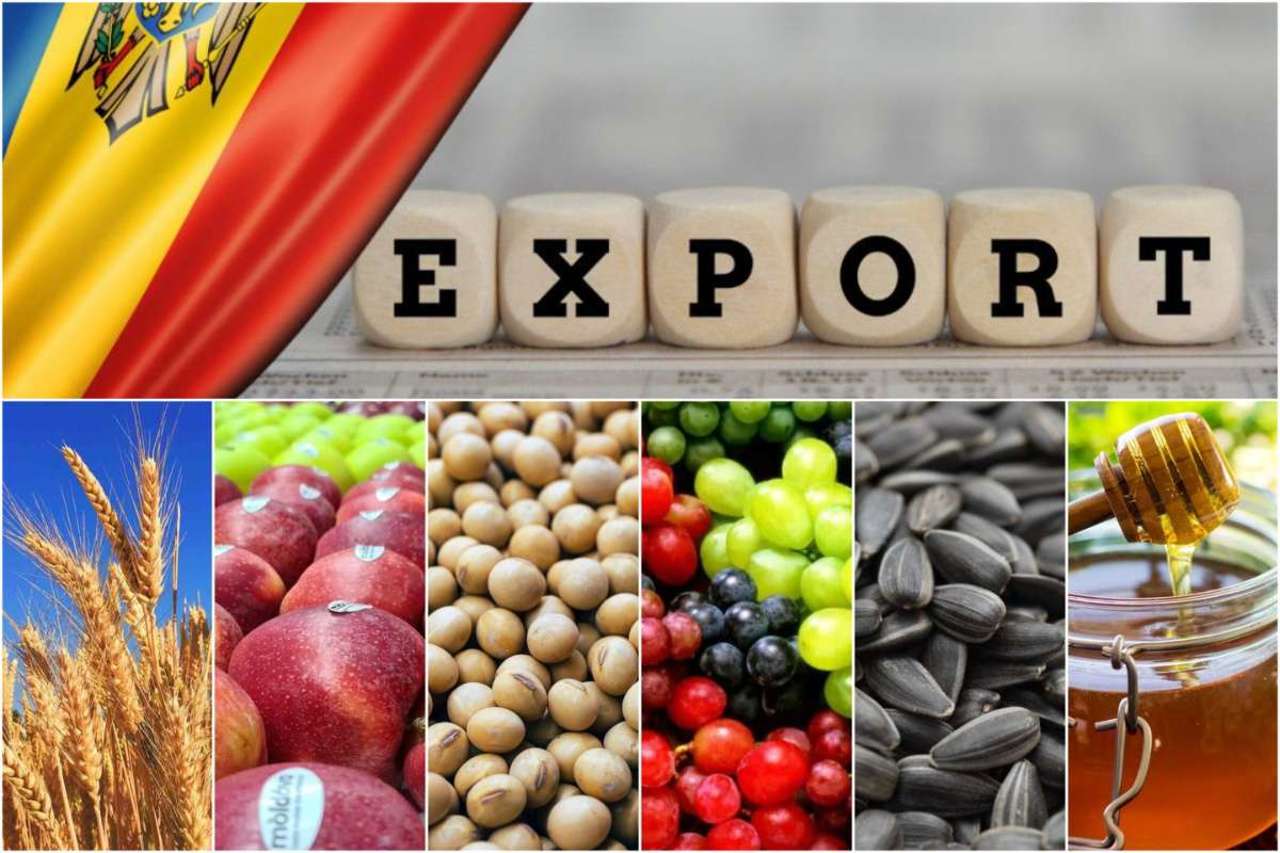
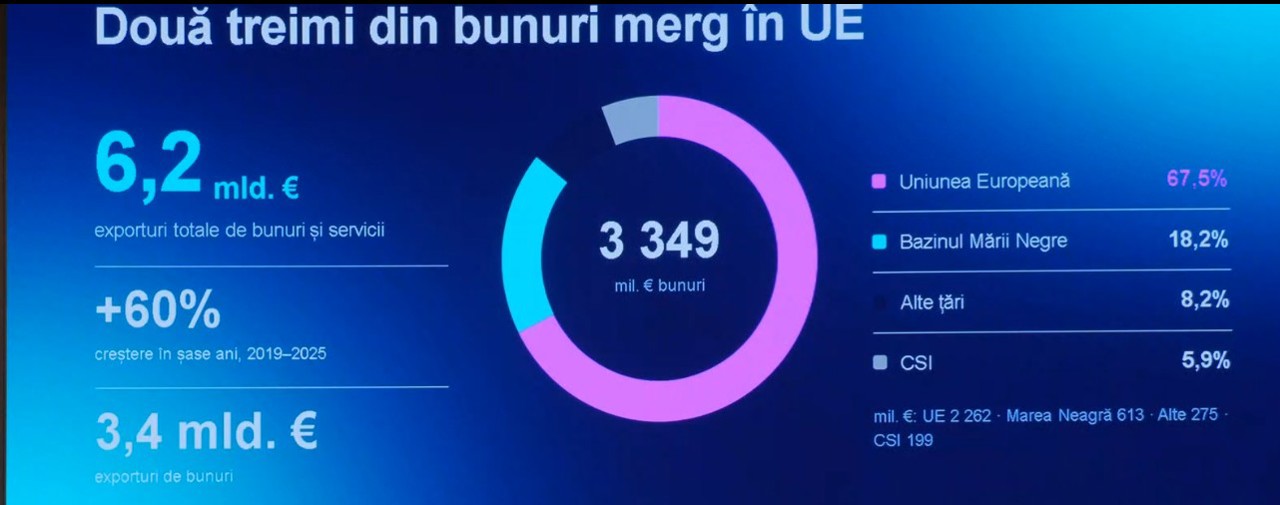
Rising from €1.75 billion in 2019 to over €6.2 billion in 2025, the Republic of Moldova's foreign trade has grown by more than 60%. Although temporarily impacted in 2022 by the outbreak of the war in Ukraine and logistical costs, exports rebounded strongly after 2024, with the European Union serving as the primary destination for over 67% of the goods shipped.
Service exports exceeded €2.8 billion, according to data from the Investment Agency’s report on the Republic of Moldova’s export offering, presented on Thursday, October 1, at the Moldova Export Forum.
The same report indicates that the European Union remains the primary destination for Moldovan goods, accounting for over 67% of total exports. Domestic products are exported as follows: over 18% to countries in the Black Sea region, 8% to other states, and 5.9% to CIS countries.
Romania is the leading destination for the Republic of Moldova's goods exports, with a value exceeding €1 billion, followed by Ukraine, Italy, Turkey, and Germany.
Together, the top four destinations account for 56% of our total exports.
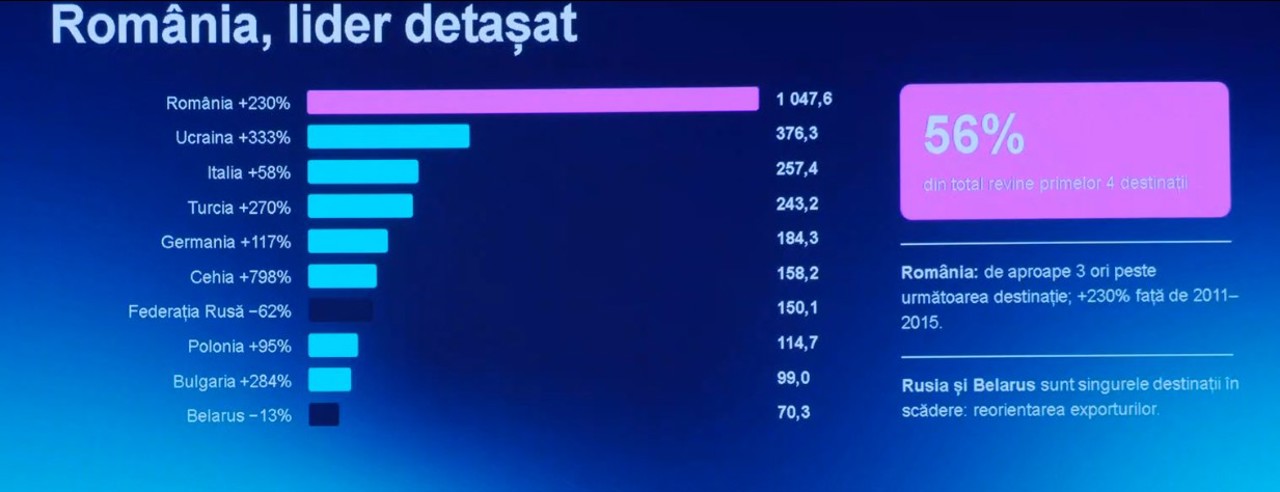
Within the European Union, the primary markets for Moldovan products are Romania, Italy, Germany, the Czech Republic, and Poland. Romania and Italy account for over 60% of Moldova's exports to the EU.
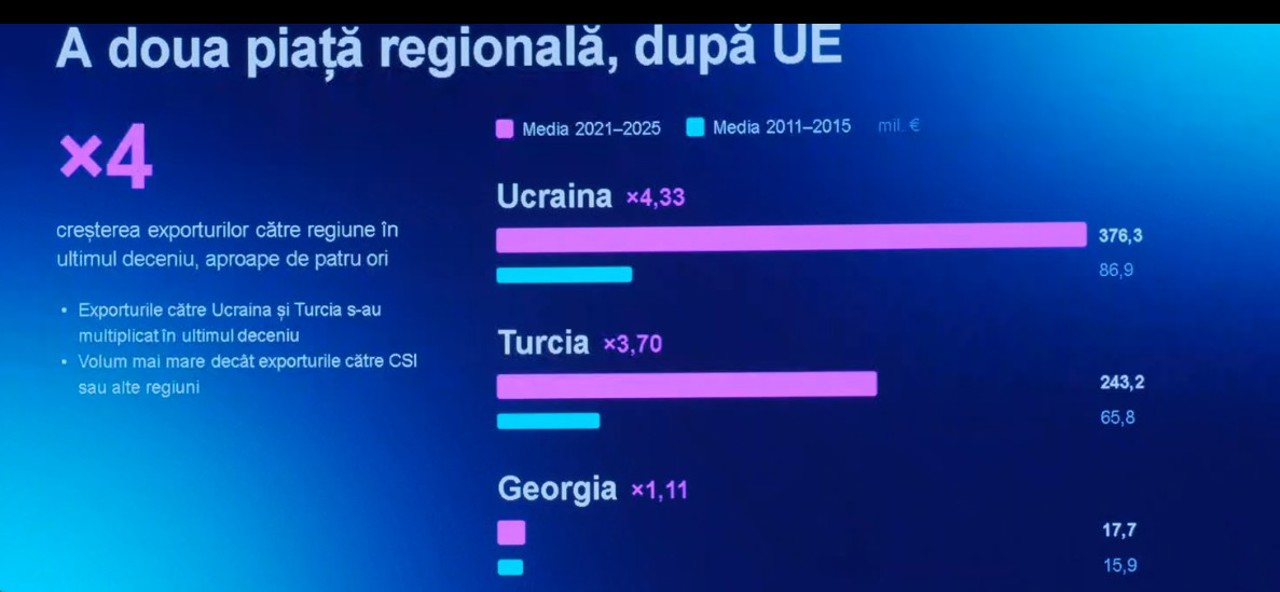
Another important regional market is the Black Sea region, where the main destinations are Ukraine, Turkey, and Georgia. Exports to Ukraine exceeded €376 million, those to Turkey reached €243 million, and Georgia is also on a growth trajectory. Over the past five years, exports to these three destinations have more than quadrupled.
The Republic of Moldova also exports its products to markets in the USA, Switzerland, the United Kingdom, Lebanon, Serbia, and Egypt. The USA, Switzerland, and the United Kingdom account for 43% of exports to this group.
Among the fastest-growing markets are Ukraine, the Czech Republic, Bulgaria, and Hungary; these also offer additional potential for Moldovan exporters.
At the same time, Russia and Belarus are the only top destinations experiencing a decline, reflecting the reorientation of the Republic of Moldova's exports and the diminishing share of CIS markets.
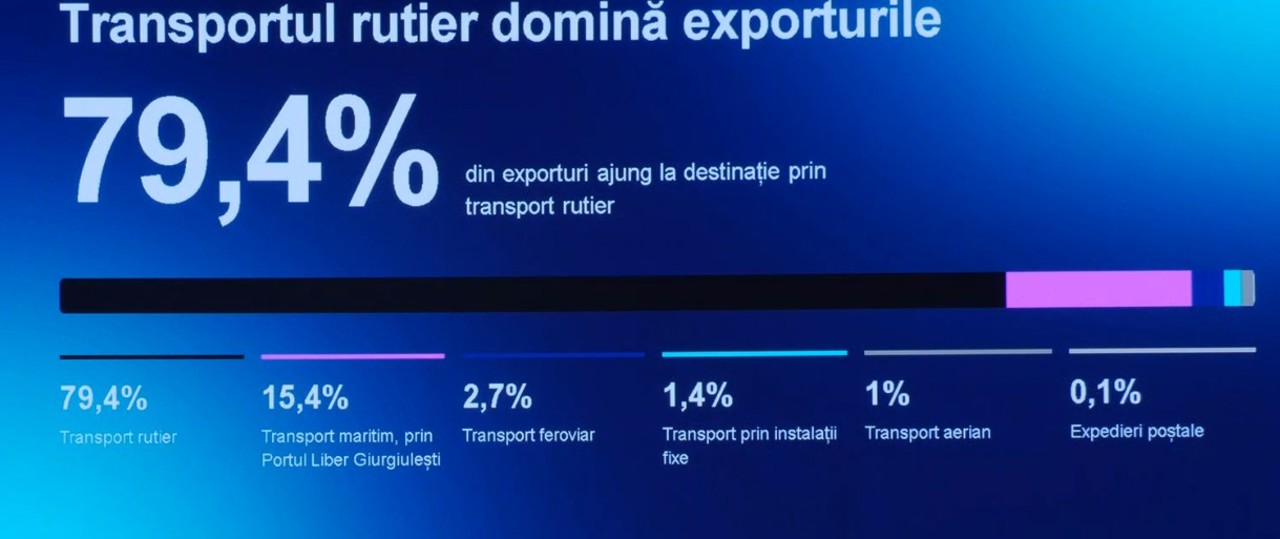
From a logistics perspective, road transport is the primary means by which Moldovan products reach foreign markets. Nearly 80% of exported goods are transported by road, 15% by sea via the Giurgiulești International Free Port, 2.7% by rail, 1% by air, and 0.1% via postal shipments.
Agriculture and the food industry: key sectors
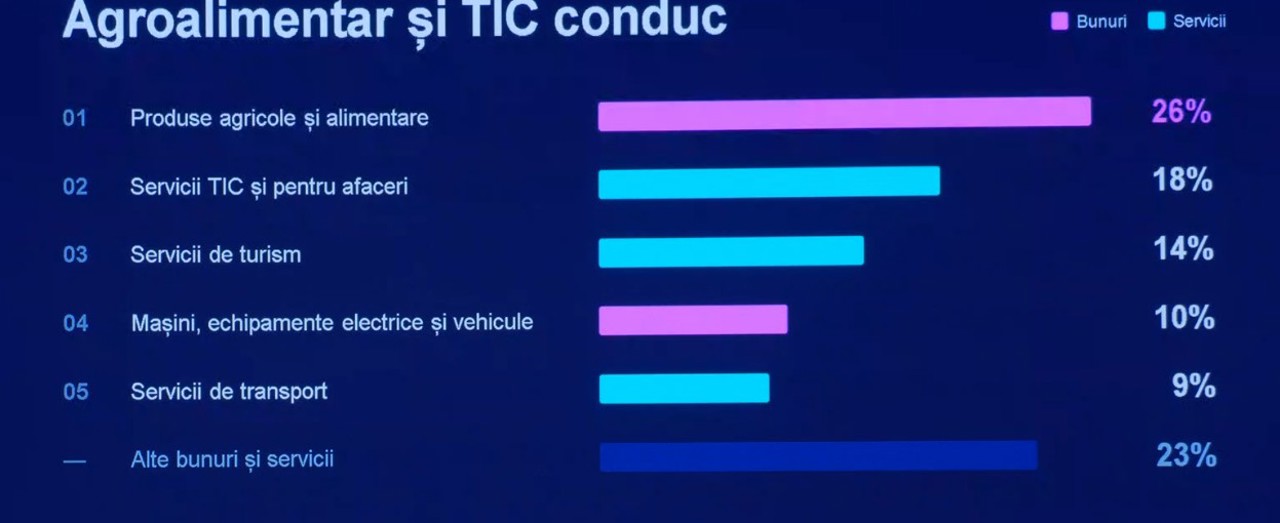
In the export structure, agricultural and food products account for 26%, ICT and business services for 18%, tourism services for 14%, machinery, electrical equipment, and vehicles for 10%, and transport services for 9%.
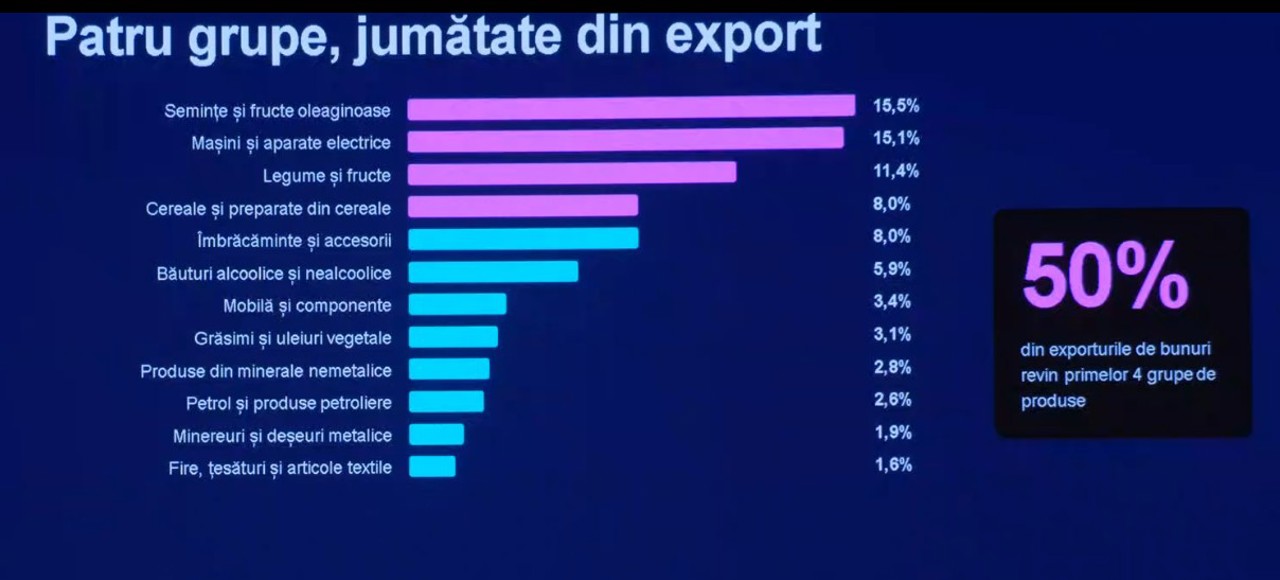
Regarding goods exports, the main categories in 2025 were oilseeds and oleaginous fruits; electrical machinery and appliances; vegetables and fruits; cereals and cereal preparations; clothing and accessories; alcoholic and non-alcoholic beverages; and furniture and components.
The top four categories—oilseeds and oleaginous fruits, electrical machinery and appliances, vegetables and fruits, and cereals and cereal preparations—account for over 50% of total goods exports.
In the agri-food sector, the Republic of Moldova primarily exports oilseeds and oleaginous fruits, cereals, fruits and vegetables, alcoholic beverages (including spirits and vinegar), as well as fats and oils. The top three categories account for 58% of agri-food exports. According to the Investment Agency, the Republic of Moldova also holds significant positions in international rankings for certain products. The country has the world's largest wine collection by number of bottles and ranks first globally in vineyard density.
Last year, the Republic of Moldova ranked eighth among cherry exporters, 12th for apple exports, 14th for table grape exports, and fifth for exports of plums, prunes, and divin (Moldovan brandy).
Service exports exceeded €2.8 billion
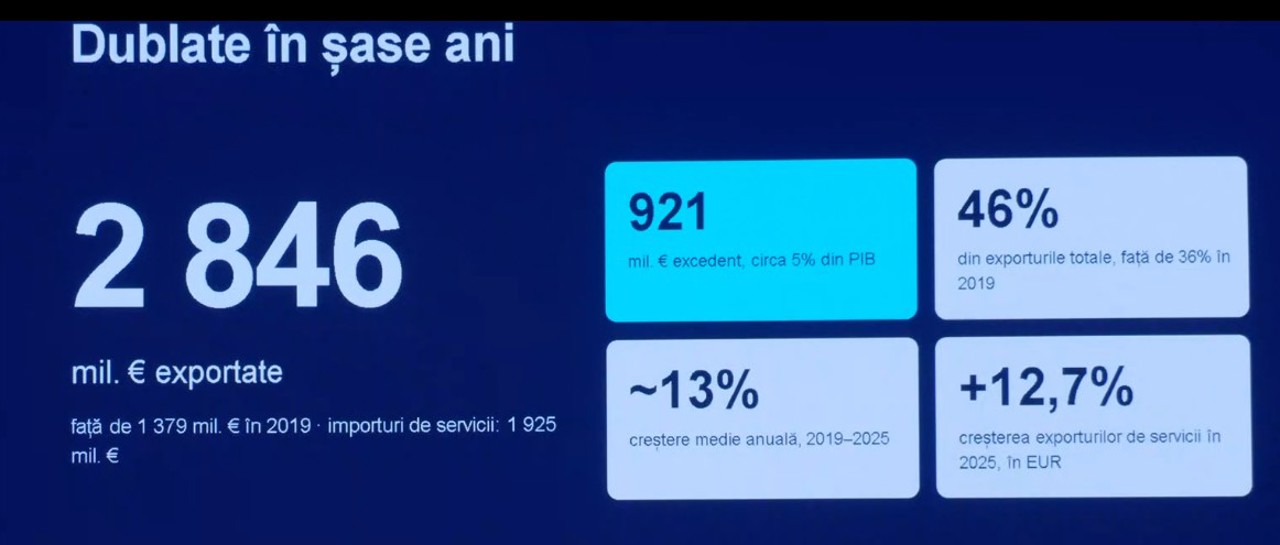
Service exports represent a rapidly growing segment. In 2025, the value of these exports surpassed €2.8 billion—nearly double the figure from six years ago.
Moreover, services are the only sector highlighted in the presentation where the Republic of Moldova records a positive trade balance, exceeding €921 million. Between 2019 and 2025, service exports grew by an average of over 13% annually.
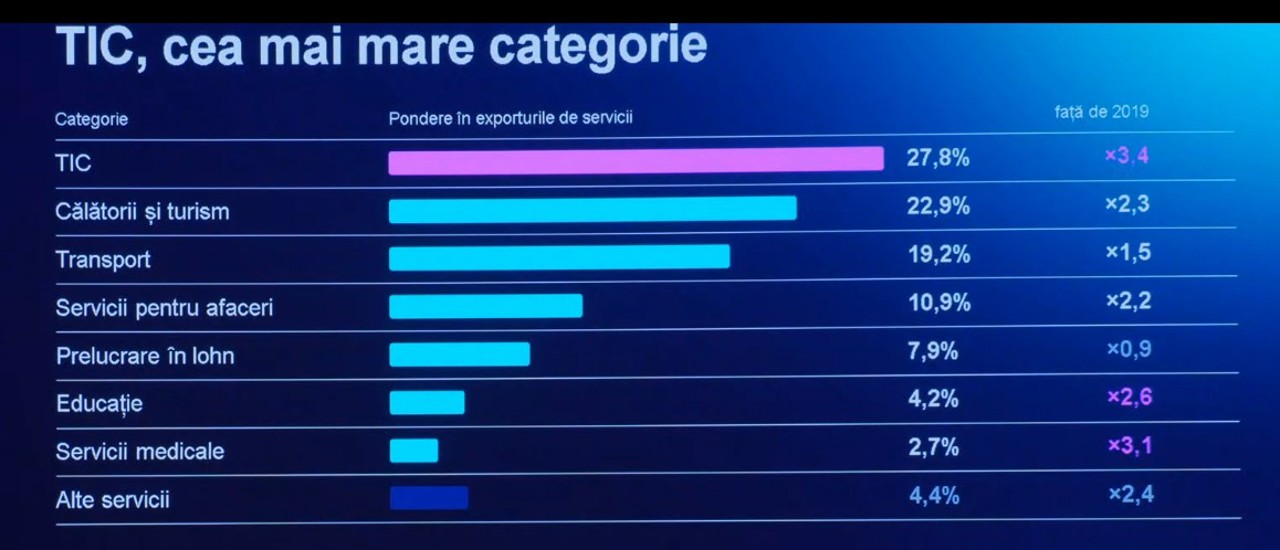
The key categories include ICT services, travel and tourism, transport, business services, processing services (particularly within the textile sector), as well as educational and medical services.
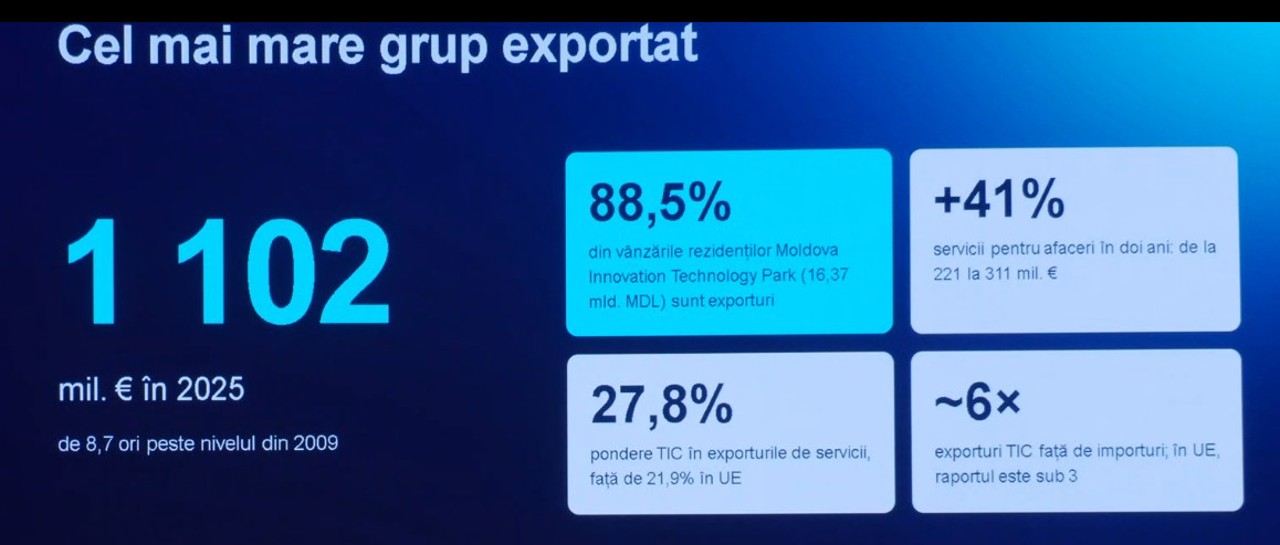
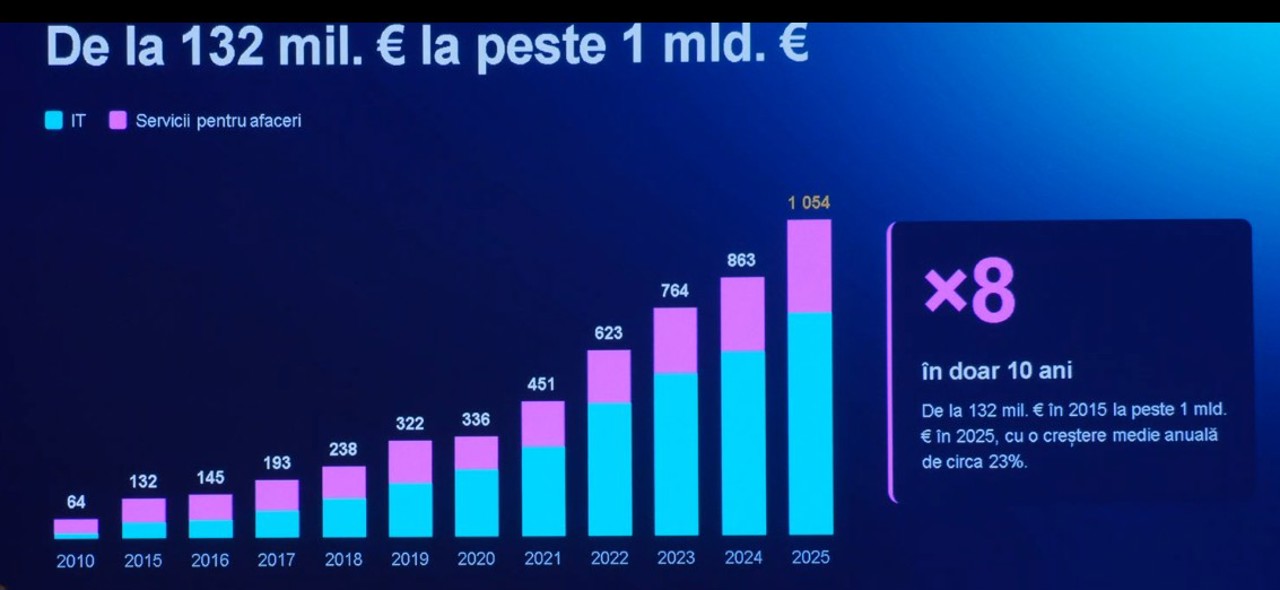
ICT and business services constitute the largest category of exported services, with a value exceeding €1 billion—an almost ninefold increase compared to 2009. Notably, 88% of these exports are generated by residents of the Moldova IT Park, with the ICT sector accounting for 27% of total service exports.
Between 2010 and 2025, exports of IT and business services grew more than eightfold, rising from €64 million to over €1 billion.
Educational services also demonstrated significant growth. In 2025, these generated €121 million, marking a nearly ninefold increase compared to 2010. Last year, over 6,000 foreign students were registered in the Republic of Moldova, with their numbers rising by more than 12% in a single year.
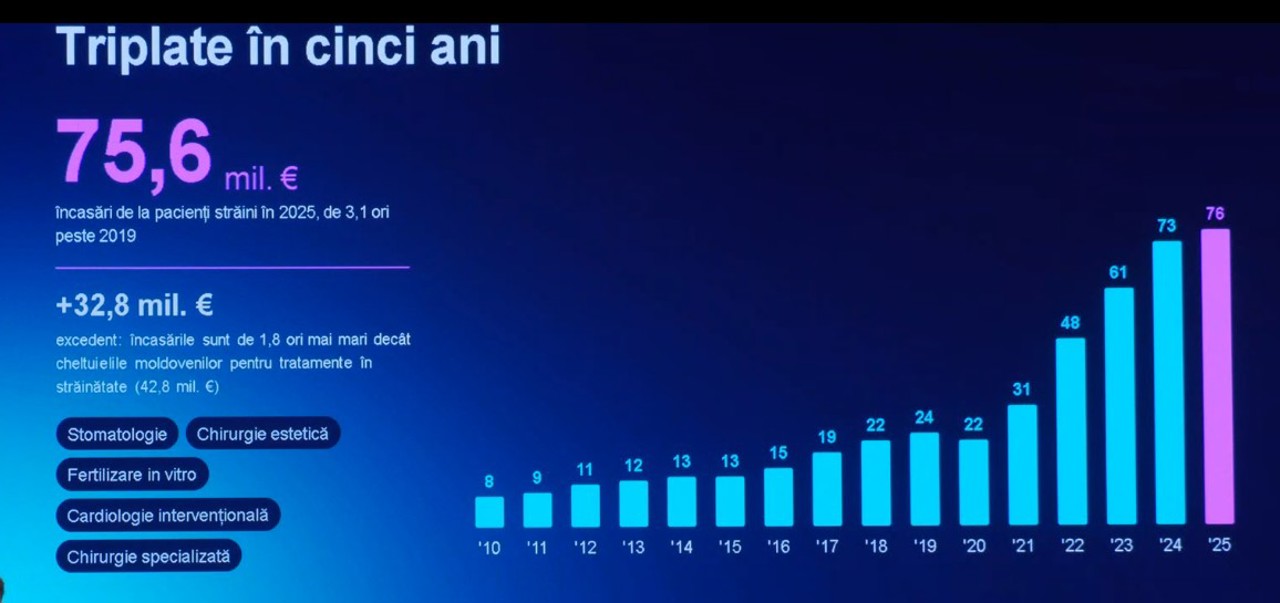
Meanwhile, medical services represent a rapidly growing sector. Over the past five years, exports in this segment have tripled, exceeding €75 million. The revenue comes from foreign patients who choose the Republic of Moldova for dental services, cosmetic surgery, in vitro fertilisation, interventional cardiology, and specialised surgery.
According to the Investment Agency, the Republic of Moldova benefits from access to international markets and a potential market of over 870 million consumers through free trade agreements. Currently, 47 free trade agreements are in force, including the Deep and Comprehensive Free Trade Agreement (DCFTA) with the European Union.
The Republic of Moldova has held EU candidate country status since 2022. From a logistics perspective, Moldovan products can reach European countries within one to five days. Additionally, direct flights operate from Chișinău to 30 countries and over 70 cities across Europe.
Key logistical advantages include the "Eugen Doga" International Airport in Chișinău, the Giurgiulești International Free Port, a time zone compatible with most European states, and a multilingual population. Furthermore, companies in the Republic of Moldova can obtain international certifications—such as GlobalG.A.P., OEKO-TEX, and ISO—which facilitate market access for their goods abroad.
The Moldova Export Forum took place as part of Moldova Business Week, Chișinău’s premier event dedicated to the business community and attracting foreign investment.
Moldova Business Week is currently bringing together over 1,500 participants from more than 50 countries in Chișinău—ranging from business leaders and European officials to delegations from Africa and Latin America—reflecting the country's growing openness to the global economy.