Sandu: EU by 2030, unification up to Moldovan voters
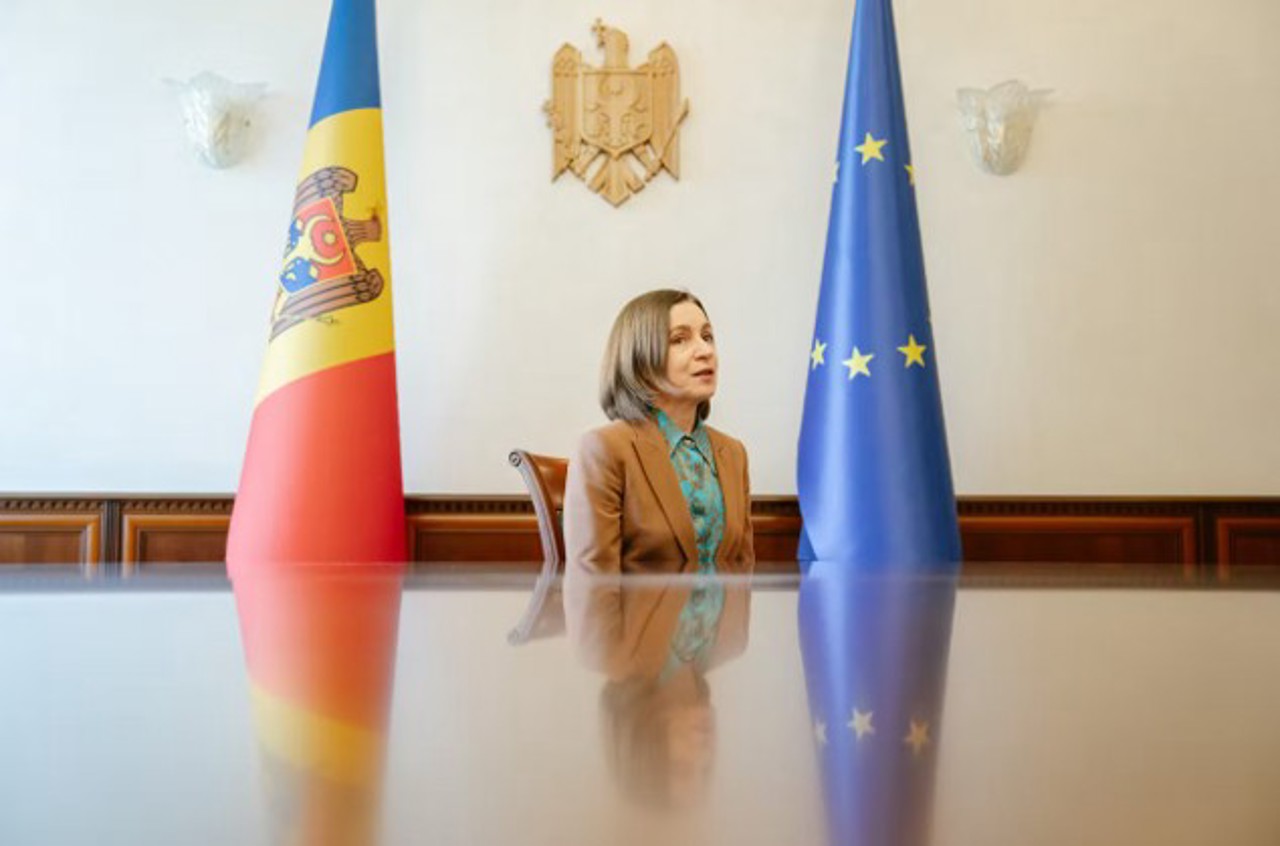
Reuniting Moldova and Romania could accelerate Chișinău's path to the European Union, according to President Maia Sandu. However, such a decision must be made by a majority of citizens. Sandu outlined these views in an interview published on April 28 by the French newspaper Le Monde.
"This would allow us to enter the EU faster and could help us," Sandu stated. She reminded readers that the 1939 Ribbentrop-Molotov pact was an illegal act that forcibly separated the two banks of the Prut River.
Support for unification has grown to approximately 40%, yet the final decision belongs to the people. Currently, European integration through internal reforms remains Chișinău's absolute priority.
Historical context and democratic choice
Sandu explained that before the 1939 Soviet-German pact, Moldova was part of Romania. Consequently, the historical context explains why a significant portion of Moldovans currently favor reunification.
Recent polling by the ATES Research Group shows substantial support for a potential union. Inside Moldova, 44% of respondents would vote "yes" in a referendum, while 39.2% would oppose it. Among the diaspora, pro-union support surges to 60.8%.
Both Moldova's Prime Minister, Alexandru Munteanu, and Romania's Prime Minister, Ilie Bolojan, have previously expressed openness to unification. Bolojan affirmed that Bucharest is prepared for whatever scenario Chișinău decides.
Transnistria and the two-step strategy
Amid regional tensions, Sandu does not exclude a "two-step accession" model for EU membership. This strategy involves Moldova joining the EU initially without the breakaway Transnistria region.
This approach would prevent the Kremlin from using Transnistria as a veto over Moldova's European future. It ensures the country can progress toward the West securely.
Progress on justice and the 2030 target
During the interview, the President expressed confidence that Moldova will be ready for EU accession by 2030. She pointed to real progress in reforming the justice system.
Recent high-profile corruption convictions serve as evidence of a paradigm shift in Chișinău. "We are working actively and counting on the support of our partners," Sandu concluded. She specifically highlighted France and President Emmanuel Macron's role in unlocking the next negotiation stages.
Translation by Iurie Tataru