Moldova hires 20 experts to accelerate EU integration
The European Union (EU) will hire 20 additional experts to work within the Republic of Moldova's central public institutions. This initiative aims to strengthen public administration capacities and accelerate the country’s European integration process. These experts will assist in developing and implementing public policies and investment projects across infrastructure, economic development, agriculture, energy, and environmental protection.
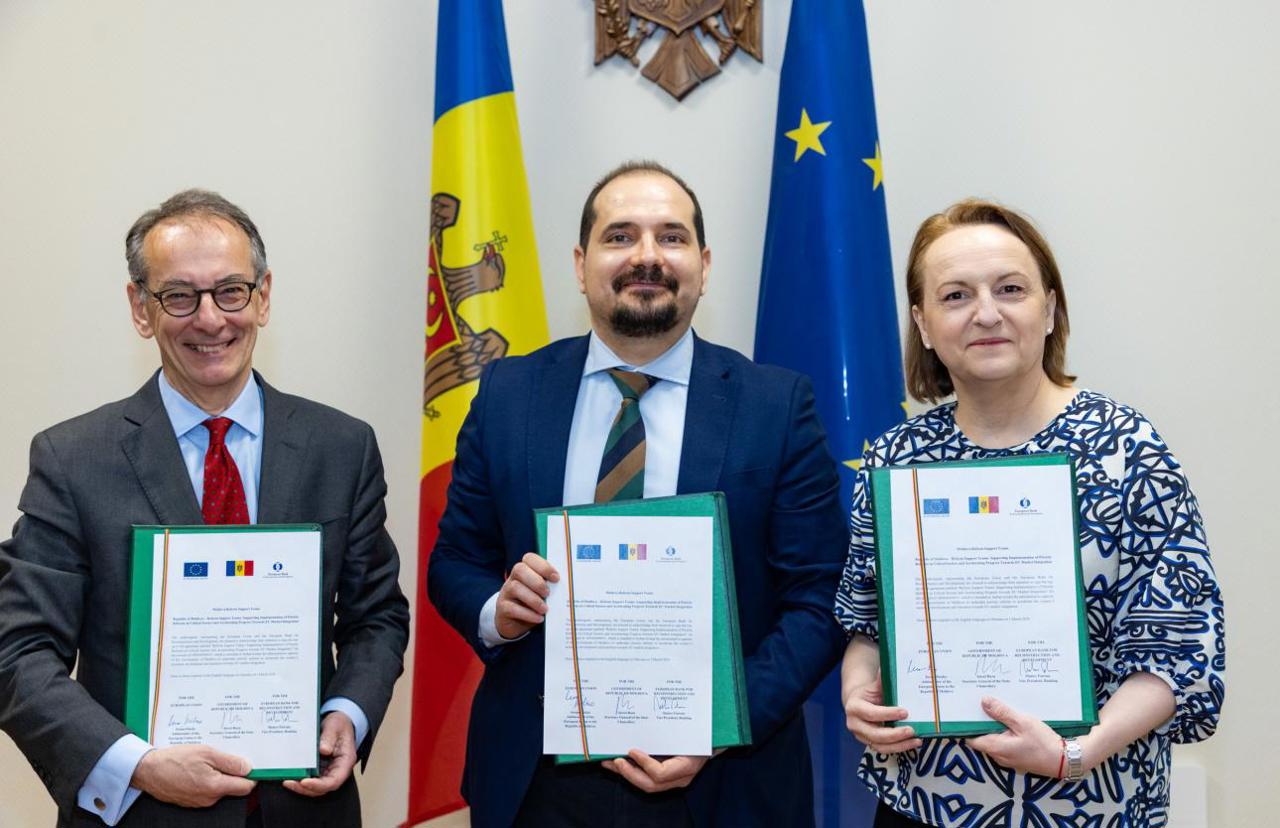
An agreement to expand the "Reform Support Team" project, financed by the EU and implemented by the European Bank for Reconstruction and Development (EBRD), was signed on March 5 by Alexei Buzu, the Secretary General of the Government; Iwona Piórko, the EU Ambassador to the Republic of Moldova; and Matteo Patrone, the EBRD Vice-President.
The agreement allocates an additional two million euros for the Reform Support Teams program in the Republic of Moldova. This initiative employs Moldovan experts directly within key ministries and agencies to accelerate the country’s alignment with EU standards and the implementation of the EU Growth Plan.
According to the EBRD, this new funding complements the existing three million euros previously contributed by the EU. This will enable the program to continue providing practical, expert support to Moldovan institutions throughout the EU accession process.
The EBRD has been implementing this initiative since 2023, aiming to strengthen the institutional capacities of public authorities involved in executing government priorities.
So far, approximately 60 experts have been deployed to 10 ministries and agencies, including the Ministry of Energy, the Ministry of Infrastructure and Regional Development, the Public Property Agency, and the Ministry of Economic Development and Digitalization, among other key institutions.
The "Reform Support Team" project serves as a technical assistance mechanism in the Republic of Moldova to accelerate the modernization of public institutions and ensure their alignment with European Union standards.
The primary goal of this project is to enhance the administrative capacity of government ministries and agencies. It does not replace civil servants; rather, it brings in highly qualified experts to work alongside them to implement complex reforms that would typically take much longer due to a lack of human resources or specific expertise.
The teams consist of professionals from the private or associative sectors, often local or diaspora experts, who are hired on a project basis. They provide advice in strategic areas such as harmonizing national legislation with EU standards, managing public investments, digitalizing government services, and reforming public administration.